SSILD by Cosmiciron(Zhang G. X.-L) compared to MILD by LaBerge.
Quote:
Conclusion
Findings provide the strongest evidence to date that the MILD technique is effective for inducing lucid dreams. Findings indicate that the SSILD technique is similarly effective. In contrast, RT appears to be an ineffective lucid dream induction technique – at least for short periods such as 1 week in the present study.
Hi all, I wanted to start a thread that discusses the key turning points you’ve experienced on your path to lucidity. To discuss the moments and lessons that really stood out as pivotal to your journey and progress. I’m talking about those big eureka moments that helped you achieve that first lucid. The realisation that brought you out of a prolonged dry spell after weeks of nothing. The lesson that helped you gain better dream control after been unable to stabilise them. The experiments that lead to you been able to lucid dream every night when before it was irregular. Those methods, lessons or techniques that you still swear by today.
This question is reaching out to both experienced members and beginners so that we may better understand and gain wisdom of the key moments that lead us out of the dark and into the light. I expect everyone’s journey will be very different but It will be interesting to see if we all share some common Lessons and turning points and may help some beginners out of those deep pits we get stuck in and help us all to better understand how lucidity goes from unattainable to something we excel at.
So I will go first with my pivotal moments on my journey so far:
1. To Stop over doing it and relax!
This was a big one for me. When I first started like most people I had a routine of many planned and thought out steps that had to be ticked off throughout the day, everyday without fail. Failure meant no lucids! I was RCing as much as possible, doing ADA as much as possible, visualising, meditating, DJing, researching as much as possible and it became exhausting! I decided I needed to ease off on the effort as it was frustrating me and as soon as I did I started seeing results. I learned to relax and stop putting in so much brain power into my daily practice and keep it all much more casual and less intense. I very quickly started seeing more consistent results and lucidity came much more naturally when I stopped treating it like I was studying for an exam.
2. To do Natural WBTBs
My first goal upon starting my dreaming journey was to improve recall but it proved hard at first and each morning I could only remember very vague fragments when I woke up. I then decided to try WBTB and learned I could wake myself naturally by setting my intent before I fell asleep. I didn’t think this would actually work as it seemed too easy but that same night I woke up naturally many times throughout the night without an alarm and was able to recall many vivid dreams. My record to this day is 11 dreams recorded in one night and I owe it to WBTB and waking naturally. I also believe doing this every night has also lead to some quick success with lucid dreaming as well.
3. Lucid’s may only take a moment
Now this is a small one but has really helped me. My goal each night is always to wake in the last few hours of sleep and perform a WBTB and do MILD. Sometimes when I woke though I would see I only had an hour, or worse, 20 minutes or less till my wake up alarm was going to go off! I would get in a panic and start stressing out and thinking I had no time and missed my chance. That was until one morning I thought “eh let’s try anyway”. I went back to sleep and became lucid for maybe 2 -5 minutes and since then when ever I wake up with little time left I can relax and say “hey I have 5 minutes, plenty of time to get lucid” and go back to sleep with no stress.
4. I Found DreamViews
(Aww, a little love note to the forum). But seriously before I found this site I was sort of wandering aimlessly through the internet and focusing a lot on repetitive Technique heavy ‘How to’ guides and though I learned a lot it wasn’t till I found DreamViews and started reading about other people’s experiences and more unconventional methods that I found a confidence to continue, a passion to experiment and a desire to master this skill. Hearing everyone’s stories and reading the many discussions and in depth debates has really opened my mind in a way that has inspired me and boosted my motivation to unlock the mysteries of this amazing topic. Visiting everyday has kept me enthusiastic, eager to learn and improve.
So here’s just a few I’ve had so far and hope it gets the ball rolling for others to contribute. I wonder if the next big turning point I have I learn from this thread. 🙂
via Lucid Dreaming - Dream Views - Attaining Lucidity https://ift.tt/2PUhnTg
Maryland is a generally permissive state when it comes to the carry of knives, but you will be sharply limited on the style or type of knife you are allowed to carry.
Pretty much the only kind of knife you are able to carry concealed is a penknife, a definition that is not commonly encountered today.
You can sensibly open carry any knife that is not a dangerous weapon, but under that classification you will find such styles of knife as dirk, switchblade, bowie, star knife (throwing star / shuriken) or razor. That can potentially encompass a majority fraction of all knives!
But you had better make sure you are on the right side of the law when carrying a knife in Maryland: if you should be charged you can expect substantial fines and significant criminal charges!
What You Need to Know
What Kinds of Knives Can I Own?: Any knife; cannot display, sell or transfer any switchblade or ballistic knife.
Can I Carry a Knife Concealed Without a Permit?: Only penknives that are not switchblades.
Can I Carry a Knife Concealed With a Permit?: Any knife you want.
Can I Carry a Knife Openly?: Any knife that is not a “dangerous weapon”, meaning a dirk, switchblade, bowie knife, star knife (throwing star/shuriken) or razor.
General Ownership
While you can own pretty much any kind of knife you want in the state of Maryland, it is illegal to display, sell, offer to sell, transfer, or otherwise barter a switchblade knife or a ballistic knife.
It does not mean you cannot have one, and it doesn’t mean you cannot carry one (concealed: open carry of switchblade is illegal),but you cannot resell it once it is in the state.
Concealed Carry, No Permit
Maryland carry laws get a little bit complex. What you can and cannot carry is partially dictated by whether or not you have a state concealed weapons permit.
If you do not have a permit, you cannot concealed carry any fixed blade knife, any throwing star (which the state calls a star-knife), any razor or any switchblade.
You should definitely know that the way Maryland defines switchblade means that in all probability assisted opening knives will fall under that province, so definitely don’t carry a simple assisted opening pocket knife if you don’t have a concealed weapons permit.
What you can carry without a concealed weapons permit is a penknife, which is explicitly defined in the statutes as not a weapon. What is a penknife, you ask?
A pen knife is defined as any pocket knife that has a blade that folds into the handle. that pretty much describes any folding pocket knife, doesn’t it?
Hold on just a minute: don’t some folding pocket knives have features that could see them classified as a dangerous weapon in court? Potentially, and any of you that are already passingly familiar with state laws know that that is anything but a clear answer.
But fortunately in this case the courts in Maryland have already clarified with little ambiguity any knife meeting the definition of pen knife that is not a switchblade (meaning an automatic or assisted-opening knife) is a-okay for concealed carry. There are no other restrictions or classifications on the knife based on that action.
Concealed Carry, With Permit
And then we move on to the subject of concealed carry with a permit. The state statutes clarify the restrictions do not apply to people who have a concealed weapons permit, and also do not apply to people who have a “reasonable” belief to carry one of the restricted knives for self-defense.
Before you strap on that big bowie knife, you must understand that the courts reserve the right to judge the circumstances under which you decided to carry that restricted knife at their pleasure.
Your decision making process as well as your reasonableness will be assessed and dissected with excruciating thoroughness should you be charged with a crime while carrying that knife.
Don’t be dumb: if you want to carry one of these restricted knives mentioned above get yourself a Maryland concealed weapons permit! Otherwise stick with a simple knife that meets the definition of penknife in all regards to stay on the safe side!
Open Carry
Maryland statutes clearly state that a person may carry openly on or about their personage a knife so long as it is not a dangerous weapon.
If you care to consult the definitions in the statutes below, you will see that “dangerous weapon” includes dirk knife, bowie knife, switchblade knife, star knife and razor.
No explicit definitions are given for the aforementioned types of knives, so it is assumed that they have the common meaning. It is in your best interest to understand those definitions and choose a knife that is decidedly not any of the above if you want to openly carry it in the state of Maryland.
Prohibited Places
Public schools. The carrying of any kind of knife by any person and for any reason on or in public school property is a violation of Maryland law, and carries with it stiff penalties.
Don’t take it on school grounds, don’t take it into school buildings, don’t even take it to school functions off school property if you are smart. It doesn’t matter if you are a student, uninvited guests, anything.
No knives in public schools. The only exceptions to this law are for law enforcement officers, be they on duty, off duty or retired, and even then they must be there as the guest or relative of a student and badged.
Note that this law only applies to public schools, not private schools, and those private institutions can implement their own rules on the subject.
Assessment
Maryland knife laws are a study in contrasts. On the one hand you can own pretty much any kind of knife you want and with a concealed weapons permit carry almost any kind of knife you want.
But on the other trying to open carry or carry concealed without a permit sharply limits the kinds of knives you have access to for carrying in public.
Make sure you read up on the relevant definitions and ensure that your knife does not fall into any prohibited categories based on your permitting status or mode of carry.
Important Maryland State Statutes
The following is the bulk of Maryland’s important laws governing the ownership and carry of knives. Quite a bit of it is fairly dry reading, but considering how stiff the penalties and attendant charges are in the state, it is in your best interest to become familiar with all of it.
Pay careful attention to what kind of knives you are allowed to carry and under what circumstances. Your mode of carry along with your permit status will be critical to staying out of trouble:
4-101. Dangerous weapons
(a) Definitions. –
(1) In this section the following words have the meanings indicated.
(/)
(4) “Star knife” means a device used as a throwing weapon, consisting of several sharp or pointed blades arrayed as radially disposed arms about a central disk.
(5)
(i) “Weapon” includes a dirk knife, bowie knife, switchblade knife, star knife, sandclub, metal knuckles, razor, and nunchaku.
(ii) “Weapon” does not include:
1. a handgun; or
2. a penknife without a switchblade.
(b) Exceptions for certain individuals. — This section does not prohibit the following individuals from carrying a weapon:
(1) an officer of the State, or of any county or municipal corporation of the State, who is entitled or required to carry the weapon as part of the officer’s official equipment, or by any conservator of the peace, who is entitled or required to carry the weapon as part of the conservator’s official equipment, or by any officer or conservator of the peace of another state who is temporarily in this State;
(2) a special agent of a railroad;
(3) a holder of a permit to carry a handgun issued under Title 5, Subtitle 3 of the Public Safety Article; or
(4) an individual who carries the weapon as a reasonable precaution against apprehended danger, subject to the right of the court in an action arising under this section to judge the reasonableness of the carrying of the weapon, and the proper occasion for carrying it, under the evidence in the case.
(c) Prohibited. –
(1) A person may not wear or carry a dangerous weapon of any kind concealed on or about the person.
(2) A person may not wear or carry a dangerous weapon, chemical mace, pepper mace, or a tear gas device openly with the intent or purpose of injuring an individual in an unlawful manner.
(3)
(i) This paragraph applies in Anne Arundel County, Baltimore County, Caroline County, Cecil County, Harford County, Kent County, Montgomery County, Prince George’s County, St. Mary’s County, Talbot County, Washington County, and Worcester County.
(ii) A minor may not carry a dangerous weapon between 1 hour after sunset and 1 hour before sunrise, whether concealed or not, except while:
1. on a bona fide hunting trip; or
2. engaged in or on the way to or returning from a bona fide trap shoot, sport shooting event, or any organized civic or military activity.
(d) Penalties. –
(1) A person who violates this section is guilty of a misdemeanor and on conviction is subject to imprisonment not exceeding 3 years or a fine not exceeding $ 1,000 or both.
4-105. Transfer of switchblade or shooting knife
(a) Prohibited. — A person may not sell, barter, display, or offer to sell or barter:
(1) a knife or a penknife having a blade that opens automatically by hand pressure applied to a button, spring, or other device in the handle of the knife, commonly called a switchblade knife or a switchblade penknife; or
(2) a device that is designed to propel a knife from a metal sheath by means of a high-compression ejector spring, commonly called a shooting knife.
(b) Penalty. — A person who violates this section is guilty of a misdemeanor and on conviction is subject to imprisonment not exceeding 12 months or a fine of not less than $ 50 and not exceeding $ 500 or both.
4-102. Deadly weapons on school property
(a) Exceptions. — This section does not apply to:
(1) a law enforcement officer in the regular course of the officer’s duty;
(2) an off-duty law enforcement officer or a person who has retired as a law enforcement officer in good standing from a law enforcement agency of the United States, the State, or a local unit in the State who is a parent, guardian, or visitor of a student attending a school located on the public school property, provided that:
(i) the officer or retired officer is displaying the officer’s or retired officer’s badge or credential;
(ii) the weapon carried or possessed by the officer or retired officer is concealed; and
(iii) the officer or retired officer is authorized to carry a concealed handgun in the State;
(3) a person hired by a county board of education specifically for the purpose of guarding public school property;
(4) a person engaged in organized shooting activity for educational purposes; or
(5) a person who, with a written invitation from the school principal, displays or engages in a historical demonstration using a weapon or a replica of a weapon for educational purposes.
(b) Prohibited. — A person may not carry or possess a firearm, knife, or deadly weapon of any kind on public school property.
(c) Penalty. –
(1) Except as provided in paragraph (2) of this subsection, a person who violates this section is guilty of a misdemeanor and on conviction is subject to imprisonment not exceeding 3 years or a fine not exceeding $ 1,000 or both.
(2) A person who is convicted of carrying or possessing a handgun in violation of this section shall be sentenced under Subtitle 2 of this title.
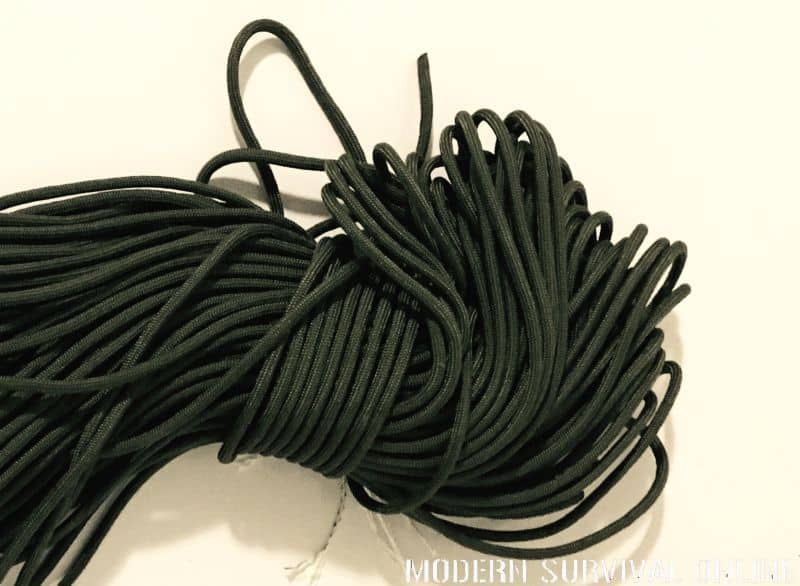
Paracord is one of those items that you’ll never see a prepper without. This incredibly versatile, super handy cordage is known for rot resistance, flexibility, and tremendous strength out of all proportion with its diameter.
Paracord is useful for just about everything: you can easily pitch a tent with it, hang a hammock, use it for construction and lashing, if you know what you’re doing and your conscious you can even use it for climbing. It’s definitely useful, and it’s definitely strong but do you know how strong paracord really is?
Genuine military spec paracord, Type-III, that adheres to the technical specification MIL-C-5040H and contains between seven and nine 3-fiber nylon strands surrounded by a 32-fiber nylon sheath is rated with a breaking strength of 550lbs. this is where the common nickname “550 cord” is derived from.
While nearly all varieties of commonly encountered paracord are of the 550 variety, you should know that the term paracord could describe one of several varieties of similar cord, with all being military cordage that is lightweight and strong for size.
While fairly rare in comparison to the classic 550 cord, all or now commercially available. In the sections below we’ll compare the strengths of the various types of paracord.
Varieties of Paracord
It is a common misconception among civilians that real paracord is only of the normal 550 variety that we all know and love. In reality, if you’re referring to paracord it could be one of the various types mentioned above.
Starting with the most common, Type-III “550” cord, we have we have a lightweight, kernmantle rope made entirely from nylon. Kernmantle is simply a term, rope verbiage, that means any rope that is sheathed.
In the case of our 550 cord taking her strands which furnished the real strength of the rope are the kern, and this kern is surrounded and protected by the woven exterior sheathe.
What is a paracord family there are several other types you might choose from.
From smallest to largest diameter we have:
Type-I, which will hold 95 lbs.
Type-IA which is a little stronger and holds right at 100 lbs.
Type-IIA, which holds a respectable 225 lbs.
Type-II, which is a big jump from its cousin and holds a whopping 400 lbs.,
Depending on your application and precisely what you expect from your paracord, any of the above may be found on the commercial market and could be better for a certain task than the old standby of 550 cord.
But with that being said you’ll find it awfully tough to beat 550 cord because it offers the best possible combination of availability, low-cost and capability.
Military Spec or Commercial Spec
If you buy genuine military spec 550 paracord, its strength is assured. The steadfast reliability is part of the appeal of paracord as a general preparedness item. But, you only get that strength if you get the genuine article!
There are many makes of commercial, or so-called civilian grade, paracord on the market. That’s not necessarily a bad thing, as many of them are quite good, or can even exceed the mil-spec cord and strength and capability.
But there are just as many brands of cord out there that are paracord in appearance alone.
Some paracord is typically purchased as a utility, or even a decorative item that legendary strength may not be important to you or even a requirement for your task. But if you need your cordage to hold up when the chips are down, you must make sure you’re getting the genuine article.
Note that some commercial cords are just as strong as original mil-spec cord but also have other handy features.
The so-called survival 550 cord has a few strands of the inner core removed and replaced with jute, useful for a fire starting, and wire which is useful for fishing or creating snares.
No matter what you’re looking for, it is up to you to determine the precise specification of the cord you have in front of you. Buy accordingly. Relying on or unknowingly buying inferior cord for applications that have life-threatening consequences for failure will be a tragedy.
If you have any doubt about your cord’s breaking strength, purchase new cord of known make from a reliable vendor.
Telling the Difference between Commercial and Mil-Spec 550 Paracord
Well, not 100% reliable with the proliferation imitation and quality commercial grade paracord there is a generally reliable way to determine the quality of the Paracord you have on hand.
Real-deal mil-spec paracord will be made 100% from nylon. The inner strands will number between 7 and 9. Each of these strands will themselves be made from three fibers of nylon. Not one. Not two. Not four. Three, no more, no less.
And while you may be forgiven for thinking that mil-spec paracord comes in any color you could possibly want, it does not. Green and tan are the two most common military paracord colors.
Military paracord is typically sold by the spool, and you can check the spool for the maker’s brand. One of the largest and certainly one of the best OEM mil-spec manufacturers a paracord is the E.L. Woods Braiding Company.
This venerable outfit has decades of experience in making all kinds of military cordage, and if you take the time to get some of their paracord you’ll know you’re getting the very best.
One more important note: while it is important to be sure you’re getting mil-spec cord for heavy-duty applications, you cannot simply trust the mil-spec label on any package of paracord. Many manufacturers of inferior cord slap mil-spec on products that are absolutely not.
The term mil-spec is in fact nothing more than marketing jargon. If you do not take the time to find out what kind of standard a given paracord is made to you could be in for a rude awakening.
I’m not saying that commercially made cords are not up to the task, or are inferior, but a great many of them are compared to the genuine article. Again, make sure you know what you’re getting before you buy!
Conclusion
Mil-spec Type-III paracord made to the standards of MIL-C-5040H is rated to a surprisingly high breaking strength of 550 lbs., this breaking strength going on to lend the strong little cord its nickname of “550” cord.
No matter what you are doing and what you might need cord for, there are few things more handy or up to the rigors than genuine 550 paracord!
For survival, camping, or just general utility use, make sure you stash a hank of the real stuff so you’ll have it close at hand when you need it.
Alabama is a state with easy-to-understand trespassing laws. There aren’t too many of them, they aren’t too long, they are generally logical, and make sense.
No matter what kind of trespassing is committed in the state, it only results in misdemeanor charges, assuming no other crimes were committed while trespassing or trespassing was done with the intent of committing another crime.
You can get a quick breakdown just below on everything you need to know, and read on for more thorough analysis.
What You Need to Know
Alabama trespass law covers buildings (including dwellings), vehicles and undeveloped or unused land.
Signage does not need to be posted against trespassing in Alabama so long as a verbal notice has been given. Otherwise it does for law to have effect excepting a residential building.
Fencing or other obstructions are never required for the law to have force.
All trespassing charges in Alabama are misdemeanors only.
General
In Alabama, a vehicle is considered a building as far as the trespass law is concerned.
The person doing the trespassing does not need to have any other unlawful intent to be considered trespassing, and even if you notify the owner of any given property that you don’t have any ill intent they can still have you trespassed.
This also includes empty, unused and otherwise unimproved land. It can be nothing but a patch of weeds or wild woods, and if you don’t belong on the property you can be trespassed if notice has been given against entry.
Posted Notice, Fences, Etc.
You can be trespassed for entering into any dwelling unlawfully in the state of Alabama, no notice, no signage and no fencing required.
If you were to enter upon or enter into any building or other piece of real property which is fenced, walled off or otherwise enclosed in such a way as to exclude intruders or limit access that is also trespassing.
This also applies to completely undeveloped or unused land so long as it is posted, fenced or walled off, or specific notice has been given to you by the owner, either verbally or in writing.
Entering in defiance of any of the aforementioned methods of notice will get you charged with trespassing.
But in the case of empty or unused land that is undeveloped, if you have not received prior notice and the land is not posted or fenced under the law, it is considered that you do have permission to be on the land.
It can be revoked at any time, obviously, if you are caught but you can walk right on in so long as you do not cross fencing or ignore a posted sign.
Charges
Violating any trespass statute in the State of Alabama will result in misdemeanor charges, which could see you put in jail for up to a year and fined.
Important Alabama State Statutes
Alabama does not have too many statutes covering trespassing. You can find the most important ones below.
The following definitions are applicable to this article:
(1) BUILDING. Any structure which may be entered and utilized by persons for business, public use, lodging or the storage of goods, and such term includes any vehicle, aircraft or watercraft used for the lodging of persons or carrying on business therein, and such term includes any railroad box car or other rail equipment or trailer or tractor trailer or combination thereof.
Where a building consists of two or more units separately occupied or secure, each shall be deemed both a separate building and a part of the main building.
(2) DWELLING. A building which is used or normally used by a person for sleeping, living or lodging therein.
(3) ENTER OR REMAIN UNLAWFULLY. A person “enters or remains unlawfully” in or upon premises when he is not licensed, invited or privileged to do so.
A person who, regardless of his intent, enters or remains in or upon premises which are at the time open to the public does so with license and privilege unless he defies a lawful order not to enter or remain, personally communicated to him by the owner of such premises or other authorized person.
A license or privilege to enter or remain in a building which is partly open to the public is not a license or privilege to enter or remain in that part of the building which is not open to the public.
A person who enters or remains upon unimproved and apparently unused land, which is neither fenced nor otherwise enclosed in a manner designed to exclude intruders, does so with license and privileges unless notice against trespass is personally communicated to him by the owner of such land or other authorized person, or unless such notice is given by posting in a conspicuous manner.
(4) POSTING IN A CONSPICUOUS MANNER. A sign or signs posted on the property, reasonably likely to come to the attention of intruders, indicating that entry is forbidden or the placement of identifying purple paint marks on trees or posts on the property, provided that the marks satisfy all of the following:
a. Are vertical lines of not less than eight inches in length and not less than one inch in width.
b. Are placed so that the bottom of the mark is not less than three feet from the ground or more than five feet from the ground.
c. Are placed at locations that are readily visible to any person approaching the property and are no more than 100 feet apart on forest land or 1,000 feet apart on land other than forest land.
(5) PREMISES. Such term includes any “building,” as herein defined, and any real property.
Article 1 – Burglary and Criminal Trespass. Section 13A-7-2 – Criminal trespass in the first degree.
Criminal trespass in the first degree.
(a) A person is guilty of criminal trespass in the first degree if he knowingly enters or remains unlawfully in a dwelling.
(b) Criminal trespass in the first degree is a Class A misdemeanor.
Article 1 – Burglary and Criminal Trespass. Section 13A-7-3 – Criminal trespass in the second degree.
Criminal trespass in the second degree.
(a) A person is guilty of criminal trespass in the second degree if he knowingly enters or remains unlawfully in a building or upon real property which is fenced or enclosed in a manner designed to exclude intruders.
(b) Criminal trespass in the second degree is a Class C misdemeanor.
Article 1 – Burglary and Criminal Trespass. Section 13A-7-4 – Criminal trespass in the third degree.
Criminal trespass in the third degree.
(a) A person is guilty of criminal trespass in the third degree when he knowingly enters or remains unlawfully in or upon premises.
(b) Criminal trespass in the third degree is a violation.
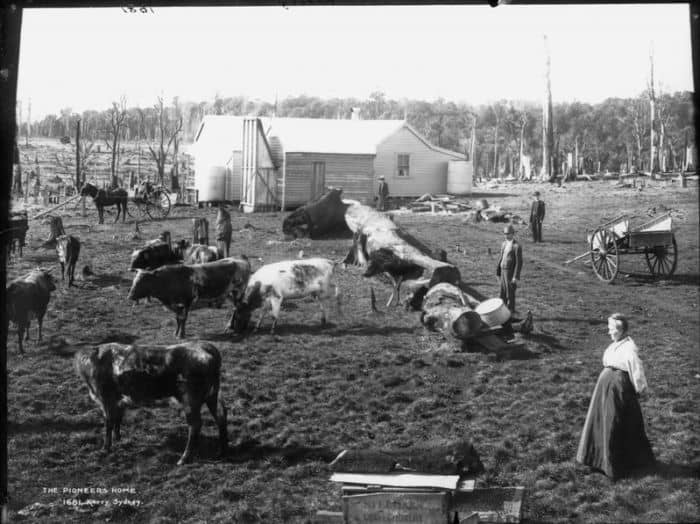
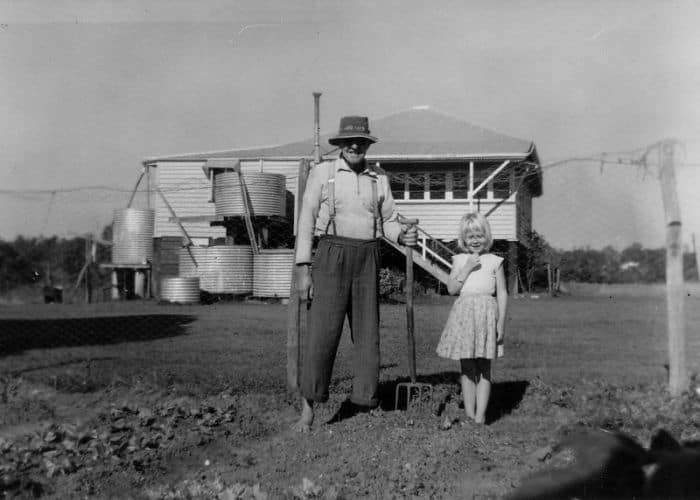
The term “pioneer” evokes a gritty, somewhat romantic image; the first people in a new land or frontier to start carving out civilization from the wild and sometimes hostile bounty of nature all around them.
In every culture around the world it is the pioneers who command a certain respect and not a little bit of awe.
They are taking a big risk heading off into the unknown to expand the borders of their nation or empire. Throughout it all, they will have only themselves and their skills, along with possibly a few of their fellows as neighbors, to rely on.
Do you ever stop to consider how much you get done or achieve in your own life that is partially or even mostly dependent upon the goods, services and infrastructure made possible by the work of other people? Or indeed made possible by the legions of our forebears that came before us?
This is not to say you don’t work hard to accomplish your goals, but we all benefit everyday from the foundations of society that were laid down ahead of us. We can thank the pioneers of old for that!
As preppers, we can be far better prepared for the unexpected, including society toppling events, by taking inspiration from our pioneer ancestors and indeed swiping a couple of pages out of their playbook.
They, by necessity, had to practice a radical form of self-reliance: there was no calling in the experts for them; they were the experts! In today’s article I will be offering up 10 pioneer skills that are worthy of learning by modern-day preppers.
Do It Yourself or Do Without It
The pioneers of ages past lived lives of intense toil in which their continued existence was anything but guaranteed.
These are people that had to show up to raw, untouched places in the wilderness of a brand new frontier or even a brand land and do everything from scratch with what few tools and materials they brought with them, which were always limited.
They had to create shelter, learn the lay of the immediate area and the surrounding region, discover and then identify which plants and animals were helpful, and which ones were harmful, learn to hunt wild game that was good for eating, prepare the land for planting and so, so much more.
To say these people had grit is possibly the understatement of the century! If they needed something done it was up to them to figure out how to do it if they or someone in their party or burgeoning settlement didn’t possess the required skills or know-how.
Information and expertise were precious, precious things and we all benefit to this very day from the lessons they learned, bought-and-paid-for, in sweat, blood and tears.
But the result of all the toil and struggle was a people and later citizens who were profoundly self-reliant in all things. This is perhaps the most important lesson we can learn as preppers; extreme self-reliance should be an everyday value, not some pie-in-the-sky achievement that we will one day attain.
We don’t need to go back in time and live their experience to benefit from this wisdom. Instead we can adapt it for our own time and our own struggles.
In the sections below, I will share with you 10 pioneer skills lost to time our ancestors were intimately acquainted with. Ones that we should adopt again to improve our own self-sufficiency!
10 Lost Pioneer Skills
1) Shelter Construction
Many preppers today are acquainted with the importance of shelter in an outdoor survival situation, as it is one of the most crucial tasks when it comes to staving off death from exposure.
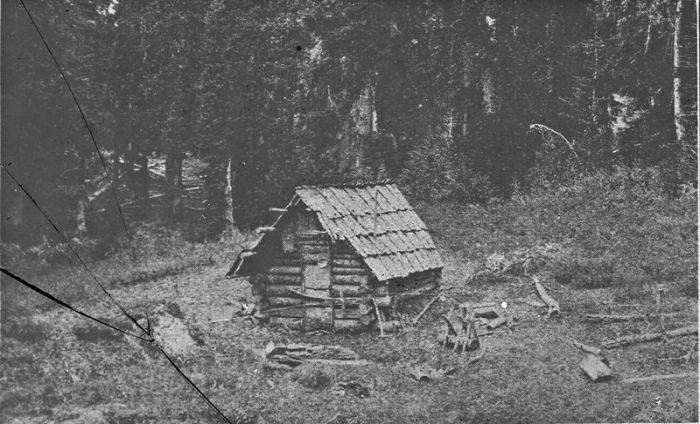
That being said, the pioneers of yesteryear would run circles around us; where your average prepper can probably slap together a primitive shelter like a lean-to or erect a tent, your average pioneer was at least skilled enough to build a small house or cabin for himself and his family.
Building even a small cabin sounds like a pretty intimidating undertaking foremost preppers today!
Correctly siting the structure, ensuring the foundation is sound, harvesting and preparing the timber, laying on the roof and then building the chimney and fireplace from locally-sourced stone. That requires a variety of real skills!
But these are skills you should endeavor to learn, even if you are never more than a journeyman.
It is far from out of the question that a SHTF event could be severe enough on a regional, national or even global level that it is literally society-toppling in scope and scale. That means you might be rebuilding society the old-fashioned way- house by house!
It might require a tremendous investment in terms of energy and material, but for serious long-term survival you will want a proper dwelling to survive in for the long haul, not some shabby lean-to or tent.
2) Land Navigation
Land navigation is seeing a renaissance among modern preppers and that is great news, but it is still not nearly the ubiquitous skill that it used to be. We should all strive to correct that!
Pioneers that were moving into any new and unexplored territory oftentimes only had the vaguest idea of where they were heading based on word-of-mouth directions from people who have been ahead of them, scouts, or primitive and oftentimes hideously inaccurate maps.
The smart ones depended upon their own observation and their own instrumentation to ensure they did not get lost. You had better believe that any pioneers worth the name who were moving into deep wilderness had with them a compass, and knew how to keep a pace count while moving from place to place.
This was the only way they had of determining which way they were heading and how far they had travelled. Together, and sometimes with a map if it was dependable, these elements would help them more or less accurately ascertain their position, and whether or not they had made a wrong turn, or just overshot the mark.
We have it easy today with the proliferation of GPS devices in our phones and as standalone tools, and while these things are wondrously accurate and absolutely worth having, we probably will not be able to depend on them forever in a particularly bad SHTF scenario.
What we can depend on (if we take the time to learn how) are our analog navigation tools, namely maps and compasses. We are especially lucky today that our modern maps are extraordinarily accurate, affordable and available almost anywhere.
You will be both lucky and wise if you obtain these maps for your area and the surrounding region well ahead of time, and make them part of your survival stash. But then the real work will begin: you need to learn how to use both together in order to accurately plot your course across the wilderness!
3) Knowledge of Plants and Animals
For the old-time pioneers, intricate knowledge of the flora and fauna in their region wasn’t just a hobby, and wasn’t relegated to a just-in-case skill; wild plants provided medicine, food and material.
The local animals were much the same. If they wanted to make use of these materials, they needed to know where to go to locate them and how best to harvest them. This required committing to memory a fair bit of nature lore.
Also just as important was a thorough knowledge of the plants and animals that can hurt them, or even kill them. I have often stopped to wonder how many unlucky pioneers blundered through nettles, poison ivy, poison oak or poison sumac before it was well and truly understood that these were plants you wanted to give a wide berth at all times.
I have also sometimes pondered what unfortunate soul first picked and ate a poison mushroom after confusing it with a similar look-alike. You can wonder much the same about a variety of dangerous or at least annoying animals and insects!
You can learn from the pioneer example by becoming intimately familiar with a variety of helpful and harmful plant and animal species in your region and even beyond, throughout your home country.
Your medicine might run out and your food supply could be all gone or spoiled, but you can replenish both with an intricate knowledge of the plants and animals that are good to eat and where you can find them or how you can catch them.
This takes a significant amount of study and a sharp eye for detail, but doing so will allow you to replenish your stocks from nature’s bountiful pantry.
4) Repair Skills
This is another skill that any pioneer worth the name would be at least competent at, and for a whole host of things. If something wore out or broke down that was needed, they had to be able to fix it if they wanted to make use of it.
If this was an essential item, the success of their expedition and their efforts would literally hang in the balance. This is one of those things that will suffer no excuse when the chips are really down.
Of course it is an easy thing to say “be skilled at repairing things” and another thing entirely to actually be good at it. If you stop to consider how many varied items that a pioneer might have to take care of all by themselves, it turns into quite an impressive feat that they were as independent and self-sustaining as they were.
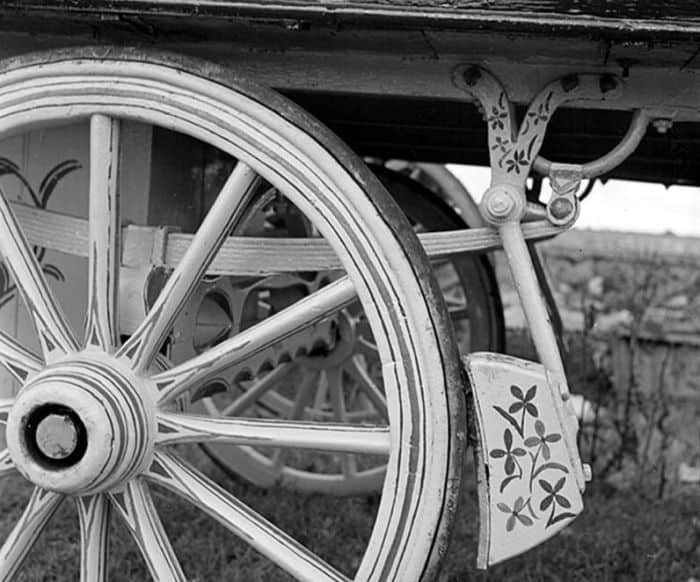
In the course of a single day a pioneer might have to mend a hole in his clothing, repair a broken leather strap, reattach and true the wheel on a wagon, fix a leaky roof, and replace rusty or broken nails holding some contraption or structure together.
In order to do this he would have to know how to make primitive glue, sew, perform carpentry and blacksmithing, roofing, and more.
Of course there was no “standard of capability” in some pioneer handbook, and not every pioneer was equal in depth or breadth of their skill, but all of them would be expected to be generally capable of tending to their own tools and their own problems.
We should absolutely strive to do the same. You should be able to diagnose and repair problems with your dwelling, your vehicle, your firearms and even your BOB and your clothing.
And for any of you guys out here who would shirk at the idea of doing a little sewing, you can drop that right now; there is nothing girly about repairing your things when they need fixing, and a busted strap on your BOB could spell disaster when you can least afford it!
5) Trapping
Many pioneers made trapping their primary endeavor. This served important economic as well as provisional purposes for themselves, their families and their neighbors.
Hunting skills are of course excellent and can definitely put meat on the table, but the big shortcoming with hunting is that you can only be hunting in one place at one time.
Trapping, despite the modern connotations, is a highly efficient form of harvesting animals because traps work round-the-clock whether you are there to babysit them or not, requiring only periodic checking to see if they have nabbed any quarry or require resetting in case of a miss or failure.
A skilled trapper can set up a field of traps in various environments in an effort to bag a variety of animals. Trapping, on the whole, is a skill unto itself and a person could spend a significant fraction of their life mastering it.
Trapping successfully on a large scale requires intricate knowledge of the game you are after, what traps work best and in what environment and a sense of strategy, since you will be placing traps to catch animals interacting with their environment in different ways in different seasons.
The great thing about trapping is that you can fashion a variety of traps from various natural materials as well as discarded man-made detritus and expect both to work to excellent effect so long as your construction and your placement is good.
With little more than a knife and some quality cordage you can rig a variety of lethal or non-lethal traps just like your ancestor pioneers did.
This is definitely a skill you will want to add to your repertoire, especially if you are planning on surviving on your own or in a small group where manpower will be at a premium. A hunter may sleep, but a trap set never tires!
6) Tanning and Fur Harvesting
This may come as a surprise to some of you but back in the day a pioneer could not simply run down to the local department store or shopping mall and pick up a bunch of new clothes.
Particularly egregious, if you ask me, was the lack of Bass Pro Shops. What were you supposed to do when boots, waders and other cold or nasty weather gear was required?!
All joking aside, pioneers instead made use of what they had to the best effect possible. As it turns out, what the pioneers had at their disposal for clothing and other goods was the skins and furs of the animals they caught.
But this was enough most of the time. With more time, labor and the right materials skin could be converted into sturdy leather, useful for all kinds of things, and as you know it is a material we still use in abundance today. Even more valuable in cold climates was the fur of animals equipped with a warm coat.
Rabbits, foxes, bears and other animals could furnish a skilled hunter or trapper with a pelt that could then be converted into insulating outerwear of all kinds. Animal pelts and leather were also valuable trade commodities that could purchase a pioneer anything he could not craft or obtain for himself.
If you are thinking about long-term survival in an austere environment after the world goes pear-shaped, but you are only planning on harvesting animals for their meat and nothing else, you are planning to throw away extremely valuable materials in the form of the animal’s skin and pelt.
But these materials will do no good if you don’t know how to correctly harvest them, preserve them and use them in a meaningful way.
This is something you should absolutely undertake as a prepper. It is oftentimes gross and smelly work, but the result of your labors will be material that is priceless for crafting warm clothing and durable soft goods. With a little time and effort, you will look like a veritable pioneer yourself!
7) Butchery
Before you become too certain that you’ll be eating complete meals of high quality meat procured from the wild game you’re going to shoot or catch, ask yourself if you know what you’re going to do with it once you catch it.
Specifically, do you know how to best process the carcass of the animal in order to make the best use of the meat? This is important not just for preparation at dinner time, but also for preservation, which we will get to in a minute.
You had best believe that the pioneers of old did, and had to be uniformly excellent at it. Shoddy or amateur butchery could see valuable meat wasted, or at worst even ruin the meat that you worked so hard to get.
This is a sustainment skill like any other that a typical pioneer would rely on. It was not enough to have a camp butcher, although most camps and settlements did. If a pioneer was alone or out working as part of a duo in remote country, they would need to be reasonably skilled at preparing meat that was caught for eating.
You will be under the same auspices whenever you are living off the grid in a bug-out situation. Most animals cannot be roasted whole (like fish can) and will require varying degrees of preparation both for health reasons and for efficiency.
Correctly prepared meat cooks more evenly and tastes better than meat that is haphazardly hacked off the carcass. This is another instance of hard, gross and often smelly work, but it is work that must be done if you want to prosper in the wild! Of course, vegetarians need not apply…
8) Food Preservation
For pioneers, any kind of waste that could be avoided was anathema, and this edict was doubly true for any provision as essential as food. Pioneers knew how to preserve all kinds of food in order to maximize their return on investment when it came to their efforts.
Vegetables, fruits and meat were all preserved when possible in order to pad the pantry for the long winter or time of lack that would inevitably come.
The pioneers from long ago did this using all kinds of ingenious methods that are still viable today, including salting, pickling and smoking.
This was an especially popular approach with meat, since the harvest of a large game animal could produce a quantity of meat that even a couple of families cannot hope to eat before it spoiled.
Preservation was the only way to keep them viable for any amount of time after a kill. It was also done to ensure rations were available for long journeys into unknown territory.
Pemmican, jerky, dried berries and more were all popular trail food and produced by some of the most common methods of preservation available to pioneers.
We do plenty of our own food preservation today, including such ubiquitous methods as canning, but our preservation is typically made possible by modern technology, and the conveniences built-in to our modern kitchens.
That is all well and good, so long as you know how to put them to use in order to prolong and preserve your food supplies to keep them fresh.
But even so, you will not have those “luxury” appliances after the end, and for that reason it is a good idea to keep one or two primitive methods of preservation under your hat!
9) Animal Husbandry
Humans have raised animals on farms for millennia, and pioneers who had the skills and the breeding stock to start with certainly did for the benefit of everyone.
Farm animals can be raised for all kinds of products: chickens for their eggs and meat, cows for meat and milk, pigs for delicious pork of course, and goats for meat as well as milk, though this is less popular today.
Other animals can be raised for their wool or hair, another source of comparatively rare fiber for the pioneer.
Raising and taking care of animals is an awful lot of work, and requires many specialized skill sets along with a fair bit of room, unless someone only wants to raise a handful of chickens or goats. But the results are so often times worth it, and serve as one of the best hedges against starvation that anyone could hope for!
But aside from the occasional backyard chicken coop, people who did not grow up on a working animal farm often have no idea whatsoever what is required in the raising and care of animals.
The pioneers did, and those skills were often passed on through the generations of a given family, father to son, on and on down the years.
It might not be a skill you have considered before, since most animals are not particularly portable and if you are planning on bugging out your animals will likely not be going with you, but none the less you should learn the basics of animal husbandry.
There are farm animals all over the world, it is not impossible to domesticate certain species of wild animal and breed them in captivity.
These are skills that are worth passing on, and more importantly, are an essential part of any self-reliance plan for preppers. Take the time to get at least a basic education in animal husbandry; you might yet be glad you did.
10) Gardening and Cropping
Gardening and the planting of crops on a larger scale are not lost skills in the greater sense of things, but unless someone is a serious enthusiast or a professional farmer they are highly unlikely to understand the mysteries and the intricacies of planting to ensure a bountiful harvest.
I can promise you pioneers did, even if they were not farmers by trade. This was just one more way to ensure they had the materials and the food they needed if they could not trade for it, gather, or otherwise get their hands on it.
Most folks are not green thumbs, and that is not a surprise. Pretty much everyone knows that you can stick a seed in the ground, cover it with dirt, water it and have a reasonable expectation of seeing some green sprout in a matter of days or weeks.
But that is where most folks’ working knowledge of gardening or cropping ends. There’s so much more to it than that, including such arcane subjects as soil composition and health, crop rotation, seasonal planting, pest prevention and deterrence, and much more.
This is yet one more permaculture skill that any serious, long-term survivor should endeavor to learn even if it is not their primary method of producing food and other resources.
Much like trapping, the planting of crops, even if it is just a small garden, will produce returns out of all proportion with the effort that went into it up front, and once your plans are established all they require is periodic upkeep and regular watering. They will take care of themselves from then on, until it is time to harvest them!
Conclusion
Like so many other lessons, history provides us with many examples of ingenuity, skill and tenacity that we can learn from in order to improve our own performance today.
The pioneers of eras gone by can furnish us many such lessons in self-sufficiency, and the skills that they typically possessed can serve as a useful template for our own prepping.
Review this list of lost pioneer skills above and see if some or all of them do not warrant inclusion in your SHTF survival plan!
Software defined radio or SDR has changed the radio landscape forever. But to use one you need to buy some kind of hardware right? Maybe not. As [Tech Minds] shows in a recent video there are plenty of SDRs publically available on the Internet. We know that isn’t news, but the video does cover several different methods of finding and using SDR receivers including many that run totally in the browser.
Of course, there are a lot of reasons you might want to borrow an alien radio receiver, even if you have your own hardware. Maybe you don’t have a great antenna or maybe you want to hear a signal — maybe even your own — from a different location.
Some of these methods even have the ability to pipe audio data out to another program if you want to do some sort of decoding or processing. The SPY network uses the SDR# software, so you will have to install something for that. On the other hand, the program doesn’t really treat local hardware and remote any differently, so you can do lots of different things. But many of the programs will work inside a normal browser. SDR Console also needs some software, as well.
WebSDR works totally in the browser. KiwiSDR uses the very cool OpenWebRX interface and apparently it decodes radio signals on the server side, making it easy to listen to different signals in the browser.
With everyone having a bit more free time at home lately, this is a great way to take up listening to the radio with zero extra investment. Of course, if you have the inclination and the antennas, you can get a cheap dongle, although you’ll need an HF converter to listen to the shortwave bands. Or you can hack a QCX transceiver.