Saturday, April 18, 2020

An FPGA And A Few Components Can Make A Radio

There was a time when making a radio receiver involved significant work, much winding of coils, and tricky alignment of circuitry. The advent of Software Defined Radio (SDR) has moved a lot of this into the domain of software, but there is of course another field in which a radio can be created via code. [Alberto Garlassi] has created a radio receiver for the AM and HF bands with a Lattice MachXO2 FPGA and minimal external components.

He describes it as an SDR, which given that it’s created from Verilog, is a term that could be applied to it. But instead of using an SDR topology of ADC and digital signal processing, it implements a surprisingly traditional direct conversion receiver.

It has a quadrature AM demodulator which has a passing similarity to an SDR with I and Q phased signals, but that’s where the similarity ends. Frequency selection is via an oscillator controlled from a serial port, and there is even a PWM amplifier on board that can drive a speaker. The result can be seen in the video below, and as you can hear the direct conversion with quadrature demodulator approach makes for a very effective AM receiver.

If this is a little much but you still fancy a radio with minimal components, you should have a look at the Silicon Labs range of receiver chips.


via Radio Hacks – Hackaday https://ift.tt/3bkla5B

Seeing the Future by Looking Into Our Past

It’s times like these that people worry about the future. What will happen? When will this end? When can we come out, when will things ease up, when will things get better? What will things be like on the other side?

It is a quirk of humanity that we always think we are the ones living in singular times. It is all too easy to forget the wisdom that tells us “there is nothing new under the sun”.

How very right that is. This is not to say that circumstances or a confluence of events is not unique in its composition, timing, speed or severity, but no matter what kind of perceived paradigm shift you think you are facing you can rest assured and indeed take a little comfort from the fact that it has all happened before in another time, in another place.

But it happened, and it happened to people who wondered the exact same thing that you wonder now. Ultimately, in the grand scheme of things, life went on as it always has.

Nothing is over, and I mean “Over” with a capital ‘O’, until it is. Life comes to an end for an awful lot of people every single day resulting from all kinds of events, accidents, choices and omission of choice.

The point of all this is to reassure you that whatever might happen, life will go on for your successors and survivors, but just as importantly you can ensure that your life goes on through whatever you’re facing if only you will take the time to read the instructions that the past, our shared history, has left for us.

Learn From People and Events Who Came Before

Any prepper should take the time to learn from the people that came before us.

From our parents, from our grandparents, from our great-grandparents, our forefathers and all the great men and women throughout history whose toil, whose blood, sweat and tears brought us to where we are.

Their sacrifices gave us the accumulated store of knowledge that provides us such a huge head start on life while we hurtle through space on this big blue marble.

It is absolutely possible to glean life-saving wisdom from their struggles, trials and tribulations. Answers, or at least parts of them, can be found if we care to study in detail the events that surrounded their lives and how they navigated, or failed to navigate them.

I know this isn’t anything new to many of you. You have probably spent countless hours studying the books of the great survival instructors, Outdoorsmen, explorers, soldiers, sailors and statesmen. Good on you. But if that doesn’t sound like you, ask yourself “why not?”

Do you really think that what you were experiencing, going through or worried about has never happened before, anywhere on earth, in the sum total of human history and experience?

Is the problem you are staring down the barrel of completely unique, or has merely the technology, culture and trappings of the society experiencing it different?

Singular Times. Or Are They?

It is funny how fast things can change. Or rather it would be funny if it wasn’t so shocking and so frightening for so many people.

One minute you are moseying along through your weekly and monthly routine, getting up early, brushing your teeth to get ready for work, plodding through the work day, and then coming home to take care of a few chores, reset and re-cock for the next day before doing it all again. Then all of a sudden, things are different.

Not just a little different. Way different. Everybody needs to go home and stay there. Really stay there. Leave only for essential tasks, and if you aren’t essential then you aren’t working.

Damn the torpedoes, it is for your own good and the good of all! This drags on for some time. Days turn into weeks. Gun shops and grocery stores emptied. Weeks turn into a month.

Unemployment skyrockets, serious and dolorous questions about the economy and the future grow louder. With no end in sight people start to question. Some of them question pretty hard. Protests start.

Typical political lines of division have been forgotten. Now our politicians attack each other on a new front: who screwed things up the worst and the earliest in handling the crisis.

Progressives and conservatives no longer fight over typical cultural battlefields, instead drawing party lines based on who doesn’t follow instructions on remaining in place and being socially distant, dooming the obedient to die, or who is following the party mandate hook, line and sinker like a good little sheep prancing merrily into the slaughterhouse and obliteration.

Even a cursory glance at the news on the television or on the internet shows the situation is pretty much the same all over the entire world. The whole world is going through what you’re going through!

An invisible and silent killer stalks the cities of mankind, slaying at random. They say it is really bad, certainly the worst pandemic of our time. But is it really?

Some people don’t think so, some people think it is all a grand scheme or scam, or completely overblown if it is natural at all.

No matter how you might feel about the prevalent pathogenic threat in this not-so-theoretical scenario, the fear one might feel, the uncertainty, the gut-wrenching knowing that the times are a-changing has a profound and oftentimes deleterious effect on one’s mental state. It can feel overwhelming.

Only the insane or the sociopathic would not worry for themselves, their loved ones, their communities and their countries.

It is easy to get taken with the idea that this great thing we are all going through is really it; it is really the end of all things.

Just one flaw in that theory: This is not where it ends. You should stop worrying and learn to lean into these paradigm shifts. They have always happened and will happen again, probably once or twice more in your lifetime.

As a prepper, you need to ask yourself if it is really in your best interest to allow yourself to think that there is anything the world has not already faced before.

The More Things Change, the More They Stay the Same

It is true that things can change so much that the wisdom that was valid however long ago is completely irrelevant or even harmful today. But an awful, awful lot of things still apply!

Especially concerning the principles of survival and of the rhythm, or trajectory, of human civilizations and cultures is as fresh and relevant and inseparable from our natures today as it was tens, hundreds or even thousands of years ago.

In the sections below you’ll find just a few examples of what I am talking about. Use this information to inform your own assessments of situations today as well as your own planning.

Also, it is my sincere hope you take comfort from what our forbearers and our ancestors had to go through; if they did it, we surely can, too.

Political Conflict and Division

The prevailing opinion about the political division and conflict we are facing in our era seems to be that it is the worst it has ever been, the most vicious, the cruelest, the nastiest.

The president isn’t acting presidential, candidate X, Y, or Z would have been better and statelier!

My party is trying to get things done, your party is holding things up! No, your party is the party that’s the problem, mine are the good guys trying to fix things! As if we truly have different parties in America anymore; we have one party that wears two different jerseys…

It is easy to believe that in some far away version of America, and this probably holds true for most countries in the rest of the world, it was a sort of real-life Leave It to Beaver universe where everyone, politicians included, always play by the rules, had good manners and spoke the truth.

Well, I have bitter news for you, friends, if you believe that: Our country was never, ever that wholesome and clean-cut when it came to politics, and neither were the constituents to their respective parties.

It has always been a battle of conservatism versus progressivism, of one ideology against another. One religion against another, or this one, or that one. This region against this one.

Wars were fought over less. Wars are fought still. People are tribal. We care about who is in and who is out, persecute according to how bitter the enmity, and how certain the chances are we will attract the sledgehammer of federal force.

Every, single era in American politics, every presidency, is marked by a certain amount of scandal, strife and standard issue, cloak-and-dagger political “wet work”. Politics is an ugly business.

It will never fail to attract a disproportionately ugly type of people who want power at all costs, even if it is only power over their fellow man.

Usually, this ends with nothing more harmful than higher taxes, the rich getting ever richer and steadily creeping inflation along with a sense that things just aren’t right.

Periodically the people at or near the bottom, now so far from the elites and kingmakers in their ivory towers that they cannot even see the glint of the spires, decide enough is enough and revolution erupts in a paroxysm of bloodshed before the cycle starts anew with fresh, truer promises paid for in blood.

A promise is nothing but a debt unpaid.

Every once in a blue moon, you might get a real gunslinger, a true believer who wants to make a difference in office, but chances are they will be drummed out of the business on their head if they are not corrupted first.

Any politicians who talked a big game about helping the common man either fail or are lying; such has been the refrain of the common people for millennia.

Ultimately, there are two kinds of people in the world- big people and little people. Chances are you are a little person, just like I am, and that means there will be no bailouts, no one coming to save you, no golden parachutes.

It is just you, your wits and whatever you can scratch or build out of the bosom of the earth and society. All you will ever truly have is yourself and the people inside your circle of trust.

Act accordingly. The decline of empire is a scary thing to consider, but people all over the world have been surviving it for ages and if you roll poorly on the great craps table of civilization you might have to weather it.

Diseases, Pathogens and Pestilence

It would appear that we have become so hopelessly inured by our prosperity, including our incredible medical technology which has made diseases that plagued mankind for decades or even centuries little more than trivialities, that we have as a First World society completely forgotten what it is like to face the fabulous and terrible unknown threat of disease.

At the first sign that a particular viral outbreak was even slightly more lethal than seasonal flu and other diseases that we somehow can’t quite seem to get rid of, virtually the entire world went into lockdown.

But far worse than any microscopic pathogen is the germ of panic. A virus, a real one, can hardly be said to live at all. It is a packet of protein or fat containing a bundle of genetic material that will hijack our cells into reproducing in its image.

The germ of panic is a phantom that travels at the speed of darkness and infests every thought and action, corroding reason as the walls close in, and the shadows whisper of conspiracy.

In a nonstop assault lasting for weeks on all major media outlets we have been told in breathless, shivering detail about how the golden years are over and that things going forward, no matter how bad the current outbreak gets, will be different.

Things will just never be the same. We will never get back to normal. This new virus, so very different from the ones that came before in all their countless multitude, is different.

What a load of crap.

Tell that to anyone who was alive at the time the Spanish Flu ravaged the entirety of the globe, and when I say ravaged I mean tens upon tens of millions of people killed, including with shocking regularity the young and healthy in the prime of their lives.

Recall if you will that the particularly deadly pathogen was gently eradicating Humanity during one of the largest conflicts of the 20th century, World War I.

Even well before that there were other famous epidemics and pandemics that did their best to scour the landscape of human life.

One of the most infamous and certainly one of the nastiest was the bubonic plague, colloquially and grimly known as the Black Death.

This bacterial menace killed an estimated 200 million people across much of Europe and Asia during its reign in years 1346 to 1353.

It took a long time, and the cultural scars of that event did not heal for decades, if a century, but we adapted.

Through trial, error and- Eureka! – innovation we developed countermeasures. Or, even though we died in droves, we simply grew tougher; if not immune then resistant.

In the end, humanity adapted in one way or another and we went on as individuals and as a species.

We will do the same with this current and “novel” virus, and after it is all but a memory and reduced to a punchline in a stand-up comedian’s joke, some new and dawning viral or bacterial terror will be, through accident, deliberate malfeasance or just a twist of fate, unleashed on humanity to repeat the cycle again.

This is nothing new. Where you have an advantage that your ancestors perhaps did not, is for all the ways that we don’t know germs can kill us, we do generally know how they infect us, and you can use this knowledge to keep yourself and your family safe, or at least safer.

Life will and indeed must go on.

War and the Shadow of War

If you listen to the news today, we are always on the brink of war. Wars, or what pass for wars today, are more like up-gunned police actions with all the trappings and set dressings of war.

The last, great slam-bang, roll-the-tanks war for the U.S. was in Korea. Of course, war is not defined by its tools, is it?

Is war something you make, or something you do? The fact is that the face of War has changed, once again.

We are entering an era of warfare that experts are dubbing 4th generation warfare.

It is warfare marked not by formations of troops supported by tanks and bombers on a set field of battle, but it is instead war 24/7, everywhere and anywhere, on demand.

It is not war that takes place around civilians, it is war that takes place within civilian populations and carried out by civilians who have bones to pick with government powers.

It is war of information, tiny strikes aimed at high-value targets with the objective of shifting perception and placing the blame on someone else. It is now war on a microscopic level for the most part, but war all the same.

It almost seems quaint that a formation of tanks manned by crews would roll out to a field in order to shoot at another formation of tanks with the objective of breaking the enemy’s war-making capability before they broke ours, and nothing more.

The agreed-upon Rules of War today, that are increasingly falling out of use and relevance, prevent standing military powers from deploying their full might against civilian populations.

If one is to stop and think about it, that is exactly what you should do if you want to get a war over with quickly and with a minimum of fuss.

You must break the backs of your foe in the most intimate way possible, ruining them utterly, body and spirit, so that the survivors will only whisper about what happened and shiver for hundreds of years.

In the past, war was more or less done for precisely that reason. If you went to war, you meant it.

You wanted to wipe out your enemies, with capturing them and integrating the useful, pliable and compliant survivors into your society only a possibility in certain cultures at certain times.

War was fought over many things, but always, ultimately, about resources: land, commodities, food, water, or the fear that your foes would taint them or take them from you.

Sometimes, wars were fought because people were afraid their neighbors would do the same to them first.

Unfortunately, it looks like 4th generation warfare is it least keen to that idea. Terror attacks bring entire countries to their knees, at least temporarily; a level of effectiveness that is geometrically out of proportion with the men and material involved.

Using the modern vernacular terrorism, and the terrorists who perpetrate it, are the new front line: “single cell” fighters that are the best equipped for perpetrating this type of warfare. Think terrorism is a 20th and 21st century conceit? Think again.

Terror tactics have been employed throughout human history, with the basic notion (though not the modern definition) that you could terrify or horrify your enemy enough that he would give up or leave you alone, or barring that that he would be so shaken he could not fight back effectively.

Today, our nation’s modern militaries are ill-equipped for fighting and persecuting the type of warfare that will become the new standard way of doing business. But it has ever been this way, an arms race of men, materiel and tactics.

The plate mail that stayed an enemy’s swords and arrows was little more than a shiny target for a musket.

Today, the battlefield is all around you, and if you are in the wrong place at the wrong time, you may see yourself involved in the war whether you want to be or not.

Economic Plight

Undoubtedly there is no nation on earth more out of touch, at large, with serious poverty and economic woes than the United States of America.

We live in a nation where poverty, the actual poverty level, still includes an air-conditioned and heated home, a motor vehicle, flat-screen TV and smartphone.

If that does not tell you something about being a victim of our own success, then I don’t know what will. Only in America could what is described as abject poverty be a standard of living that is utter luxury in so many other places spanning the globe.

But, economies too are cyclical, as is prosperity. They rise and peak only to fall again and sometimes they fall pretty far and pretty hard. That turns into a rollercoaster ride that some people just cannot cotton too, and they take their own life.

Chances are that our grandparents, for some of you, or our great grandparents, for the rest of us, would have laughed off our fears and concerns about the economy in our modern era, so high is the lofty summit we have attained.

Those older folks came through the Great Depression, an era of unparalleled lack. Before the Great Depression (and after in some smaller, localized areas,) there existed a level of economic desperation that is nothing short of soul crushing in some places.

Places where people today still kill each other over decent shoes. Places where people eat dirt or the bark off of trees for something, anything to fill their bellies and stave off death.

Places where families may be split up, with parents heading off in the desperate, mad hope they can procure food, or work, anything to send resources back to their family and keep them alive. Places where your next meal might come from a garbage can, if you are lucky.

But the internal and unseen cogs and mechanisms that drive markets, the laws of economics that are so interwoven and so inviolable are incredibly complex, and even the best minds in that sector of study do well to get a handle on some of the variables.

What you should take away from this revelation is this: as prosperous as we are, as prosperous as the rest of the world is happily becoming (even if some are slower than others) there will always be rough air ahead.

You will never be able to predict when an intersection of events will crash an economy.

When a major terrorist attack, natural cataclysm, or domino-effect failure from the rest of the world stock markets will have a terrible effect on the economy in your country.

Are you ready for it? Are you still holding out for that 25-year pension, gold watch and send-off retirement cake? I hope not. It is a pipe dream.

You have to have a plan for sorting out your own financial health, the entire way around.

While the world of work, investing and retirement is so different from your great-grandparents’ it might as well be in a different solar system, the old timers did know one thing…

When times get tough, cash is king, and cashy money is not necessarily the fiat currency that most major economies employ. Things like precious metals will get you favors and goods where all other methods fail.

And if things get really bad, and I do mean really, really nightmarishly bad, remind yourself that you cannot eat gold or silver.

The ability to provide shelter, supper and security for you and yours is the only thing that will make a difference in the most personal of economies, your family economy.

Survival is Survival in any Era

For all of our wondrous achievements, for however far we have come as a country, as a people and as a species, the fundamentals of survival have not changed over the years. Nope. Not one single iota.

Each and every single one of us can live without the internet. We can live without electricity.

We can certainly live without a car, a smartphone, the latest video game system, workout machine or any other artifact of modern technology.

There are just a few things, elemental things, that you cannot live without.

From the beginning of time to this very day, every single one of us needs to clean air to breathe. Without air, we die in minutes.

All of us must have shelter in order to regulate our core body temperature. A few degrees too high or too low, and we can die in as little as hours.

Each of us must have water, for without it there is no life, and we dehydrate, die and desiccate.

All of us must have food, calories, that are the fuel to drive our bodily processes and sustain life. Without enough calorie intake we will surely die, but slowly and agonizingly over weeks or even months.

Lastly, we must have a certain amount of security, from both man and beast, for the world at large is full of dangers, and if history has shown us anything it is that nature does not reward trust.

One thing you might notice looking back in history, is that the farther back you go (even in our modern era, as near gone as the early 20th century), day-to-day life saw average people much closer to the providing of those survival necessities themselves, you might say.

People grew a lot more of their own food. Ensuring that a well was both productive and safe to drink was a perennial concern.

Building community with your neighbors and your neighbors across the way was serious business, because there was no cavalry coming outside of your family and your neighbors if you got in a jam.

An awful lot of people built their own homes, either from scratch or from kits. They kept them warmed with wood that they chopped, processed and seasoned for firewood.

There was no air conditioning beyond what breezes people could take advantage of, or for the very lucky who had access to ice, perhaps something like a primitive swamp cooler.

If you didn’t have a breeze you had to generate one using muscle power.

For generation upon generation, meat was only had as the result of a successful hunt. If you couldn’t hunt, you had better sure as hell hope you could gather or grow what you needed, or else you didn’t eat.

There was no butcher shop or grocery store you could run down to and ensure easy access to any and every kind of animal meat or product you could dream up.

The point of this is not to pine for less technologically advanced days gone by, those of pastoral, subsistence living.

It is only to remind you that for the vast majority of human history the skills we call today primitive survival skills, prepper skills or austere living were called, all through history, just…

Life.

You might consider that the standard of living we enjoy today with all of our technological wonders and conveniences of modern life is in fact an extremely new and immensely precarious thing.

It can vanish in the blink of an eye, and if that happens there are an awful lot of people who will not survive the winter.

It is definitely in your best interest now, today, as it has ever been to become intimately acquainted with the most fundamental skills needed to provide the survival necessities that you and your family must have no matter the situation and no matter the year.

Instead of scaring you, I hope it comforts you that history has furnished, time and time again, a thousand lessons how your ancestors, all the way down to your progenitors, pulled it off.

How they had the grit, the tenacity and the skill to get done what they needed to get done to ensure they could pass on their genes to carry on their lineage. And on and on down the years, forever, this trial repeated until we get to… You.

However you might feel about your chances and however confident or not you are know that you are a product of immense refinement in the business of survival.

Act like it! Do not throw away idly the lessons of the past; they are the codex to your future.

Conclusion

Allowing yourself to think that the trials, travails and problems we deal with today are in any way unique challenges facing humanity at large is patently false and is indeed the height of hubris.

There is nothing new under the sun, there are no new problems. We only confront our problems wrapped in the garb of our era.

As our ancestors and forefathers had to face down and overcome, so must we, and we would be wise to take and implement their wisdom since it can inform so much of our own responses to our current and future survival problems.



via Modern Survival Online https://ift.tt/34MMgzD

Thursday, April 16, 2020

As A Matter of Fact, It’s All Dark

While the dark side of the moon wasn’t seen by humans until the middle of the 20th century, that side of the moon isn’t always dark, just hidden from view of Earth by a quirk of gravity. The more appropriate name for the other half of the moon is the “far side”, but while it gets just as much sunshine as the near side does it is dark to one thing in particular: man-made radio waves. That, along with the lack of an atmosphere and ionosphere on the moon, makes it a perfect place for a new telescope.

This telescope isn’t like something you’d set up in your back yard, either. It’s more similar to the Aricebo Observatory in Puerto Rico which uses natural topography to help form the telescope. The proposed telescope on the far side of the moon would use a robot to deploy a net along a fairly large crater to act as a parabolic dish, while another robot would suspend the receiver above the crater. The large size is necessary for viewing deep into space, but is also because of the low-frequency radio signals they hope to capture.

Building a dish like this on the moon is sure to be no easy task, especially since remote control on the far side of the moon is difficult for precisely the reasons that make this a good location for a telescope. But with an appropriate amount of funding and some sufficiently autonomous robots it should be possible. Plus, you never know what you’ll find when looking deep into space.


via Radio Hacks – Hackaday https://ift.tt/2Vdns0p

A Dangerous Demonstration of the Power of Radio

Terrestrial radio may be a dying medium, but there are still plenty of listeners out there. What would a commute to or from work be without a check of “Traffic on the Eights” to see if you need to alter your route, or an update of the scores from yesterday’s games? Getting that signal out to as many listeners as possible takes a lot of power, and this dangerous yet fascinating demo shows just how much power there is on some radio towers.

Coming to us by way of a reddit post, the short video clips show a crew working on a 15,000-Watt AM radio tower. They appear to be preparing to do tower maintenance, which means de-energizing the antenna. As the engineer explains, antennas for AM radio stations in the medium-wave band are generally the entire tower structure, as opposed to the towers for FM and TV stations, which generally just loft the antenna as high as possible above the landscape. The fun starts when the crew disconnects a jumper and an arc forms across the clamp and the antenna feed. The resulting ball of plasma acts like a speaker, letting us clearly hear the programming on the station. It’s like one of the plasma speakers we’ve seen before, albeit exceptionally more dangerous.

It’s an impressive display of the power coursing through broadcast towers, and a vivid reminder to not mess with them. Such warnings often go unheeded, sadly, with the young and foolish paying the price. There’s a reason they put fences up around radio towers, after all.

hen


via Radio Hacks – Hackaday https://ift.tt/3epGWGJ

Wednesday, April 15, 2020

These 11 Plants Are Good Toilet Paper Replacements

Growing your own toilet paper is far less expensive than stockpiling copious amounts of commercially manufactured toilet paper for use during a SHTF.

Not only will you save money by growing or foraging your own toilet paper, but keeping an abundant supply at hand also requires significantly less space.

How much toilet paper will be enough for a 6-month disaster … a TEOTWAWKI SHTF scenario that will last for years?

According to a toilet paper study at MIT, Americans use 20,805 sheets per year, on average. That amount is equal to roughly 57 sheets of toilet paper each day – or 50 pounds worth of those tiny lightweight sheets.

How much space would it take to store 20,805 sheets of toilet paper per person to create only a single year stockpile? The short answer is, a lot.

The typical single ply roll of toilet paper is comprised of about 1,000 sheets of toilet tissue. A thicker double ply roll contains approximately 500 sheets.

Do you have enough space to store enough toilet paper rolls to provide 20,805 sheets per family member per year? The amount of space that many rolls would take up at one time is almost staggering to ponder.

If there is anything living through the 2020 madness taught us it is that toilet paper will fly off the shelves first, and remain difficult to impossible to get for weeks (even when the resupply chain has not been disrupted).

In my area, a package of the cheapest toilet paper you can buy is a store brand at Walmart.

Current prices indicate it sells for $6.68 for 9 double ply rolls. Toilet paper sure is not cheap, especially if you are trying to stockpile enough all at once to ensure your family has all it will need to get through even a one year disaster.

Growing or foraging your own toilet paper is not a new concept, just one that fell out of favor when commercially manufactured “medicated wipes” were invented in 1857. Even then, using the precursor to toilet paper was still reserved only for the affluent, in most cases.

Our ancestors made use of many free or cheap ways to clean up after taking care of business other than TP: corn cobs, wool, hemp, the Sears and Roebucks catalog, and even the Farmers Almanac that came with a hole in it for easy hanging inside of the outhouse – and plants.

Following the tried and true practices will help you not only stockpile all the natural “toilet paper” you will ever need, but keep a continual supply growing so you will not be a member of the panicked horde waiting in enormous lines at the store hoping there is even a single roll left as disaster is striking.

Why You Should “Grow” Your Own Toilet Paper

Using plants to wipe your bottom is definitely not as uncomfortable as it might initially sound.

The soft and absorbent nature of the plants listed below can help to quickly clean away human waste and not leave either men or women feeling unclean.

If you do not want to spend a bundle on toilet paper you do not have the space to store enough of or be reduced to using up all that lace and fabric you have stockpiled to make clothing for growing kiddos as toilet tissue, start growing your own toilet paper.

Even if you are an urban and not a rural prepper (which you really should become) with ample space for gardening, you should still be able to cultivate a sustainable source of toilet paper by growing vertically or in containers both inside and out.

While these plants can and should be grown to create a sustainable supply, many of them can also be foraged, as well. Learning how to identify each of the “toilet paper plants” may help you find something clean and safe to use during a survival or bugout situation.

Top Toilet Paper Plants to Grow or Forage

moss

1. Moss

Moss is the “Charmin” of the toilet paper plant world. It is not only oh so soft, it may have natural antifungal and antibacterial properties.

While it takes a handful or two to use as a natural toilet paper (because moss is not dense), you can use any variety you come across without fear or accidentally garnering a dangerous look-alike.

mullein

2. Mullein

Mullein is an awesome healing plant that unfortunately far too many folks have deemed a mere weed. Mullein is one of the most popular TP plants because it is incredibly easy to grow in nearly any type of soil, boast large leaves, and is very soft.

The leaves of the mullein plant are fuzzy and velvety soft to the touch. The plant has been called both “cowboy” toilet paper, and “Indian” toilet paper.

During the 1800s mullein was a primary choice for toilet paper by the masses because it was free, and it grew in great abundance throughout the continental United States.

Mullein typically grows six feet tall. It prefers sunny locations but can tolerate partial shade. It will thrive in a dry soil, but can also grow in a well-draining and softer soil.

It is not uncommon to see mullein lining the roadside, and in livestock pastures. The telltale yellow tassels that develop at the top of mullein plants help make it easy to identify.

This biennial plant has been known to provoke a dermatitis type response in some folks who are prone to similar and common skin rashes. Thankfully, the skin irritation caused is typically both temporary and mild.

During the 1700s and 1800s the mullein plant was often referred to as the “Quaker’s Rouge” because the women of this religious sect were not permitted to wear makeup.

They would rub mullein leaves onto their cheeks to cause a rosy glow naturally on special occasions.

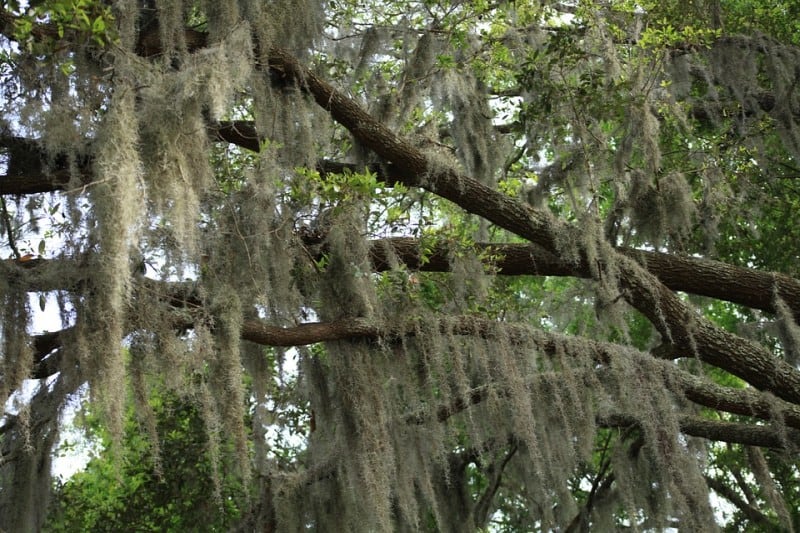
Spanish moss on oak tree

3. Old Man’s Beard

There are more than 87 different types of old man’s beard plants, so odds are some grow where you live.

This natural toilet paper alternative may look like a moss but it is actually a lichen. Moss and lichen plants are often lumped together into one group, but each are distinctly different types of living organisms.

Moss is an incredibly simple plant with the most basic of root, stem, and leaf structures. There are more than 14,0000 different types of moss. Lichen is a composite organism that is the combination of algae and fungi, and has no leaves.

Old man’s beard grows on trees and resembles the look of a tangled fishing line. This type of lichen may help against both Streptococcus and Staphylococcus bacteria.

If you forage this lichen to use for a natural toilet paper, save a bit and allow it to dry so it can later be used as an excellent fire starter, as well.

4. Slippery Elm

Unlike mullein or lamb’s ear leaves, a leaf from the slippery elm tree is neither soft nor supple.

But, the coarse texture created by silica crystals can help remove dried or big messes – especially those stemming from a woman’s time of the month, or a diaper.

The inner bark of this tree chewed or mixed with water has been used as an active natural home remedy to treat diarrhea, gout, sore throat, irritable bowel syndrome, coughs, toothaches, rheumatism, urinary tract infections, constipation, syphilis, colic, hemorrhoids, tapeworms, to reduce stomach acid, and herpes.

In older times, particularly during the late 1800s, some women inserted a slippery elm twig into their cervix to provoke an abortion.

While there is no scientific evidence this practice worked, it is probably advisable for pregnant women and to avoid using this natural toilet paper alternative.

lamb's ear

5. Lamb’s Ear

This is one of the softest plants that can be used for toilet paper. Lamb’s ear grows in the wild in great abundance as is often mowed down as a nuisance weed.

If it does not grow where you live or you simply want to grow a large and sustainable supply, seeds are available from herb plant suppliers.

Leaves on a lamb’s ear plant are not only super soft, but incredibly broad and thick. There are no known toxic look alike plants to lamb’s ear. This plant is edible, and has been used as an active ingredient in numerous home remedies.

The luscious leaves from this plant can also be used as a makeshift bandage. Thanks to the natural antibacterial properties of lamb’s ear, using it as a bandage may have added healing benefits for mild wounds or burns.

Because lamb’s ear is not tall or bushy, it can be grown year-round indoors, making it an excellent toilet paper plant choice for apartment dwellers, and for people with limited to no outdoor growing space.

6. Large Leaf Aster

The large leaf aster plant was predominantly used by Native Americans as a natural TP alternative. The particularly wide leaves are not only a durable enough to use for wiping, but have often been used in both medicinal and edible recipes of various types.

This plant can be grown in many climates and is commonly spotted in the wild throughout the country.

The large leaf aster is most commonly found along the edge of a pasture or wooded areas in a partially shady spot. The leaves are easy to identify even for a novice forager because they are distinctly heart-shaped and, produce small purple flowers each spring.

7. Corn Lily

These living are most prominently found growing wild in fields and livestock pastures. Corn lilies boast the most broad leaf of any toilet paper plant. Many leaves on these plants grow as broad as a football.

Even though corn lily leaves are not as soft as those which grow on either the mullein or lamb’s ear plants, they are especially durable, which is also a useful attribute when trying to clean up a “bathroom” mess.

If a corn lily plant stinks, I mean really stinks, it is likely disease ridden – hence the nickname “false skunk cabbage” that has been levied against the lily plants that are sickly, especially after periods of drought.

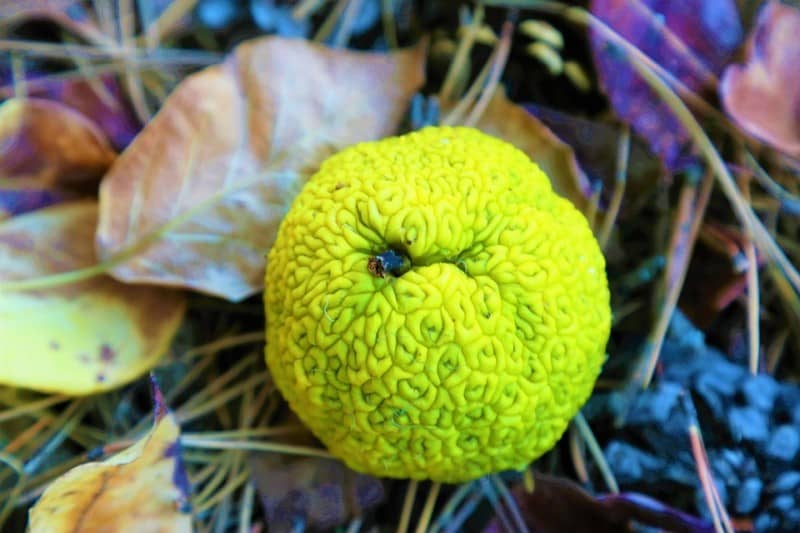
Osage orange

8. Osage Orange – Hedge Apples

The young fruit from the osage orange (also called hedge apple) tree is considered by some to be the best natural toilet paper ever.

The myriad of bumpy little crevices on the peel of the hedge apples are a perfect texture for removing a mess after going to the bathroom during a SHTF situation.

The only downside to cultivating osage orange as natural toilet paper is that the window of opportunity to use it is small. Once the hedge apples mature, they are simply too large to fit into the necessary wiping areas.

Always look the osage orange fruit over carefully before using, if there are brown spots that indicate damage to the peel, it is likely that the sticky sap contained inside will seep out and onto the skin.

As an added bonus to growing a hedge apple tree, the mature fruit can be placed around the home to help deter spiders from coming inside when the weather turns cold.

9. Pink Wild Pear

While the pink wild pear is also an excellent choice for a toilet paper plant, unless you live in Agricultural Growing Zone 1, it can only be cultivated indoors during cold weather months.

Unlike many of the plants on this list, foraging opportunities for the pink wild pear are going to be extremely limited to non-existent depending upon where you live.

This plant is also known as Dombeya burgessiae. Its leaves are both soft and thick. You can even use the bark from this shrub-like plant to make rope, and to weave baskets.

10. Blue Spur Flower

This tall shrub-like plant is also known as the Plactranthus Barbadas plant. It is also sometimes known as the Indian COleus and the Coleus Forskohlii plant.

The blue spur flower was once so sought after as a natural toilet paper (and still is in some remote regions) that is was planted along the path to the outhouse so users could keep it handy when they were about to do their business.

The thickly textured leaves are so large that it generally takes just one to get the bathroom job done. The broad leaves also emit a pleasantly sweet smell that can linger on the skin after wiping.

The quick spreading and thicket style nature of the blue spur flower plant has caused some folks to deem it invasive but others to welcome it as a hardy and steady supply of leaves.

The flowers on the plant are toxic to animals, so there is no need to worry about your livestock consuming all of your natural TP.

Unless you live in a warm climate, Plectranthus Barbados will need to be grown in a greenhouse or indoors during cold weather months.

thimbleberry leaves

11. Thimbleberry

This natural alternative to toilet paper is most likely the fastest growing plant on this list. Thimbleberries grow wildly in both the northeast and western regions of the United States.

During the late spring to summer growing season, the berries produced by this bushy plant can be eaten. The medium-sized and soft leaves can be used any time of the year when they are present, as a natural toilet paper.

Leaves on the thimbleberry plant are durable like those growing on the corn lily plant and fairly broad. Because the leaves are not exceptionally thick, you may need to bend them in half to clean up big messes.

The large leaves are quite fuzzy and soft, and sometimes grow as large as an adult hand. If you are foraging for this plant, expect to find it growing in moist soil in shady areas, especially in mountain regions.

Toilet Paper Plant Cautions

All of the plants on this list should be safe for most people to use, but simply because something is growing wildly in the dirt or does not cause a negative allergic reaction for one person, does not necessarily mean it will work equally well for you.

Speaking with your medical care provider now about possible ill side effects, and testing the plant leaves or fruit on your skin, would be far wiser than using the natural material for the first time when you cannot call a doctor.

Once you have grown or foraged a plant you have properly identified and are certain has not been sprayed with agriculture chemicals, test just a tiny bit of the leaf on a small portion of your skin.

If you do not have any adverse reaction in 24 hours, it is likely that one will not occur.

Topical allergic reactions to be on the lookout for include a mild to severe skin rash and mild to severe hives that could provoke serious breathing issues.

Stockpiling seeds to cultivate new crops of the toilet paper crops after the SHTF as well as dehydrating the leaves on the fruit, nut, or herb setting on your machine, will help ensure that a steady supply of toilet paper plants will always be on hand if (when) a disaster does occur.

toilet paper plants pin


via Modern Survival Online https://ift.tt/3epjb1v

Tuesday, April 14, 2020

Pluto Might Not be a Planet, but it is an SDR Transceiver

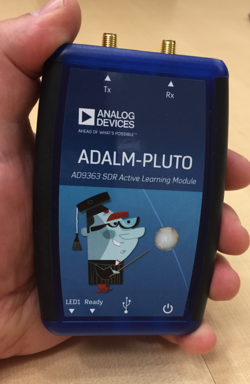
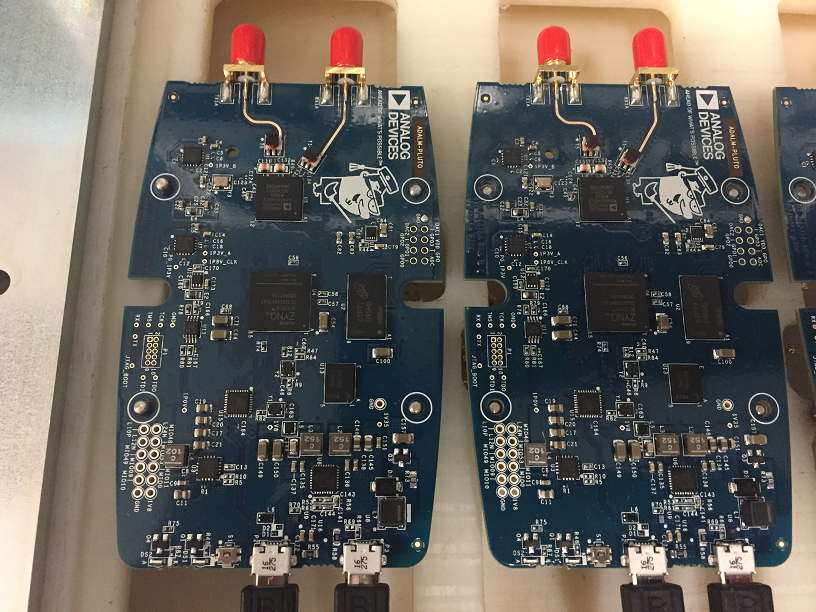
Many of the SDR projects we see use a cheap USB dongle. They are great, but sometimes you want more and — especially — sometimes you want to transmit. The Analog Devices ADALM-Pluto SDR is easily available for $200 and sometimes as low as $100 and it both transmits and receives using an Analog AD9363 and a Zynq FPGA. Although you normally use the device to pipe IQ signals to a host computer, you can run SDR applications on the device itself. That requires you to dig into the Zynq tools, which is fun but a topic for another time. In this post, I’m going to show you how you can use GNU Radio to make a simple Morse code beacon in the 2m ham band.

I’ve had one on my bench for quite a while and I’ve played with it a bit. There are several ways to use it with GNU Radio and it seems to work very well. You have to hack it to get the frequency range down a bit. Sure, it might not be “to spec” once you broaden the frequency range, but it seems to work fine. Instead of working from 325 MHz to 3,800 MHz with a 20 MHz bandwidth, the hacked device transceives 70 MHz to 6,000 MHz with 56 MHz bandwidth. It is a simple hack you only have to do once. It tells the device that it has a slightly better chip onboard and our guess is the chips are the same but sorted by performance. So while the specs might be a little off, you probably won’t notice.

Prep

The Pluto has several different ways you can communicate with it. For one, it looks like a drive plugged into your PC. That’s handy for updating firmware and things like that. There’s also a network connection that uses USB for the physical layer. This lets you move data back and forth or even get a command prompt.

Of course, if you want to use it with GNU Radio, you’ll need blocks to talk to the input and output. There are a few choices there, as well. Analog Devices maintains two different sets of blocks. The one that appears older is the PlutoSDR block but the IIO blocks seem newer and support a bunch of devices.

Unfortunately, building these blocks can be painful. I didn’t have any problem using the released version along with the GNURadio in the Ubuntu repos. But when I switched to the new release candidate, I couldn’t get it to build. It looked like I would need to manually build some libraries to get it all to work so I just stuck with the older version in the repos.

Changed the Same

For the receiver, if you have the IIO or Pluto blocks built, it is pretty much the same as you would do with any other SDR receiver. Sure, there are a few oddities. For example, since the device is connected via a network, you have to provide a connect string. If you can ping pluto.local, you can use “ip:pluto.local” as the name. If you don’t have mDNS set up, you might need to use the IP address of the box.

Everything else is the same. You’ll want to respect the minimum and maximum sample rates, of course (have a look at the detailed specs). If you set the gain to auto, you’ll get errors trying to set the gain manually. You’ll also get them if you set the gain over the limit, around 70 dB.

Of course, the difference between the Pluto and your garden variety SDR dongle is that it has a transmitter, but if you know a little bit about radio, you won’t find transmission very confusing. IQ goes in and very low level RF comes out.

A Beacon for Pluto

I decided to put together a Morse code beacon for the two meter band. I’m a ham radio operator and the beacon will send my call sign, that’s perfectly legal. It turned out to show quite a few nuances of how GNURadio works.

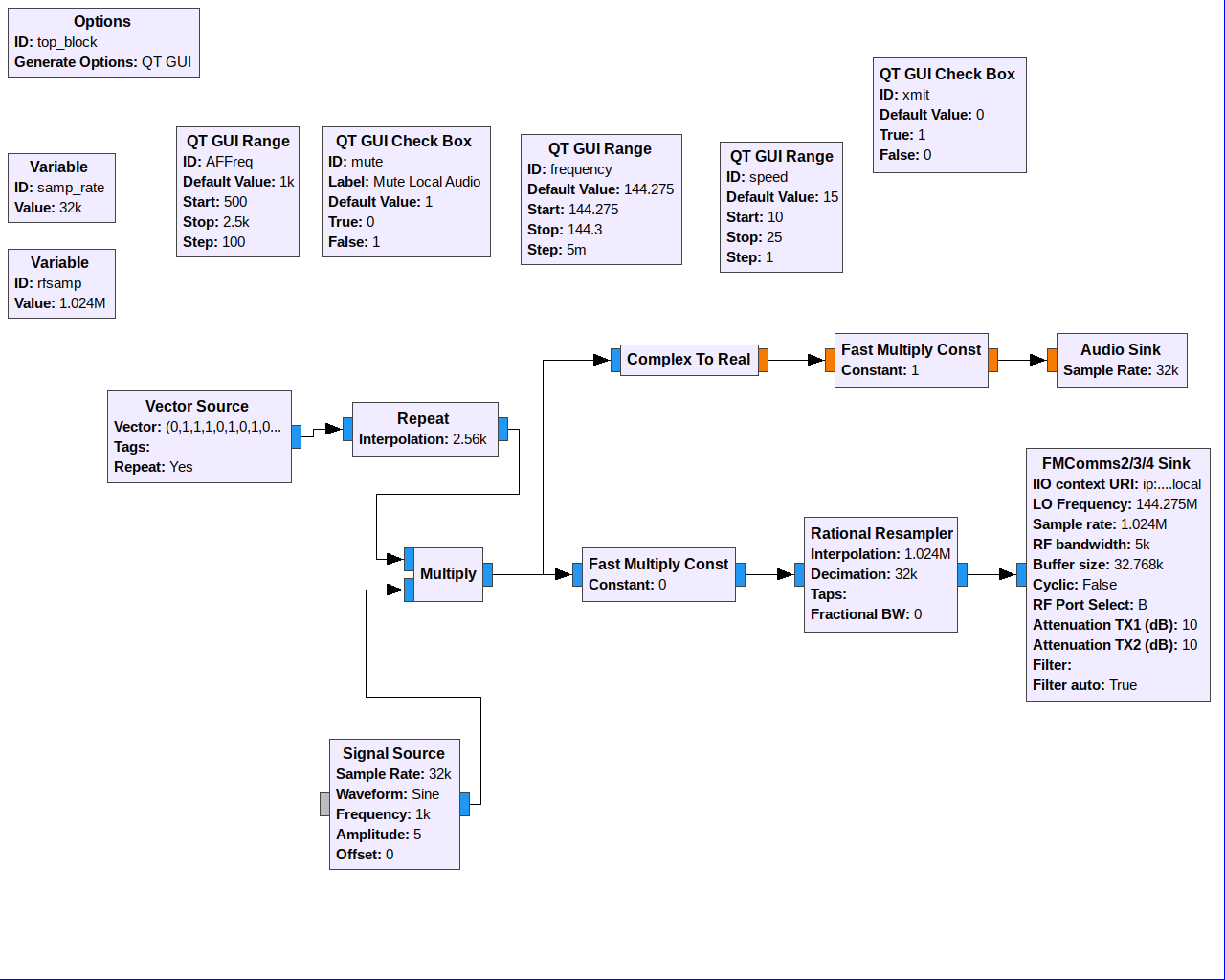
You can find the grc file on GitHub. You’ll notice that the transmit part is pretty simple. There’s the RF sink, of course, and a rational resampler to convert the CW tone from a 32 kHz sample rate to the higher sample rate used by the sink. The Pluto can only accept certain sample rates, and there’s no use generating a sidetone at high sample rates, so the resampler converts the lower sample rate to the higher rate. You can think of the new sample rate as interpolation*(old_sample_rate/decimation).

The real trick is how to get the Morse code you want to send to modulate the sine wave. There are probably many ways to do it, but I used a vector source. I have to confess I lifted this idea from [argilo] who has a lot of SDR examples on GitHub.

Vectors

Even though newer versions of GNURadio have other mechanisms, in general, everything in GNURadio is a stream. So I needed a stream that looks like the code I want to send. The source has a stream where a 0 represents silence and a 1 represents tone. So a single 1 is a dit and three in a row make a dah or dash. The 0’s combine to make different size spaces. Now there are two problems. Getting the rate right and coming up with the vector data which is surprisingly tedious.

Fixing the rate is easy. The vector source gets you one sample each time someone gets one, which amounts to the sample rate. However, a dit at 1/32000 gives you about 31 µs, which is pretty fast. The repeat block interpolates the samples. All that means is that for each sample it repeats it a certain number of times before it gets another sample from the vector. You can adjust the speed by tweaking the interpolation.

The formula for the length of a code element in seconds is about 1.2/speed where the speed is in words per minute. There is a GUI widget to select the speed. The formula in the repeat block is: int( samp_rate*(1.2/speed)). Just remember that slowing down the speed also increases the delay at the end of the message.

What that means is that a single 1 in the vector turns into a bunch of 1s at the output of the repeat block. You multiply the sine wave by these 0s and 1s, and you are good to go. That still leaves getting the data together.

Lazy

True, you could just do it by hand, but that’s surprisingly tedious. I decided to take the time it would take me to get it right and write a little C program to generate the vector. Truth is, you could do the interpolation in the C code, but that would make very long vectors and it would also make it harder to change the speed at run time.

The C code does let you tweak what you put in for the code elements and the spaces. It is a simple program with no frills, but it gets the job done. You can redirect a file in and redirect the output file since there are no command line options.

I manually added a bunch of zeros at the end to space out the beacon. It might be a nice idea to add that to the program so you could specify a gap in seconds and the sample rate and it would add the right number of zeros. If you make that modification, don’t forget that the sample rate is divided by the repeat block’s rate.

Sidetone

I decided I wanted to have audio come out of the speakers when transmitting. There are at least two ways to do that. I could use another signal source to generate the tone and gate it with the stream of 1s and 0s. However, since the modulating tone is already at 1 kHz, it made sense to just pipe it to the audio. A complex to real block gets things set up to go to an audio sink that connects to the soundcard. I put a fast multiply constant in that multiplies the tone by 1. This would allow you to control the volume, but I only wanted to mute it, so a GUI widget can change the constant between 0 and 1.

In Use

If you want to try this, you should change my callsign on the beacon. You’ll also want to pick a good frequency that isn’t in use in your area, although the output from the Pluto is pretty weak and unlikely to interfere with a repeater that isn’t within walking distance.

If you run the flowgraph, you’ll hear the beacon’s sidetone from your computer speakers. If you have an FM receiver you should also be able to hear the beacon on the radio if you get the antennas close together. Because the audio tone is on and off, you may want to turn your squelch all the way down to hear the entire dot or dash since the squelch will usually cut a little off at the front end.

The user interface is ugly, but it could be made nicer with the GUI Hint fields and some attention. If you haven’t used those before, check out our GNURadio tutorial series.

I got tired of the beacon always transmitting when I just wanted to work on the code portion of it, so I added another multiply and a widget as an on-off switch so the output to the transmitter can be forced to zero without stopping the sidetone.

The truth is, the beacon would be better if I did a little waveshaping on the modulating pulses but for this low power beacon, it isn’t a big deal. You may also want to tweak the CW spacing to be more to your preference which is easy to do with the C program.

Value

For experimenting, the Pluto is great. I sure wish it was able to tune below 30 MHz, though. However, if you have plans to use it for ham radio operations, you’ll probably want some filtering on the output and definitely some amplification. The little antennas provided are not going to do anything practical, either.

If you want more about GNURadio, we did some videos about using it you might like. Keep in mind you can use it for signal processing audio, too.

The photos of the hardware in this post are all from the Analog Devices Wiki.


via Radio Hacks – Hackaday https://ift.tt/2yiQClK

Lucid Dreaming | Some questions

So after a along time of getting only false awakenings I took a long break, about a year or 2 to be precise. But now I’m very determined to have one. But I’m not sure if they were actually false awakenings or just me dreaming that I had a false awakening.

Lucid dreams feel like real life right? Like you are conscious. It doesn’t feel like a normal Dream which is always fuzzy to me. You decide if you wanna touch stuff. Because my false awakenings felt like real life. I had one where a mysterious figure kicked a shoe into my room, he had smoke coming off him. Also I Always have no sound in my dreams either. Rarely do I get sound. Maybe I’m not vivid enough.

Anyway. I’m doing MILD, because me and my brothers share a room. And I can’t wake them up in the middle of then night haha.


via Lucid Dreaming - Dream Views - Attaining Lucidity https://ift.tt/2V8aTnp