Friday, October 2, 2020

M17 Aims to Replace Proprietary Ham Radio Protocols

While M17 might sound like a new kind of automatic rifle (as actually, it is), we were referring to an open source project to create a ham radio transceiver. Instead of paraphrasing the project’s goals, we’ll simply quote them:

The goal here should be to kick the proprietary protocols off the airwaves, replace DMR, Fusion, D-Star, etc. To do that, it’s not just good enough to be open, it has to be legitimately competitive.

Like some other commercial protocols, M17 uses 4FSK along with error correction. The protocol allows for encryption, streaming, and the encoding of callsigns in messages. There are also provisions for framing IP packets to carry data. The protocol can handle voice and data in a point-to-point or broadcast topology.

On the hardware side, the TR-9 is a UHF handheld that can do FM voice or M17 with up to 3 watts out. The RF portion uses an ADF7021 chip which is specifically made to do 4FSK. There’s also an Arm CPU to handle the digital work.

We were struck by the similarity of the TR-9 to a cell phone since it has an LCD display, an SD card slot, and a 9DOF sensor.  Maybe some open hardware cell phones and open hardware ham radios could find common ground.

This is quite ambitious, but generally, small ham rigs are having a resurgence. Having high-quality RF components available as chips makes a lot of difference.


via Radio Hacks – Hackaday https://ift.tt/3ju0kVa

Lucid Dreaming | Are These Dreamlets?

Hey there, I need some clarification on things that have happened to me this week.

So, today I WBTB an hour early before usual. I didn't stay up long, maybe a couple of minutes at best, then went back to bed. As I did, I wasn't entirely sure I would fall asleep, what with insomnia making it difficult to relax and being so close to finishing my normal sleep schedule, but I tried nonetheless. As predicted, I kept tossing and turning for long, until suddenly I began dreaming, or at least, that's what it looked like to me after I "woke up" from it.

The scene I saw wasn't particularly noteworthy, just me observing someone getting chased by some people. As this "dream" progressed I found myself taking part in it, non-lucidly playing along with the plot. And then... I woke up, only it didn't feel exactly like any normal wake up. This thing felt different. It wasn't so much as a waking up but more like going through a seamless transition. One moment I'm dreaming some scene and the very next I find myself still turning and tossing about as if I never actually slept. I've never felt a transition as smoothly as this before. It's as if I almost didn't loose consciousness from leaping from wake-to-sleep-to-dream. It left me confused throughout the rest of the morning. Also, during the first part of this "dream" I'm confident I could've become aware of what was happening if I tried, while at later sections I was completely non-lucid.

The other time took place this last Tuesday. Now this one is even weirder to me because it lasted the whole night. I went to bed as usual but couldn't manage to sleep no matter how hard I tried, or so I thought. I kept constantly tossing and turning, and then I would imagine these scenes as if in a dream, and again transition rather seamlessly into wakefulness without as much as a stutter between the two states. I never felt a moment of actual sleep, a passing of unconsciousness as one might expect. Quite opposite, I was becoming extremely frustrated because the hours kept piling up and I thought I wasn't getting any sleep at all! I must've had about 6 or 7 of these instances by morning.

When the sun rose, I had completely given up and dreaded the rest of the day to be miserable, dealing with what I thought was a pretty big case of sleep deprivation. But, to my surprise, I felt quite rested! I resumed life utterly confused about what had happened. Still, I was convinced something like this could not last long enough to dodge the inevitable consequences of lack of sleep the longer I went with my day, but it never came. Come night, I went to bed as usual and this time I slept normally like any other day.

Now, obviously I must've fallen asleep at some point in the night without my knowing. It just weirds me out how it all played out. Additionally, I don't know if this is worth pointing out, but I've been taking meditation a lot more seriously this past couple of months. This week in particular, has seen me increasing my normal meditative sessions from the previous month, the effects of which I've beginning to see bleeding into my daily life. Although, I don't know if that has anything to do with this. Should I act on these instances or ignore them? In many of these I become aware of what they are a bit late. I think, oh wait this is a dream, only to realize I am already awake.

I researched around for a bit and came about some threads talking about dreamlets, so I figured this might be a similar case, but you never know. Better safe to ask.


via Lucid Dreaming - Dream Views - Attaining Lucidity https://ift.tt/34zQ5sv

Thursday, October 1, 2020

California State Knife Laws

California is an often derided and rightly feared state when it comes to its weapons laws for civilians. Host to a massive and swollen bureaucracy that seems to delight in inflicting ever-greater and increasingly draconian restrictions on its residents, California does nothing to make your life easy when it comes to the carry of a knife.

California flag

At first glance, it might not seem so bad since there is not any proscription on the general ownership or daily carry of various knives, but if you look a little deeper you will start to run into issues.

For starters, a long and detailed list of restricted categories and features for knives makes finding safe ground for an EDC knife difficult. Worse yet, the California court system seems to take on an especially despicable glee in throwing the book at people who violate its Byzantine statutes. You must be cautious of running afoul of the knife laws in California.

What You Need to Know

  • What Kind of Knives Can I Own?: Typically common folding knives or fixed blade knives. See restrictions below.
  • Can I Carry a Knife Concealed Without a Permit?: Yes, so long as it is a common and legal type of knife.
  • Can I Carry a Knife Concealed With a Permit?: Yes, with restrictions. Fixed blades are forbidden, and any authorized knife must be a common and legal type of knife.
  • Can I Carry a Knife Openly?: Any non-restricted knife, including fixed blades, that is not a switchblade with a blade measuring 2 inches or longer.

General Ownership

It is entirely legal within the law to own most common knives in the state of California, but you must know that California has a lengthy list of prohibited classes or types of knives.

Many of these knives are archaic or endemic to other countries and martial arts systems, not knives you are liable to encounter unless you go looking for them.

However, if you stop to consider how aggressive and how greedy California’s legal system is, it’s far from out of the question that they might easily construe a feature on your knife to count it as a restricted class of knife if it serves their purposes.

The following categories of knives are completely forbidden in California:

  • ✘ Switchblade 2” or longer (blade length)
  • ✘ Ballistic knife
  • ✘ Dagger (folding or fixed)
  • ✘ Dirk (Folding or fixed)
  • ✘ Sword Cane
  • ✘ Disguised knives (Pen, lipstick, belt buckle, etc.)
  • ✘ Air gauge knife
  • ✘ Shuriken (Throwing star/Ninja star)
  • ✘ Shobi-zue
  • ✘ Undetectable knife (Any knife or stabbing tool that can defeat scanners or detectors)

Also note that California has absolutely no statewide preemption of local laws. This means that you will be bound and governed by any additional regulations in any city, county or municipality while traveling in the state.

Larger cities have knife laws that are significantly more restrictive than the state at large, particularly Los Angeles and San Francisco.

Remember that ignorance of the law is no excuse for violating it, even at the local level, and as odious as it is you’ll need to do your homework if you want to carry a knife without running afoul of the law throughout the state.

Concealed Carry, No Permit

California does allow you to carry concealed on or about your person a knife so long as it is not a forbidden type of knife according to the state statutes and all other laws and regulations are followed.

Also pay great attention to the state statutes included at the end of this article, particularly the definitions of the various types of knives themselves.

You must always be alert to the aggressive and overreaching California legal system that could see you charge for carry-on an illegal weapon just because your otherwise mundane and innocuous pocket knife has a feature consistent with a restricted category of knife.

Note that dirks and daggers and any other fixed blade knife that is “readily” used as a stabbing weapon is forbidden from being carried concealed.

Concealed Carry, With Permit

A concealed carry permit does not allow you to carry concealed any type of knife that is otherwise forbidden, specifically dirks, daggers, and other fixed blade knives. Also, the restricted classes of knife mentioned above are not especially allowed just because you have a concealed weapons permit.

Stick with common, folding knives that are normally allowed, and you should be okay.

Open Carry

California does allow the open carry of knives, including fixed blade knives which otherwise cannot be carried concealed. Once again, the specially forbidden classes of knives are illegal to carry in any way or form or otherwise possess.

As mentioned above, you must be especially cautious with California’s knife laws regarding any kind of weapons charges, especially ones involving knives.

Several knife violations may be charged as either misdemeanors or felonies at the pleasure of the prosecutor, and since police officers in California are fairly notorious for making arrests over weapons of all kinds, that would be completely innocent in almost any other state, you could be rolling the dice when carrying even a small and relatively featureless fixed blade.

Prohibited Places

You cannot carry any kind of knife in any kind of school in the state of California unless you are in the military, a member of a state agency on official duty, an employee of said school who requires the knife for specific tasks or a law enforcement officer.

That’s pretty much it, full stop. If you carry a letter opener into any school in the state of California without official jurisdiction or other special permission in writing you are breaking the law, and it is a serious violation.

The laws concerning this prohibition are extremely lengthy and verbose, but that is all you need to know. You can read the full letter of the relevant sections in the snips taken directly from the California legislature at the end of this article.

Assessment

California allows its citizens to own and ostensibly carry more knives than you would think considering the state’s reputation, but as it turns out that reputation is probably well-earned.

Their knife regulations are difficult to interpret, often contradictory and there is no discernible consistent pattern as far as violation and prosecution of knife offenses go, meaning that the average citizen definitely has cause to be nervous when carrying anything more intricate than a box cutter in the state.

To compound matters, you will always have to contend with varying local laws on top of the state’s laws and they can be just as restrictive and just as intricate as anything the state whipped together.

Important California State Statutes

Make sure you read California’s state statutes concerning knives for yourself.

Digging into the letter of the law as it is written is usually a headache, but you had better concern yourself with the law before the law concerns itself with you! If you plan on carrying a knife in this increasingly draconian state, read on.

DIVISION 2 – DEFINITIONS Section 16590.

As used in this part, “generally prohibited weapon” means any of the following:

(a) An air gauge knife, as prohibited by Section 20310.

(b) Ammunition that contains or consists of a flechette dart, as prohibited by Section 30210.

(c) A ballistic knife, as prohibited by Section 21110.

(d) A belt buckle knife, as prohibited by Section 20410.

(h) A cane sword, as prohibited by Section 20510.

(i) A concealed dirk or dagger, as prohibited by Section 21310.

(m) A leaded cane or an instrument or weapon of the kind commonly known as a billy, blackjack, sandbag, sandclub, sap, or slungshot, as prohibited by Section 22210.

(n) A lipstick case knife, as prohibited by Section 20610.

(o) Metal knuckles, as prohibited by Section 21810.

(r) A nunchaku, as prohibited by Section 22010.

(s) A shobi-zue, as prohibited by Section 20710.

(u) A shuriken, as prohibited by Section 22410.

(y) A writing pen knife, as prohibited by Section 20910.

DIVISION 2 – DEFINITIONS Section 16470.

As used in this part, “dirk” or “dagger” means a knife or other instrument with or without a handguard that is capable of ready use as a stabbing weapon that may inflict great bodily injury or death. A nonlocking folding knife, a folding knife that is not prohibited by Section 21510, or a pocketknife is capable of ready use as a stabbing weapon that may inflict great bodily injury or death only if the blade of the knife is exposed and locked into position.

CHAPTER 4 – Dirk or Dagger Section 21310.

Except as provided in Chapter 1 (commencing with Section 17700) of Division 2 of Title 2, any person in this state who carries concealed upon the person any dirk or dagger is punishable by imprisonment in a county jail not exceeding one year or imprisonment pursuant to subdivision (h) of Section 1170.

CHAPTER 1 – General Provisions Section 20200.

A knife carried in a sheath that is worn openly suspended from the waist of the wearer is not concealed within the meaning of Section 16140, 16340, 17350, or 21310.

DIVISION 2 – DEFINITIONS Section 17235.

As used in this part, “switchblade knife” means a knife having the appearance of a pocketknife and includes a spring-blade knife, snap-blade knife, gravity knife, or any other similar type knife, the blade or blades of which are two or more inches in length and which can be released automatically by a flick of a button, pressure on the handle, flip of the wrist or other mechanical device, or is released by the weight of the blade or by any type of mechanism whatsoever. “Switchblade knife” does not include a knife that opens with one hand utilizing thumb pressure applied solely to the blade of the knife or a thumb stud attached to the blade, provided that the knife has a detent or other mechanism that provides resistance that must be overcome in opening the blade, or that biases the blade back toward its closed position.

CHAPTER 5 – Switchblade Knife Section 21590.

The unlawful possession or carrying of any switchblade knife, as provided in Section 21510, is a nuisance and is subject to Sections 18000 and 18005.

CHAPTER 5 – Switchblade Knife Section 21510.

Every person who does any of the following with a switchblade knife having a blade two or more inches in length is guilty of a misdemeanor:

(a) Possesses the knife in the passenger’s or driver’s area of any motor vehicle in any public place or place open to the public.

(b) Carries the knife upon the person.

(c) Sells, offers for sale, exposes for sale, loans, transfers, or gives the knife to any other person.

CHAPTER 3 – Ballistic Knife Section 21110.

Except as provided in Chapter 1 (commencing with Section 17700) of Division 2 of Title 2, any person in this state who manufactures or causes to be manufactured, imports into the state, keeps for sale, or offers or exposes for sale, or who gives, lends, or possesses any ballistic knife is punishable by imprisonment in a county jail not exceeding one year or imprisonment pursuant to subdivision (h) of Section 1170.

CHAPTER 3 – Ballistic Knife Section 21190.

Except as provided in Chapter 1 (commencing with Section 17700) of Division 2 of Title 2, any ballistic knife is a nuisance and is subject to Section 18010.

CHAPTER 1 – Schools Section 626.10.

(a) (1) Any person, except a duly appointed peace officer as defined in Chapter 4.5 (commencing with Section 830) of Title 3 of Part 2, a full-time paid peace officer of another state or the federal government who is carrying out official duties while in this state, a person summoned by any officer to assist in making arrests or preserving the peace while the person is actually engaged in assisting any officer, or a member of the military forces of this state or the United States who is engaged in the performance of his or her duties, who brings or possesses any dirk, dagger, ice pick, knife having a blade longer than 2 1/2 inches, folding knife with a blade that locks into place, razor with an unguarded blade, taser, or stun gun, as defined in subdivision (a) of Section 244.5, any instrument that expels a metallic projectile, such as a BB or a pellet, through the force of air pressure, CO2 pressure, or spring action, or any spot marker gun, upon the grounds of, or within, any public or private school providing instruction in kindergarten or any of grades 1 to 12, inclusive, is guilty of a public offense, punishable by imprisonment in a county jail not exceeding one year, or by imprisonment pursuant to subdivision (h) of Section 1170.

(2) Any person, except a duly appointed peace officer as defined in Chapter 4.5 (commencing with Section 830) of Title 3 of Part 2, a full-time paid peace officer of another state or the federal government who is carrying out official duties while in this state, a person summoned by any officer to assist in making arrests or preserving the peace while the person is actually engaged in assisting any officer, or a member of the military forces of this state or the United States who is engaged in the performance of his or her duties, who brings or possesses a razor blade or a box cutter upon the grounds of, or within, any public or private school providing instruction in kindergarten or any of grades 1 to 12, inclusive, is guilty of a public offense, punishable by imprisonment in a county jail not exceeding one year.

(b) Any person, except a duly appointed peace officer as defined in Chapter 4.5 (commencing with Section 830) of Title 3 of Part 2, a full-time paid peace officer of another state or the federal government who is carrying out official duties while in this state, a person summoned by any officer to assist in making arrests or preserving the peace while the person is actually engaged in assisting any officer, or a member of the military forces of this state or the United States who is engaged in the performance of his or her duties, who brings or possesses any dirk, dagger, ice pick, or knife having a fixed blade longer than 2 1/2 inches upon the grounds of, or within, any private university, the University of California, the California State University, or the California Community Colleges is guilty of a public offense, punishable by imprisonment in a county jail not exceeding one year, or by imprisonment pursuant to subdivision (h) of Section 1170.

(c) Subdivisions (a) and (b) do not apply to any person who brings or possesses a knife having a blade longer than 2 1/2 inches, a razor with an unguarded blade, a razor blade, or a box cutter upon the grounds of, or within, a public or private school providing instruction in kindergarten or any of grades 1 to 12, inclusive, or any private university, state university, or community college at the direction of a faculty member of the private university, state university, or community college, or a certificated or classified employee of the school for use in a private university, state university, community college, or school-sponsored activity or class.

(d) Subdivisions (a) and (b) do not apply to any person who brings or possesses an ice pick, a knife having a blade longer than 2 1/2 inches, a razor with an unguarded blade, a razor blade, or a box cutter upon the grounds of, or within, a public or private school providing instruction in kindergarten or any of grades 1 to 12, inclusive, or any private university, state university, or community college for a lawful purpose within the scope of the person’s employment.

(e) Subdivision (b) does not apply to any person who brings or possesses an ice pick or a knife having a fixed blade longer than 21/2 inches upon the grounds of, or within, any private university, state university, or community college for lawful use in or around a residence or residential facility located upon those grounds or for lawful use in food preparation or consumption.



via Modern Survival Online https://ift.tt/3l8Mfgf

Wednesday, September 30, 2020

KiwiSDR vs RaspberrySDR — a Tale of Two SDRs

Once you move away from the usual software defined radio (SDR) dongles, you have only a few choices unless you want to drop some serious cash. One common hobby-grade SDR is the KiwiSDR. This popular unit runs Linux and can receive up to 30 MHz. The platform uses a dedicated A/D converter, an FPGA, and BeagleBone computer. Success of course breeds imitators, and especially when you have an open source design like the Kiwi, you are going to find similar devices with possibly different end goals. That’s how the RaspberrySDR came to be. This is a very similar unit to the KiwiSDR but it uses a Raspberry Pi, along with a handful of other differences. What’s different? [KA7OEI] tells us in a recent blog post.

Other than the obvious difference of the computer and all that it entails, the RaspberrySDR has a higher speed A/D (125 MHz vs 66 MHz) and 16-bits of resolution instead of the Kiwi’s 14 bits. This combines to give the Raspberry a wider receive range (up to 60 MHz) and — in theory — better performance in terms of dynamic range and distortion.

[KA7OEI] measures a few key parameters on both devices and arrived at some surprising conclusions. The Kiwi appears to boost signals near its cutoff frequency to compensate for losses in the system. The Raspberry — using adapted software — looks as though it does the same trick, but does it around the Kiwi’s cutoff frequency, which is lower. Probably a software fix could take care of that, of course.

There are also tests of image rejection and front-end overloading. The tests revealed a few problems with signal strength measurement and some other problems with the RaspberrySDR. The biggest issue, though, was that the 16-bit A/D didn’t seem to have better performance. Without proper design, throwing more bits at a problem isn’t always helpful and this appears to be a good example of that.

In the end, the Raspberry looks like a cheap clone of the Kiwi with some benefits, but also some drawbacks. The blog post also covers some open source issues where Kiwi is now saying some parts of their code will only be binary in the future and there has been some difficulty finding all of the Raspberry’s files. If you are looking to buy one, you might not find the name “raspberrysdr” but [KA7OEI] suggests searching for “New 16bit 62M real-time bandwidth network shared SDR receiver” which does turn up some results.

Of course, you can always use a Pi with a more conventional dongle, and that works well enough. If you want to make a Pi just transmit, you can do that with little more than a wire, although the quality might not be perfect.


via Radio Hacks – Hackaday https://ift.tt/2SeQkU4

How to Keep Chickens Safe Now and After SHTF

Keeping a flock of chickens safe and healthy to ensure they will be around to provide meat and eggs can seem like a challenging task on a daily basis now, before the SHTF.

Once a doomsday disaster strikes, keeping the chickens safe becomes a life necessity. It doesn’t take a lot of money to protect the flock, but doing so will demand planning, manual labor, and regular checks on the coop and run.

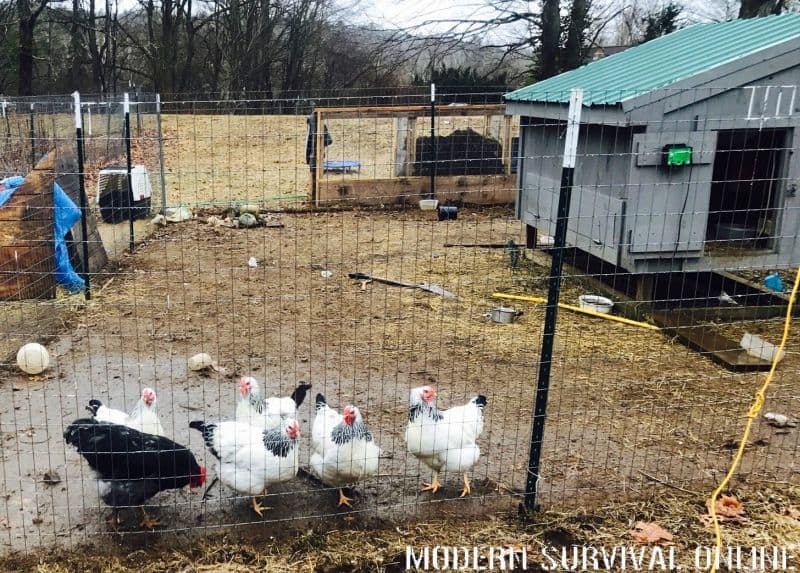
free-ranging chickens

Chickens will be an incredibly valuable asset during a SHTF scenario. Wise preppers already know this, and are creating large and sustainable flocks are part of their survival food plan.

Poultry birds are one of the best types of survival livestock a prepper could keep. They are inexpensive to both buy, feed, enclose, take up little space, and provide a steady supply of meat and eggs. Butchering a chicken does not require costly tools or heavy lifting.

Keeping a live food supply safe is not a new concept in America, merely one that has been nearly forgotten during our modern times.

During the Great Depression families across the country had to survive largely on the food they could grow and raise themselves because they had no money to buy items from a local store.

Developing and putting into practice chicken husbandry habits now, that will also keep the birds safe not just today, but during a SHTF event. Getting the birds and the keepers used to a routine is a vital part of the safety and security process.

Not only will you be able to cross train others in all aspects of chicken husbandry from the hatching of chicks all the way up through butchering and preserving the birds, but can afford the time to work out any kinks in your plan – now, when adapting it is still feasible.

Revamping Old-Fashioned Chicken Keeping Tactics

Our grandparents and great grandparents knew that both two and four legged predators would be eager to snag a free meal or eggs that they could otherwise sell to buy other wanted items.

The same scenario will play out during a SHTF event – but probably during a WROL situation.

OPSEC

The essential part of maximizing the benefits of chicken keeping while minimizing losses involves not only keeping the flock in a safe and clean pen, but keeping them hidden from being viewed or heard by others.

OPSEC is the vital first step is not done properly, everyone passing by will know that you are keeping a food source all to yourself while the unprepared masses are starving. Get this part wrong, and you won’t be a chicken keeper for long.

Practicing both sight and sound discipline will help prevent others from detecting your growing food source.

If you live in a small town, do not buy your livestock feed locally. I feel horribly typing that, I try very hard to support the few businesses we have in our rural county.

But, if you buy locally in a small town everyone who works at the store and frequent customers you chat with while shopping will known – and remember, that you keep livestock.

In my area, most folks keep animals and have gardens, but most does not mean all. There will be hungry and panicked people just three days into a SHTF event.

You do not want scared, hungry, and armed masses of people showing up at your place because they frequently saw you buying livestock feed at the local store.

Do not share photos of your livestock on Facebook. Far too often folks post images of their cute new chicks, lambs, baby goats, and calves.

The people in your community that see those images will know where to come after grocery store shelves run empty – which we all know will take only hours.

The chicken coop should be placed as close to the house as possible, preferably downwind. Even if you do not visit the coop daily, it should be built near the home with an extremely spacious run (more on that below) and room for the flock to grow.

The closer the poultry birds are to the home, the better they are protected from both humans and animal predators.

Don’t forget to build a brooder – or several, for keeping a momma hen and her chicks until they are old enough to be filtered into the larger flock.

A smaller and more portable brooder should be built for housing chicks indoors due to inclement weather after late fall or early spring hatchings. Even if you cannot run brooder heat lamps, the chicks will have a far better survival rate inside where it is not frigidly cold.

Rooster Crowing

You must view keeping the poultry birds a secret just as strongly and as diligently as you do you stockpile of weapons and ammo. Purchasing a quiet breed of chickens is a great first step but all … ALL roosters crow.

In a survival chicken flock, you must keep a minimum of two roosters at all times – one is none and two is one – as the prepping mantra goes.

If one rooster dies you will have to wait and hope that a cockerel chick reaches maturity and furthers flock numbers before your family is forced to consume all the available eggs and birds.

Purchase multiple no-crow rooster collars as a part of your food security survival plan.

Preventing a rooster from doing what comes natural seems cruel, and it may very well be even though the collar does not physically harm the rooster – but, keeping the bird as quiet as possible increases the chances that you children will not go hungry.

Remember, sound carries, especially during the winter months that there are no leaves on the trees and the forest brush has died back.

We live literally in the middle of the woods on a 56-acre survival homestead and I still would want no-crow collars on our roosters during a SHTF situation.

It is not uncommon to hear the sounds of our nearest neighbors, who live across the road from the start of our half-mile private farm road, during the winter months.

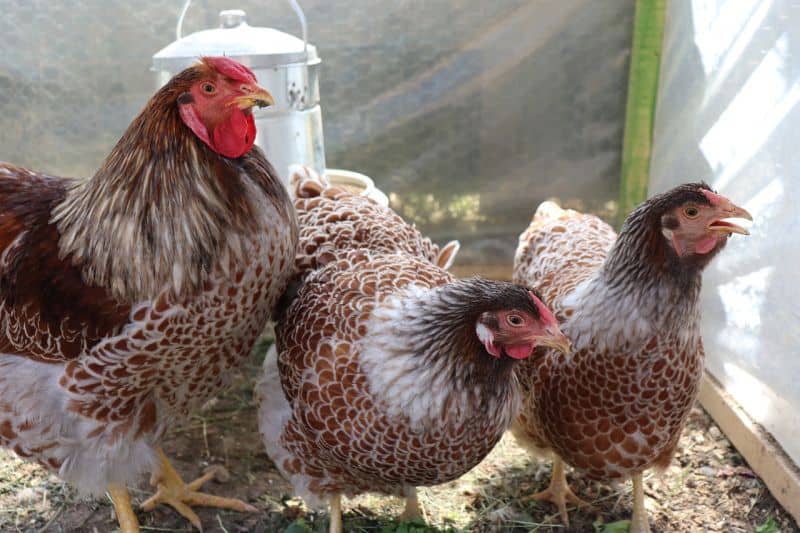
Wyandotte chickens
a few Wyandotte chickens

Quiet Chicken Breeds

Hens clatter, sometimes loudly. Keeping the ladies quiet will not be as difficult as taming back the loud noise of a crowing rooster, but to help prevent all of the clucking of the hens from being herd, consider purchasing one of the top five quiet chicken breeds.

Roosters in these breeds tend to be quieter than those of other varieties, but make no mistake about it, fellow preppers, they will still crow… and not just at dawn.

  1. Rhode Island Reds – These chickens are known to be docile, quiet, cold weather hardy, and layers of superbly large brown eggs. The only downside to keeping Rhode Island Reds is their poor sitting abilities. To better your chances of being able to hatch chicken eggs naturally, also purchase some Bantam hens. These little hens lay nice small white eggs year round, and are dedicated mommas that are eager to adopt the eggs of other hens that are not doing their jobs properly. They are also a laid back and quieter breed of chicken.
  2. Buff Orpingtons – These stately looking poultry birds are not only a quiet and hardy breed, their roosters are known to be among the most docile, as well.
  3. Barred Rock Plymouth – Chicken of this breed are quiet, great free rangers, boast some of the most docile roosters, and lay medium to large brown eggs.
  4. Wyandottes – The hens from this breed are excellent layers and fairly good sitters. Wyandottes are hardy in nearly all climates and while not affectionate with their keepers, tend to be easy to handle. They are known as a dual purpose meat and egg bird.
  5. Ameraucanas – This is another dual purpose and quiet chicken breed. Ameraucanas grow to reach seven pounds, lay medium white eggs in substantial quantities, and are good free rangers.
chickens inside run

Building A Stealth Coop And Run

Spend both the money and the time to build the “Fort Knox” of chicken coops and runs. This cannot be stated firmly enough, spend the money now so that you and your family can eat later.

Do not use chicken wire on the coop or run in any way, shape, or form. Chicken wire is good for keeping chickens in but will NOT keep predators out. The wire is too thin and gives too easily to prevent raccoons, mink, opossums, weasels, or snakes out.

Hardware cloth, also known as rabbit hutch wire, should be used on the chicken run from top to bottom.

  • Dig one foot down around the perimeter of the entire chicken run.
  • Lay at least one layer of hardware cloth down so it runs through from one side of the run to the next other – from the back of the run where the birds enter from the coop to the front.
  • Cover the hardware cloth with ample dirt so it is no longer visible.
  • Use pressure treated 4 X 4 or pressure treated 2 by 4 boards to build a frame on top of the hardware cloth of the perimeter – make sure to leave enough excess on the bottom run chicken wire layer so that it can be pulled up and around the board and stapled firmly into place.
  • From here, use pressure treated wood posts or T posts on all four corners of the chicken run and spaced no further than three feet apart along the side of the chicken run.
  • Use hardware cloth stapled or wired to these supports and to the bottom pressure treated boards to frame out the chicken run.
  • The top of the run should also be made of chicken wire. Adding a wood or metal roof over part of the chicken run to protect the birds from getting too much sun and to allow them an outdoor space to room when it is raining or snowing is highly recommended.

You do not want the birds spending too much time indoors and walking around in their droppings – doing so not only makes more mess for you to clean but can also cause and spread disease.

Some poultry diseases can wipe out an entire flock in mere days. Keeping poultry birds in multiple coops to prevent the loss of an entire flock from a contagious disease is also a wise idea.

Predators will not be able to dig through hardware cloth. It can rust and weaken to the point that it is no longer predator proof over time, but this will take at least three years to occur.

Purchase enough extra hardware cloth and keep it stored indoors so the coop (and run) can be repaired as needed.

Stealth Chicken Coop

The coop itself should be placed directly on unprotected ground. This will make the birds far too vulnerable to digging and clawing predators.

  • To better protect the chicken flock, attach thick metal sheeting to pressure treated boards to make a base plate.
  • Cover the boards with two sheets of hardware cloth.
  • Cover the hardware cloth layer with another layer of pressure-treated boards.
  • For ease of cleaning, covering the top layer of boards at the base of the chicken coop with thick rubber will allow you to use buckets or water or a water hose to clean the bird waste easier.

All of the doors and flaps on the chicken coop should have at least one two step lock to secure them closed.

A raccoon can open a one step lock in only a few minutes when determined to find a meal. Using latches that can have a lock applied to them is also a good idea.

A human with an axe or wire cutters will still be able to get inside the coop, but doing so will take a while and cause a bit of noise… a lot of noise if the flock becomes startled and starts carrying on in fright.

Do not use a dusk to dawn automatic door on the chicken coop. A clever human can hold a flashlight up to the sensor and free the birds at night, making them more accessible to theft when they venture into the run.

To further protect the chicken coop and run and the poultry birds that live there, add solar motion detector lights to all sides of the coop.

Action motivated predator decoys – plastic owls that can be attached to the coop or run, etc. also can help deter two and four legged predators and alert you to the threat.

Many chicken keepers also raise guineas. They are the junkyard dog of the poultry world. They will fight animals far larger and more vicious than themselves to protect “their” flock.

When anything, anyone, or any animal is in an area it does not belong in, they will shriek loudly and frequently to let you know.

Now, both the predator decoys and the guineas are not OPSEC friendly. Only you can decide how to balance the need for secrecy with the desire to be alerted if a predator of any type of getting near your birds.

Flock Growth

Do not neglect to factor the growth of the flock into your chicken coop and run plans. You will want to raise as many birds as you can feed during a SHTF situation.

Adding ample space inside both structures, along with enough roosting areas and nesting boxes for the birds, is in a prepper’s best interest.

Overcrowding the coop and run will cause fighting and potentially injuries of the birds and vastly increases the possibility of disease spread as well as trampled and cracked eggs.

Place several hanging solar coop lights (a cord runs to the outside of the coop with the sun sensor) will help the birds achieve the 8 to 10 hours of sunlight they need to lay eggs during the short days of winter.

The lights also invite the birds to spend more time indoors when the temperature drops, staying too long outdoors to be exposed to light can cause you to lose birds to frostbite.

Chicken Longevity and Sustainability

Keeping the chicken flock safe means keeping them alive. Keeping the birds alive will require providing them with all the clean water and healthy food they need to survive.

Stockpiling chicken feed and straw is only one step in making the chicken coop a sustainable place to live.

Dig a shallow pond, or sink a plastic baby pool in the chicken run as well as setting up a rainwater collection system on the coop to help collect and store free water.

The pond option is a lot better than the baby pool due to not only the cleaning needs of the pool, but also out of concern that young birds will get into the water when the level drops below a side perching level, and drowns.

Create a composting pile in one corner of the chicken run so the birds can help you develop quality dirt for the survival garden, and you have a place to put any food scraps you may have so the birds can eat them and the bugs they attract.

Growing food in planters next to the chicken coop so they can easily be moved inside to feed the birds should also be a part of the poultry bird sustainability plan.

Micro sprouts grow quickly even indoors under normal room lights, and can be used to help supplement the nutrient intake of the flock during the winter months.

Planting a berry bush and Jerusalem artichoke plants inside the run will keep a growing supply of food for the chickens to eat.

Planting millet in a raised garden bed to cut and toss into the run for the birds to eat as a nutrient supplement, will also keep them fed after commercially manufactured chicken feed runs out.

Save your eggshells for the flock. By crushing them up and feeding them back to the flock you are infusing more calcium into their diets and will help them lay stronger and thicker eggs.

Some folks staunchly believe hens should only be fed their own eggs for fear or spreading disease.

I have never been fussy about which hens gets which eggs because I diligently do health checks on my birds during daily livestock chores, and have never had a problem with a transfer of birds germs – but your experience could differ.

Chicken Tractors

Building or buying a chicken tractor is a must for feeding the flock during a SHTF event. The flock can be moved about in the tractor so they can safely forage for their own food.

The chicken tractor browsing for food daily activity alone could keep your flock alive when their purchased feed runs out – depending upon the size of your prepper retreat.

Ample free chicken tractor plans exist online, including ones created with wheelbarrow style handles that makes it more closely resemble a rickshaw – designed to be easily pulled or pushed by humans.

I free range my poultry flocks now. They, along with my ducks that share quarters with the chickens, are trained to walk back into the run on their own before dusk to get a treat and locked up for the night.

This habit will be really risky during a SHTF event – supervised browsing for food only or a chicken tractor offer a far safer option.

Boredom Busters

Once you have built the Fort Knox of chicken coops and runs, and have taken steps to fulfill the sustainable food need of the poultry birds, it is time to turn your attention to boredom busters.

I can guarantee you that the birds will not care that the SHTF, they will still want to find ways to enjoy their day – and you will need them too.

A bored bird can not only get aggressive with other flock members, but start the bad habits of plucking out its own feathers, or try to peck its way out of the coop or run.

If you free ranged your birds before the SHTF, they will be used to a lot more freedom of movement than they will receive when kept inside of a run day and night, eagerly awaiting their turn in the chicken tractor.

Place tires with dirt, sand, or cooled wood ash inside the chicken run so the hens can take dirt baths. This is not only a social activity for the hens but it also helps rid them of parasites.

Adding several perches, swings, and natural items the birds can climb upon will also keep them physically active and mentally stimulated so they do not get bored and act out.

If you live in a small town, city, or the suburbs and want to safely keep chickens during a SHTF event the best piece of advice I can offer is – move. There are a plethora of reasons preppers are better off in a rural area, and the covert keeping of livestock is chief among them.

Trying to prevent neighbors from seeing or hearing a flock of chickens, even a small flock that includes a single rooster will likely make too much noise to adhere to the OPSEC guidelines you will need to follow to prevent the loss of the flock to the unprepared.

If they come for your birds, odds are pretty good that they might be leaving with a lot more of your preps…

chickens safety pinterest


via Modern Survival Online https://ift.tt/3ieAinp

Monday, September 28, 2020

How Long Does Gasoline Typically Last?

If you are getting ready for the next big emergency, great or small, you will definitely want a good supply of gasoline on hand. But, compared to keeping beans, bullets and bandages stored for a long period of time, gasoline presents more challenges since it can lose its potency while in storage or even become contaminated with both outcomes, rendering it useless or potentially even harmful to an engine.

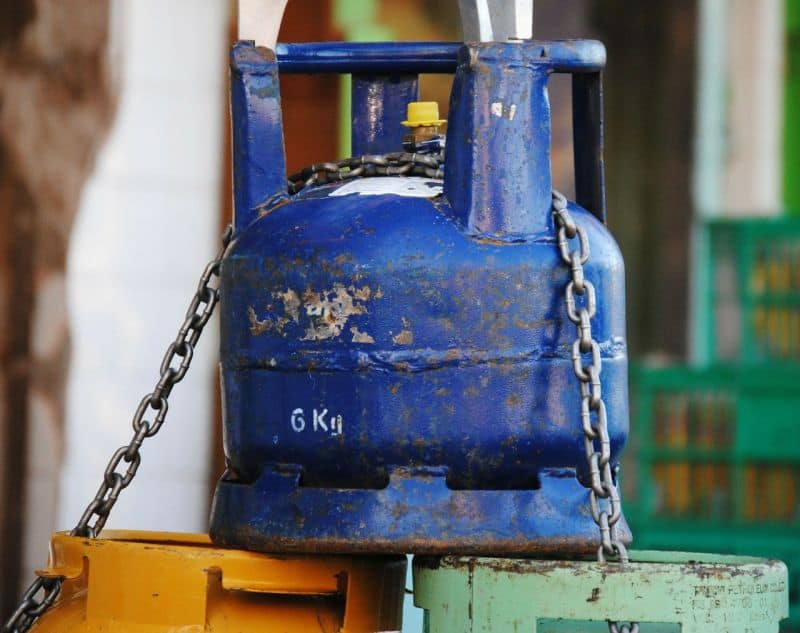
gas canisters

This means you’ll have to be extra diligent about storing your gasoline correctly and doing everything you can to extend its usable shelf life, including rotating it.

So how long can you expect to keep an average can of gasoline in storage before you have to worry about it going bad? Typical gasoline blends sold in the United States have a shelf-life ranging anywhere from 3three to 6 months, but you can increase it to 3 years if you add stabilizers. This lifespan is highly variable due to several factors, chief among them the ethanol content. Additional factors include purity, age at the time of purchase, storage conditions including the container, and the presence of any additives or contaminants.

It is in your best interest to dive in and learn as much as you can about the proper storage of gasoline and what you can do to extend its shelf life, particularly if you live in or plan to move to a remote location, with no nearby gas stations.

In addition, in the aftermath of a major catastrophe, the supply of gasoline will be severely curtailed or even halted entirely, meaning you’ll have to make do with what you have on hand, or can scavenge from out in the world.

In the following sections I will share with you information about the shelf life of gasoline as well as what you can do to extend this lifespan.

The Chief Enemy of Gasoline is Time

Gasoline degrades over time, no matter the blend and no matter how it is stored. Generally speaking American gasoline will last anywhere from three to six months as mentioned above.

This is predominantly determined by whether or not you are dealing with pure gasoline or a gasoline ethanol blend, with the latter being overwhelmingly more common, if not far less popular with switched-on gear heads.

The reason gas goes bad over time is because the volatile compounds that make it combustive (and, therefore, put the “combustion” in an internal combustion engine) are vulnerable to evaporation, and break down over time. The longer your gasoline sits in storage the more “pop” it loses.

Another insidious threat to stored gasoline is contamination by water which typically occurs through condensation, especially when kept in areas with significant temperature shifts day to day or when the gasoline is kept in a container with a significant amount of empty space in it.

To make matters worse ethanol gasoline blends are especially susceptible to water contamination because ethanol attracts water.

Impact of Ethanol on Gasoline Lifespan

Say whatever you want about the detergent properties of modern ethanol gasoline blends, but there is no discounting the fact that ethanol is both extremely corrosive, and a major flaw when it comes to in-storage shelf life of your gas.

I already mentioned that ethanol happily attracts water and that means condensation is going to be an even bigger threat for your gasoline stockpile, but worse yet the ethanol itself simply breaks down faster (ruining the gasoline) because it oxidizes quicker than the combustive compounds themselves. Hooray for progress, right?

The bottom line up-front is that the more ethanol is in your gasoline, the shorter its shelf life, all other things being equal. If you have gasoline with a lot of ethanol in it and store it improperly in less-than-ideal conditions, your gas could go bad in as little as a month!

Back on track, the most common ethanol gasoline blend in the United States is 10%, also called E10, which means you’ve got 10% ethanol and 90% gasoline in a given volume. Others are out there though and E15 and E20 are far from uncommon.

Your common, everyday E10 gasoline stored in a proper plastic gas can end in ideal conditions will sit on the shelf for about three months before it goes bad, possibly a little longer.

I hate to be the bearer of bad news, but if you had or somehow managed to track down pure gasoline you will enjoy a 6 month (appx. 180 day) lifespan compared to the measly 90 day lifespan on your ethanol blends.

And don’t forget what I mentioned above: your pure gasoline will more readily repel water, so condensation is less of an issue.

Bad or Just Old?

When you hear most people talking about old gas, they usually say it has “gone bad”, instead of just old. It might just be their choice of phrase, but there was actually a big difference between the two.

Gas that is old has lost some of its combustive properties to evaporation and age as discussed above, but it is still entirely usable even if the engine does not run quite as well as it would with refinery fresh gas.

In fact, it is entirely possible to refresh old gasoline by adding new, good gas to it and swirling them together. This is just one way to bring old gas back to life and recoup some of your investment.

But, not all gas that fails to perform is just old and in need of a shot of the good stuff. Certain blends of gas namely, you guessed it, ethanol blend gas do go bad in a big and unsalvageable way.

Over time, ethanol will start to separate from the gasoline, appearing as a sort of oil slick or distinct layer of liquid laying on top of the gas itself. When this happens there is no saving it; you can’t just mix it back together. Chalk that up as another detractor for this government-mandated B.S.!

Contamination Concerns

Contamination is another big concern for stored gasoline of any kind. Old gas can be refreshed and ethanol-blended gas that separates can be easily distinguished, but contamination can be more subtle and insidious.

Contamination typically occurs from water as mentioned which can happen in any container but can also happen as a result of the type of storage container itself, namely metal ones that can corrode and contaminate the gas with rust.

Other sources of contamination result from an open container or when trying to salvage gas while in the field. No matter what happens and no matter what is contaminating your gasoline, if it appears murky, cloudy or inky it is contaminated and should not be used.

Old gasoline that won’t make your engine fire is one thing, but contaminated gas can damage or even destroy your engine under the right conditions, so don’t chance it!

Extend Lifespan with Fuel Stabilizers

Fuel stabilizers are not a gimmick, and really do work as long as you get a trusted brand. Fuel stabilizers work by preventing water contamination for condensation and also by preventing the combustive compounds from breaking down in the gas.

You must add fuel stabilizers to a quantity of gasoline very carefully as they must be mixed precisely, but doing so can earn you a shelf life of anywhere from a year all the way up to three years. Those are some impressive numbers!

It is definitely worth your while to make use of fuel stabilizers especially when storing large quantities of fuel. This doesn’t let you store the fuel and forget about it until you need it, as you will still need to rotate it to keep from losing it, but it will save you a lot of time and grief in the process.

Bottom Line

Your stored gasoline will last anywhere from 3 months to 6 months assuming it is stored properly, and depending upon if it is an ethanol gasoline blend or pure gasoline. The shelf life of your gasoline can be extended by adding fuel stabilizer which can get you an additional 6 to 30 months of shelf life.

Gasoline that has merely gotten old can be refreshed by adding new gasoline if it is pure gas, but ethanol-blended gasoline that is showing signs of separation is no good and must be thrown out. Any gasoline that is showing signs of other contamination is no good, and should also be thrown out.


via Modern Survival Online https://ift.tt/347wnnC

Saturday, September 26, 2020

Lucid Dreaming | D-SSILD Technique

I think there are better ways of inducing Dilds from Ssild, because primary Ssild was made for inducing trance like state for Wilds and maybe as side effect you can have a occasional Dild, but if we primary target to have a Dild, another way can be more productive. In my case senses are even more important, let's first see on what the original Ssild is focusing on:
Vision) blackness behind eyelids, potentially inducing Visual HH
Hearing) on sound, potentially inducing auditory HH
Tactile) on weight of your body or the feeling of blankets over your body, potentially inducing Tactile HH

Now for Wild you want to have continues awareness from wakefulness to sleeping, so on some point your body must fall asleep while doing the cycles to have a successful one.
So your eyes must be closed to be able to fall asleep, but let's look at the other two senses, regardless of what you are doing they are always On, even while you are sleeping, but with closed eyes you can't see, so that sense is not fully functional. Now if we change just one step, all of three senses can be fully active. So it becomes like this:
Vision)Focus with open eyes at the space in front you, without moving your eyes around, they must be relaxed the entire time.(you can blink)
Hearing)Focus on sounds around you, but in lazy manner without analysing them.
Tactile)Focus on your body weight or the weight of yours blankets on your body.

One cycle must be around 5-15 seconds and 3-4 cycles must be made. Then you just fall asleep and expect to make a RC next time you are dreaming.
During the cycles you may experience the feeling that you want to close your eyes, but must keep them open, of course you can gently blink and slowly open them again, you can get a feeling that you get more and more sleepy, but you must complete at least 3-4 cycles and then fall asleep. If you are feeling that you getting too awake, you can shorten the cycles.

The target is when fall asleep to suddenly become lucid for no reason or you can have a FA, so remember to make a RC.

Grounding on all three senses, you are inducing a Dild through Vigilance.

For example during my childhood I occasionally was having a LD after a scary movie, because I was over vigilant. I was focusing on my room, I was focusing on sounds around me, I was focusing on my body, which were stimulating my senses.


via Lucid Dreaming - Dream Views - Attaining Lucidity https://ift.tt/2GarYb5