By now pretty much every prepper is familiar with the concept of the bug-out bag, a central piece of kit that will allow you to sustain while evacuating from your home to safer ground. But what will someone rely on if they are trying to get back to their home during times of trouble?
Most folks’ lives are busy enough that chances are pretty good they will be away from home at the beginning of any major event. This is precisely why preppers should employ a get-home bag, or GHB.
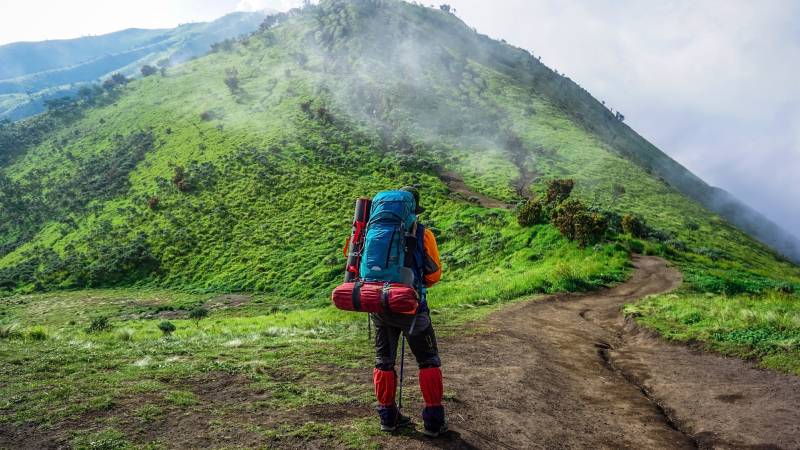
What’s a get-home bag exactly? A get-home bag is a small or medium format pack that is designed to carry only what equipment and provisions you would need to make your way back home during a disaster or other major crisis. These bags often contain typical survival supplies but the emphasis is on remaining lightweight and keeping the bearer moving quickly.
Get-home bags have a lot in common with bug-out bags and other prepping-centric luggage, but there are some considerations specific to the scenario in which they would be used that bears some explanation.
In the rest of this article we will unpack these considerations and provide you with tips for properly setting up your own get home bag.
Get Home to Get Ready
It is hard to imagine a situation that could be properly called a crisis event where you would not want to be at home if you are a prepper.
After all, home is where the heart is, but also where your heavily-laden stash of gear, tools, food, water, and all the other stuff is, stuff you have spent a tremendous amount of time and energy putting into place. It is also the place where your family is most likely to head or already be when trouble breaks open.
In short, in virtually every situation you will have a major “home field advantage” at your home compared to somewhere else, be at your workplace, out in town or elsewhere.
How unfortunate it is then that the typical lives of adults and many children are typically full of various activities and responsibilities that take us away from home many hours out of every day, and many days a week.
School, work, errands, activities and more all served to keep us in an “orbit” that is anything but homebound.
Depending on how far from home you work, or how far school or any other activity is from home, you might have many miles to cover when the pressure is on.
In many cases, you could be forced to cover those miles on foot. That means you will need a certain amount of equipment and supplies if you want to increase your chances of success. That’s why you need a get-home bag.
Typical Get-Home Bag Contents
A get-home bag carries supplies and gear that you would probably be expecting to see in any other piece of prepper luggage, such as a BOB. However, where the GHB differs from the BOB is in its emphasis on a radical weight reduction and speed.
Why? Because a get-home bag is designed only to expedite your movement home as quickly as possible, all other considerations be damned. It is not a long-term sustainment pack; it is more of a bare-minimum sustainment pack!
For that reason look at the packing list for a get-home bag and you’ll probably notice an emphasis on ready to use supplies, tools and defensive gear. Compare and contrast with a BOB which is likely to emphasize supply replenishment, sustainment and shelter.
You might be forced to spend more than a single day hoofing it home, but any gear in your GHB for the purpose is going to be quite lean.
Some typical items included in GHB’s are:
Food
Any food included in your get home bag should be oriented to keeping your body fueled up with quick, sustainable energy.
Lightweight, long lasting, ready to eat items like beef jerky, trail mix, meal replacement bars and similar are ideal. If you are a long-distance commuter, you might consider a broken down MRE for a major calorie load during a stop.
Water
Water is one of those “love it, hate it, have to have it” items for a get-home bag. On the one hand, you can’t live long without water, and even if you just dehydrate badly enough in the course of a day you might be in rough enough shape that you can’t continue. On the other hand, it is extremely heavy, slowing you down.
Generally, if you are a short distance commuter you can probably get away with a single day’s worth of water or less. A longer distance commuter should pack less potable water but include an emergency water filter to refill en route.
Flashlight / Headlamp
As bad as things are starting out they are going to get a lot worse once night falls and you have little or no light to navigate by.
Flashlights and headlamps are always useful in any kind of emergency, so make sure you include them in your get-home bag along with a few spare sets of batteries.
Knife / Hatchet
A sturdy fixed blade knife is always a good tool to have, no matter the situation. You’ll use this for countless chores when called upon, but if you never have to use it, that’s okay as it is cheap, light insurance.
Depending on where you live and where your probable routes will take you a hatchet might be a worthwhile inclusion as it has better efficacy for minor demolition tasks and also makes for a formidable weapon.
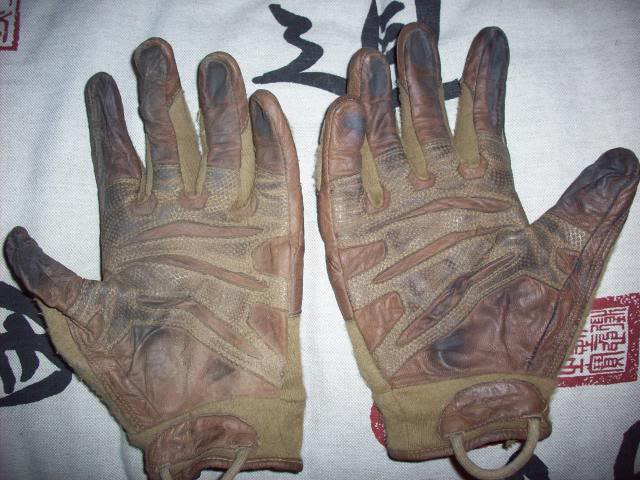
Gloves
Hazards out in the world will make short work of your hands if you aren’t careful, and you’ll be forced to interact with many of them during an SHTF event. A sturdy set of gloves will keep you from puncturing the skin on your hands.
First-Aid Kit
A first aid kit is a mandatory inclusion for a get-home bag. It should be able to take care of minor and incidental injuries like cuts, scrapes, sprains and burns as well as more serious trauma like major lacerations, penetrating injuries and so on.
It won’t do you any good if you don’t have the training, so make sure you learn what to do and keep your skills sharp.
Maps and Compass
GPS systems are excellent these days but depending on what sort of situation you are dealing with they might not be reliable. Knowing how to use a map and compass will reliably get you where you need to go with no dependence on electricity.
Cash
Is always a good idea to have cash on hand during an emerging disaster scenario. Chances are credit/debit cards won’t work or else they won’t be accepted. Cash speaks, and if you carry enough it might get you a favor when you desperately need one.
Sturdy Footwear
If you don’t habitually wear good boots or shoes for walking miles in, make sure you have a set with your GHB at all times.
Get-Home Bag Selection
Compared to a bug-out bag, a get-home bag is lighter and leaner in all ways, and this includes the pack itself. Generally, a get-home bag will be a backpack format, but it will usually lack a waist belt or frame.
Considering you’ll be carrying a comparatively light load these won’t make much of a difference. Aside from this consideration you should choose your GHB according to all the other usual metrics you would use to select a bug-out bag.
It must be durable and reliable, able to carry its load under harsh conditions, and despite mistreatment and rough handling.
The style and color of the bag should also be chosen according to your “tactical” situation, meaning it should not stick out among the masses of people in your area. If your plan calls for discretion, make sure the backpack is camouflaged accordingly.
Conclusion
A get-home bag is in essence a smaller, lighter and leaner bug-out bag that is designed to sustain the user just long enough to get them home at the onset of a disaster scenario rather than get them out of town to a bug-out location.
When the time comes to ditch your vehicle or dash out of the office the get-home bag is what you will grab in order to equip yourself with the bare minimum needed to complete your journey in a timely fashion.
Bugging out is a core tenant of prepping, and integral to the concept of bugging out is having in mind one or more bug out locations, places where you and your loved ones can head to in times of trouble so that you can better ride out whatever the problem is in safety, or at least relative safety compared to where you are.
Throughout history, threatened people and populations have fled into the mountains seeking a bastion against dangers big and small.
Sometimes, the mountains served as the backdrop of a valiant last stand and other times it served as a sanctuary, proof against all harm. More often, it turns out that the mountains themselves are an even bigger danger than what the refugees were originally fleeing from.
It is true that the mountains can offer protection, but they are also full of dangers, dangers that the average person, even a prepper, is ill-prepared to face.
If you ever thought about fleeing into the mountains during an SHTF event, or you are actively planning to do so presently you’ll need to know what you are up against in order to make best use of the terrain.
In this article I will tell you everything you need to know about maximizing the mountains for SHTF survival.
Heading for the Hills: Sound Practice or Fable?
There is something undeniably appealing about the mountains in a survival context. I think it is the awe-inspiring and nearly mythical sense of permanence, the idea that no matter what earth-shaking event is occurring way down yonder at the base of the slopes, the mountains will persist.
They were here long before you and I were ever formed, and they will be here long after. That impressive stature along with the entirely practical advantages afforded by the high ground places mountains high up on your list of worthwhile survival retreats.
And history proves as much: You can’t crack open any history book without seeing example after example of mountain dwelling cultures surviving times of incredible strife and mayhem while safely squirreled away in the many caverns and warrens afforded by the mountains.
Even coastal and lowland dwelling peoples would typically retreat to a mountain or mountain range to escape calamitous events. Surely, then, we should be able to do the same thing in our time of need, right?
Well yes. But actually no; it’s kind of complicated. Like all things in prepping, there is rarely ever a best option for anything. Be a piece of equipment, choice of provisions, or even the selection of a bug-out location what you’ll have is advantages and disadvantages: a trade-off.
Mountains are no different in that they will furnish you several significant advantages, but also several dangerous disadvantages, ones that could be showstoppers if you don’t know how to deal with them.
It will be terrible if you fled a bad situation only to make your own personal situation even worse because you are ill-prepared to deal with the harsh and completely merciless setting of the mountains. In the next sections we will go over those advantages and disadvantages one by one.
Mountain Living is Tough
Under any conditions, in any circumstances, mountain living is tough. It is complicated enough if you live in the mountains near properly settled and civilized society, but living in an austere mountain setting is a whole ‘nother level of difficulty.
It is most likely the latter that you will be embarked upon during an SHTF scenario, so you must be prepared.
Rough Terrain, Rough Going
The most obvious and iconic feature of the mountains is the terrain itself. Even among the gentler mountains like the Appalachians or the Smokies, you will be facing steep, broken, uneven terrain for the duration of your stay or journey.
What this means for the prepper is that every step you take is going to be far more difficult than the same step, the exact same distance, over flat land. This means you’ll be expending far more energy to do the same amount of work in the mountains.
What’s more, this rough terrain costs you twice, as it were. Just moving yourself through the mountains is tough enough, but doing it while you are loaded down with gear in the form of a bug-out bag or other carried cargo is going to make things an order of magnitude more difficult, and more tiring.
A lack of physical fitness is probably the number one way to get yourself in trouble when moving through mountainous terrain.
What’s more, it is difficult to set up a meaningful shelter on anything except firm, level ground. Trying to pitch a tent or construct a primitive hut on the side of a slope is significantly more difficult, though it can be done.
Unfortunately, firm, level ground is in generally short supply in the mountains. This means that knowing your range well is essential if you want to make a go of survival in such a place. More on that later.
Wild Weather Changes
Most mountain ranges are infamous for weather extremes, but less well known to the uninitiated is just how fast the weather can change, even when the climate and forecast is nice.
The tallest mountain ranges in colder countries will be blanketed with snow pretty much 24/7, but there are many ranges throughout the world that remain more or less pleasant in the appropriate seasons.
You might think you have hit the BOL jackpot when you retreat to the mountains in cool, pleasant springtime weather, at least during the day. But at night, you’ll be shocked and shivering to discover that the temperature can plunge by more than 50° depending on altitude and season.
To further complicate matters, a forecast of clear and slightly hazy skies could get tossed right out the window with the occurrence of a rapidly forming and equally rapidly departing storm or shower that can soak you and your party with cold rain and an accompanying temperature drop. That entirely too common occurrence is a great way to get hypothermia, right quick.
These extremes of weather will put you and members of your party at a more or less constant risk of exposure unless you come prepared to cover all of eventualities of weather and climate.
Knowing the typical daily and nightly temperature is only half the battle. Failing to understand how quickly the weather can change, and what those signs are, could see you caught out when you can least afford it.
Resources Can Be Scarce
Compared to other biomes you might bug out to, mountains can represent a highly variable trove of natural resources. You can either find plants and animals in abundance or shockingly scarce depending upon the range, and depending on what region of the range you are in.
Unless you were able to retreat to a completed and fully stocked structure you have pre-emplaced in the mountains, this is a big deal, as you’ll be more or less dependent upon natural resources, at least partially, for the duration of your stay.
It does hold that anywhere you can go on Earth you will find life, and where there is life you can find at least something that is useful. But hardscrabble survival, subsistence and thriving all look very different, and each rung up the ladder you go of existence you’ll require exponentially more resources, and so will everyone else in your party.
It might simply be a case that where you are camped in the mountains does not have any resources useful nearby, but with a short hike down the mountain a little ways you might find a bountiful stand of trees that can provide fuel, food and building materials.
The only trouble is, moving up and down the mountain will require a considerable amount of energy, and pose a not insubstantial risk to life and limb.
Only by careful previous analysis can you make a determination on whether or not your chosen range will furnish enough resources to support you during your stay.
The Mountain is a Dangerous Place
There is no other way to put it. Mountains are dangerous places, significantly more dangerous than typical wilderness retreats like the woods, the planes or the coast. The hazards you will face on the mountain are many, and not just the weather as already mentioned.
The terrain is broken, loose and treacherous. A moment’s inattention or an ill-advised assumption on the safety and security of a foothold could see you tumbling.
If you are lucky, maybe walking away with busted shins or a sprained ankle. At worst, a bad fracture or a head-over-heels tumble down the mountainside to the sharp rocks below.
Another inherent characteristic of the mountains is a danger unto itself: their height. As you go higher and higher above sea level, the oxygen and the air that you breathe will decrease, getting thinner and thinner with increasing altitude. This puts a strain on your lungs, and further taxes your energy reserves.
Between the terrain and the thin air you could be at risk of fainting, and prolonged exposure can result in legitimate altitude sickness.
Aside from bringing bottled oxygen with you and a regulator there is not much that a prepper can do aside from spending lots of time at a given altitude in order to acclimatize- a luxury you probably cannot afford unless you live in such a place already!
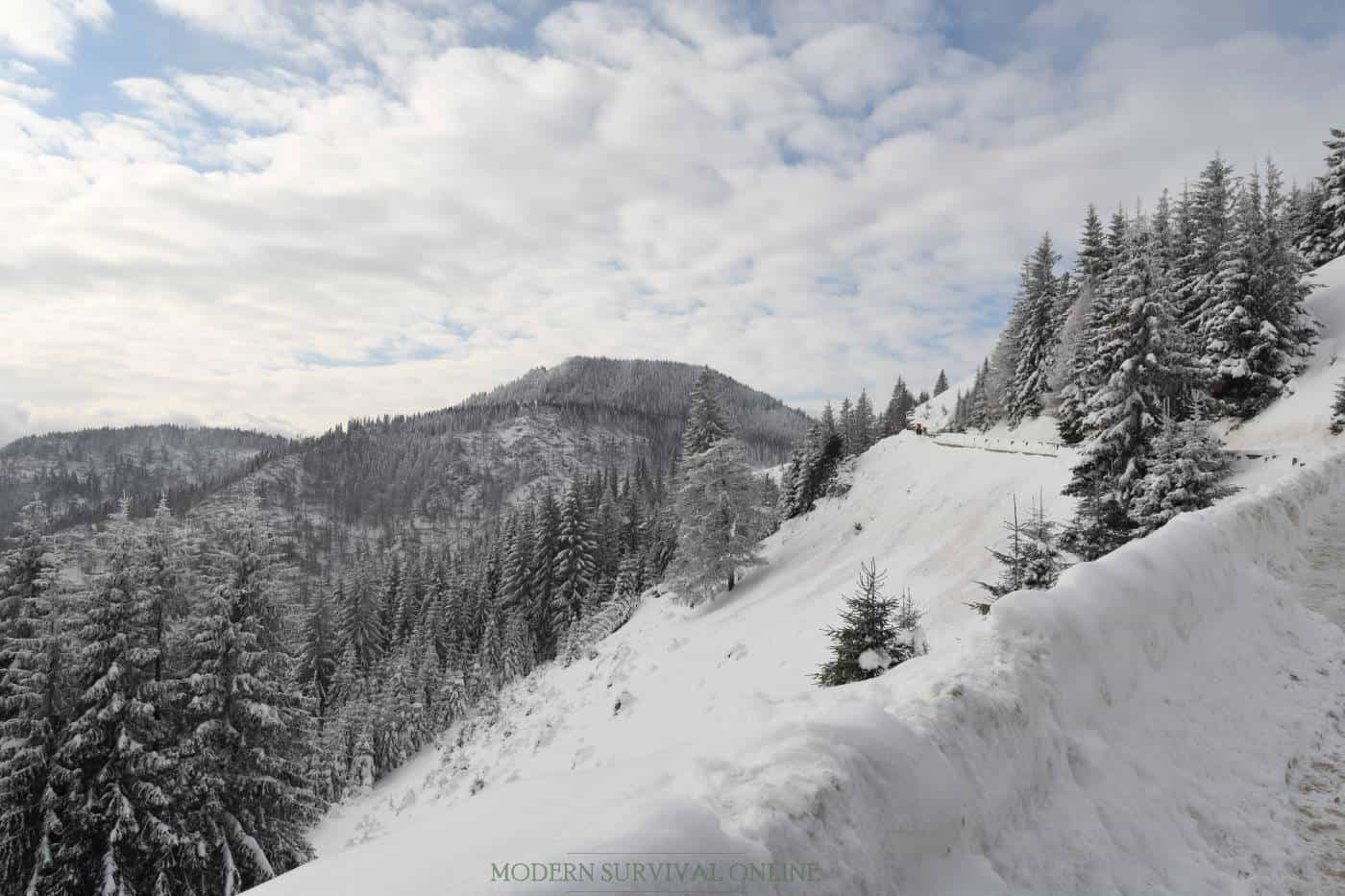
Some of the most spectacular hazards present in the mountains come in the form of avalanches, mudslides and rockfalls. These torrents of natural material gather strength and increase in size as they race down slope, obliterating everything in their path.
These typically occur as a result of a large influx of precipitation in the area, but other natural or man-made events may cause them. If you or your camp is in the way of any of them, it is game over.
And if something goes wrong in the mountains, you will be stranded in more ways than one. Such places are always sparsely inhabited if they are inhabited at all, and rarely traveled besides.
This can work for or against you, but when you need help the only people you’ll be able to depend on is yourself and whoever is with you. Even in the case of the latter, they will only be able to help you if they can reach you.
But Retreating to the Mountains Can Save the Day
Despite all of the risks and hazards we just covered in the preceding section, mountains do confer enormous advantages to preppers who are capable of managing or mitigating those risks. We will cover these advantages in this section.
A Mountain Redoubt is Easy to Defend
Aside from their general utility as places of safety in times of trouble, mountains have always formed easily defensible and nearly impassable barriers militarily, and they can do the same thing for you in any time of conflict.
Occupying mountainous terrain will make life very difficult for anyone who wants to attack you, and do so in a variety of ways.
First, the terrain itself can serve to defeat your opponents. The same arduous, grueling trek you had to make to get to where you are is one they will have to make themselves.
This means that your enemies are likely to be in an exhausted state when it is time to fight, giving you an edge once you have already settled in.
Furthermore, as a general rule your enemies will only be able to approach you from one of very few routes, meaning security will be significantly easier assuming you have enough people in your group to properly stay on watch.
You’ll be difficult to sneak up on and assuming someone is trying to sneak up on you, and they get caught, you are still overwhelmingly likely to have them at a position of disadvantage.
Bottom line, mountains make life very easy for defenders, and absolute hell for attackers.
Heading to the Mountains Makes You Tough to Get To
Beyond defense in a fight, the general inaccessibility of the mountains confers other advantages. Anybody who might come looking for you or try to follow you is probably going to give up well before they find you because the terrain is so inhospitable, exhausting and challenging to navigate.
This is important when you consider that, in a legitimate SHTF scenario, every unknown contact you have with strangers could potentially result in a bad encounter, and subsequently a bad outcome. It follows, then, that fewer interactions with strangers means fewer chances that you will have a bad interaction.
Think about it: you won’t have anyone that is not already part of your group (barring an unexpected member who is rendezvous with you later) coming by, and since you have made yourself so tough to get to it stands to reason and is righteous that you be naturally suspicious of anyone who does approach you.
For more optimistic preppers who only see the best in people this might not sound like much of an advantage, but any seasoned and savvy preppers who have taken the time to study their history knows that hunkering down only with the people you trust goes a long way towards getting you through a tough and uncertain time. Mountainous terrain will only help keep the riff raff away from you.
You Probably Won’t Have Many Neighbors
I already mentioned that mountains can be highly variable on the amount of natural resources they will furnish for you, and even if they are abundant with game and plants you can make use of, you will rarely find as much as you would in lower lying areas.
Lucky for you, then, that you will have very few if any neighbors who will be competing with you for the same resources. You’re likely to have them all to yourself, happily.
One common mistake that preppers make when putting together their bug-out plans is assuming that retreating into a natural and secluded environment means they will have bountiful and unfettered access to all of the resources that they might extract from the environment.
Unfortunately, you can count on dozens of other people, probably people just like you, having the same idea so long as that place is reasonably easy to get to.
That means- you guessed it- there is ample opportunity for conflict to arise over resources, especially in a life or death situation that will go on for an unknown period of time.
When someone is worried about providing shelter and food for their kids they might decide your encroachment of those same resources represents a potentially lethal threat, and act accordingly.
This has all played out innumerable times before on the stage of history and the next time will be no different.
Since mountainous terrain is so difficult to access there will be comparatively few people that will attempt to do what you are doing, and even the ones that do will most likely have their own spot picked out somewhere over yonder.
Vital Supplies for Mountain Survival
If you are even going to attempt survival in the mountains for any length of time you must, must go in with the correct gear. With terrain and weather so unforgiving being poorly prepared, or worse, completely unprepared is a veritable death sentence.
Though having the right gear is mandatory for any mountain excursion you’re still going to have a tough time of it. But the right supplies, and knowing how to properly employ them will make all the difference in the world.
Cold Weather-Rated Tent
A quality, durable and cold weather-rated tent is a vital asset for any trip into the mountains. The ability to quickly set up a shelter which can protect you from wind and provide warmth is essential.
However, mountainous terrain makes utilizing a tent tricky since the underlying ground is probably going to be uneven, unstable and rocky.
Additionally, the stereotypically high winds encountered in mountainous terrain can put the frame of any tent to a severe test, and you should not come equipped with some cheap “hobby” tent that you picked up at your local big box store.
For long duration stays in the mountains, tents might not be ideal, but they will still serve as your home away from home until such time as you can construct more permanent habitation.
Cold Weather-Rated Sleeping Bag
A good, cold weather sleeping bag is just as important as your tent for mountain survival, and in conjunction the two will serve to keep you snug and warm against positively frigid outside conditions.
Sleeping bags suitable for use in environments like this are almost always expensive and bulky, but this is one case where you truly cannot afford to go without them!
You should be intimately familiar with what kind of weather conditions you’ll be facing in your chosen mountain range, and buy a sleeping bag based upon the worst possible conditions.
Don’t forget you’ll need to carry a ground or sleeping pad with you to keep the craggy ground from ruining your periods of rest.
Walking Sticks / Trekking Poles
I have mentioned several times throughout this article how treacherous and untrustworthy the ground is while on the slopes of the mountains. Loose patches of rock, slippery boulders and tricky paths make a fall all together too likely, far more likely than it would be in almost any other environment.
Considering how bad a fall can be for you under the circumstances you must do everything you can to keep your balance, and one of the best tools to help you accomplish that is the humble walking stick.
Using a single or even two walking sticks or trekking poles in tandem will provide you additional points of contact with the ground at all times while walking.
If your feet should slip, you’ll be able to use your arms in conjunction with the stick to maintain your balance and prevent a fall. In essence, you’re turning yourself into a sort of temporary quadruped while using them!
Traditional, wooden walking sticks are definitely a fashionable choice but wood is heavy and more vulnerable to damage compared to modernized, collapsible trekking poles made out of synthetic material.
These flyweight trekking poles are sturdy, light and easy to keep close at hand when you aren’t using them making them the superior choice in most cases.
Signal Gear, multiple types
Signaling is a vital capability in mountainous terrain. Long distances, acoustic barriers, and the ever-present risk of becoming stranded or isolated means you’ll need to “power level” your signaling game. Your signal kit for SHTF survival in the mountains should include visual and auditory signals spread across multiple domains.
Large, colorful flags, tarps or even bandanas can work well in both the basic and complex modes. A whistle, air horn or even gun blast can be used for auditory signals.
Flashlights, lasers and signal mirrors can be used for getting attention across long distances or discreetly signaling when someone knows to be looking out for you.
Of course signaling is only as useful as both parties’ shared language, or code, allows. Certain signals like SOS are almost universally known whereas other codes like Morse and semaphore require both parties to be proficient in order to transmit complex information.
You don’t have to use any of these, and can come up with something entirely unique to your party involving colors, timing, position or a multitude of other factors. It just needs to work.
Radio Communications
Keeping in contact with members of your party is always a prime consideration and a survival situation, but it is especially important in the mountains. Unfortunately, this is easier said than done since mountainous terrain provides so many impediments, as mentioned above.
Mountain ranges have a funny way of bouncing, redirecting or outright blocking radio signals, and a radio that should have a substantial range over uninterrupted or lightly obstructed distance might find its effective range drastically cut down in the mountains.
At the very least you should get a high quality set of walkie-talkies to employ with your party so you can keep in contact with each other as you go up or down slope on the same facing.
Larger and more substantial radios including potentially a base camp set can drastically improve your coordination and safety across longer distances, though you’ll need a skilled operator on both ends to minimize mishaps and maximize reliability.
Navigation Gear
No bug-out kit is complete without comprehensive maps and a reliable compass. That should be the absolute bare minimum you bring with you into the mountains, and you should also include a pre-programmed and tested GPS.
Contrary to popular belief, only the most catastrophic events will render a GPS system permanently offline, and that means you can generally rely on one as part of your SHTF navigation kit.
However, maps are particularly important for mountain dwelling preppers because good ones will allow you to plot a route over the treacherous and uneven terrain with better efficiency, ideally saving you time and energy, and potentially saving your life.
Again, more than most other environments this is a piece of kit you must know how to use prior to embarking on your journey.
You don’t want to be second-guessing yourself or learning how to read a map on the fly in the mountains: Just how steep is that slope? Is that a gentle rise or a sheer cliff? How high will we go if we follow this ridge? All of those questions need decisive answers, not wild guessing!
Thermos, extra large
An extra large thermos will serve to carry piping hot soup or beverages that you have prepared at camp and keep them that way for a very long time even in the coldest environments.
Sure, this might technically be considered a luxury, but when a hot meal or bit of hot cocoa or tea will serve as a much-needed morale boost and also warm you up a little bit we can easily file this under life support equipment.
Sometimes it’s the little things that make the biggest difference, and access to hot liquids in the frigid mountains is one such inclusion.
Again, you can save yourself a ton of grief here by picking up a quality unit that has excellent seals and high durability. The last thing you want is a leak!
Fire-Starting Kit
If by now you do not understand how truly hazardous the climate can be in the mountains I probably cannot offer you much more help. But chances are you do, because you are a smart cookie.
Accordingly, a comprehensive fire starting kit, above and beyond what a prepper would normally carry as part of their bob, is a vital inclusion in any mountaineering specific loadout.
This fire starting kit should include at least three fast and reliable ways to start a fire on demand. The ever-popular ferro rod is one such tool, as are a variety of outdoor specific “blast” or storm lighters.
Your third inclusion could be waterproof matches, or could be something like a chemical fire starter. The bottom line is you don’t want to be messing with a friction bow or some other primitive method when it starts to get cold; you need a fire as soon as possible!
Also, there is more to include than lighters in this kit. You should include a variety of tinders also, especially those that are hot burning. Cotton balls soaked with Vaseline are a good choice as are magnesium shavings.
When you get your fire built and kindling in place, your tinder should have the whole thing roaring hot and evenly in no time.
Tips, Procedures and Skills for Mountain Survival
Survival in the mountains entails much more than just having the right gear. You’ve got to have the know-how to go with the gear, and know how in abundance.
The following section will provide you with tips, procedures and skills that will help you survive, and possibly even thrive in your mountain home.
Know Your “Home” Range
An encyclopedic knowledge of your home mountain range is vital for preppers. There is no factoid, no bit of trivia, no bit of lore that is beneath your notice or not worth your time. You want to know everything.
You want to know the typical routes and domains of every animal and insect that lives in the region. You want to know what their habits are, what they eat, what their seasonal behaviors are.
You want to know every plant backwards and forwards. You want to know when it is in season or out of season. You want to know every sub-biome in your home range. You want to know where every old trail is, every surreptitious path, ghost town, abandoned mine and more.
All of this information could be useful in the right circumstances. The best way to get it is to do so first hand, by actually getting out there, scouting and exploring. Keep a journal of your discoveries.
The next best way is to learn from other people who have spent a considerable time in and around your home range. Talk to prospectors, recreational climbers, hikers, skiers, park rangers- anyone and everyone who can help give you a more well-rounded body of knowledge to draw from.
Supplying Adequate Shelter is Vital
Your number one priority when on the mountains is to provide adequate shelter for you and your group. Lacking proper shelter when weather turns rough or as the seasons grow colder is a death sentence. There is no in between.
You should have a thorough understanding of siting and building improvised or emergency shelters and permanent or semi-permanent habitation.
You should be able to create everything from a snow cave in a couple of hours to a passable hut or cabin in a few days worth of frenzied work. You should even know how to improve natural or man-made formations such as caves or mines to further improve your shelter.
You must have adequate shelter in place when conditions get bad, or things are going to fall apart and do so quickly.
Correctly Layer Your Clothing or Die!
In accordance with keeping warm, travel in the mountains is going to necessitate you dress appropriately. In the coldest climates or seasons you must not only have adequate clothing to beat back the chill, you must layer it correctly to regulate your temperature or face death at either extreme.
What do I mean by either extreme? Simple: It is not enough to keep warm in the coldest environments, as you must also work to keep yourself from getting too hot!
I’m not crazy; in the coldest environments if you are so warm or exerting yourself so much that you begin to sweat you will eventually soak through your clothing.
Your wet skin and clothing, when exposed to colder air, will snap chill you and ravenously drain the heat from your body, inducing hypothermia.
For this reason, you must dress in such a way that moisture is wicked away from your skin to dry quickly, and you must also be able to shuck or add layers as required to regulate your temperature.
Your inner layer should be thin, light and quick drying. This is followed by a fluffy middle layer (or two) to trap a layer of warm air against the body and finally capped off by a weatherproof outer layer to keep you dry and the whole system functioning.
As you might expect, headgear, eyewear, gloves and footwear must also be adequate to the task, and meet the same requirements. If any part of your layering system fails you’ll be in danger.
Long-Range Firearms
Few are the preppers who would consider facing an end of society scenario without arming themselves, but for preppers heading into the mountains there is only one real choice for a primary firearm. You will need a rifle, a good one, with an adequate scope on it.
More than any other environment, surviving in the mountains is likely going to present you with extremely long sight lines, and ergo extremely long range shots.
But before we get to the shooting, we must be able to see what we need to see across these vast distances and that means we need some sort of magnifying optical aid.
Only by combining a rifle with a quality optic will we be able to maximize the power, range, and accuracy that a rifle can furnish, whether we are using it to bag wild game, or protect ourselves from those who would hurt us or take what we have.
Shotguns and handguns have their place in a prepper’s arsenal but these will only be niche or special purpose weapons in a mountain environment. With weight and space in your load always at a premium, chances are both may be left behind when you head to the mountains.
Learn to Recognize Good Routes / Spots
The one skill that is the easiest to explain is also the most difficult to master. A prepper who’s truly prepared for surviving in a mountain environment should learn to recognize which spots and routes along his line of travel will accomplish his objectives. Inversely, he should learn to recognize which ones will slow him down or put him in danger.
This is an active, ongoing and constantly refined process while moving through the mountains. A prepper should be looking five, 10, and 50 yards ahead, even further, to assess whether or not his route will remain viable and get him where he needs to go or if it will suddenly leave him stuck or stranded and force him to turn back. Saving time and saving energy is a prime consideration in the mountains.
Additionally, assessing where you are and where you are going with a “red team” perspective, or looking at it as an adversary would, will allow you to make an informed choice on which places are the most secure or concealed and which ones are the most vulnerable or exposed.
Likewise, anywhere you might think to stop for a temporary, semi-permanent or permanent camp must be assessed against a litany of hazards, including the aforementioned avalanches and rockslides.
Lest you think you are safe down off of the mountain in a valley or saddle with mature trees, consider that these places could be subject to intense flash floods in the case of heavy rain or melting snow.
As I said, this is not the easiest skill to pick up, and you can only develop it through long study and a considerable amount of experience in the mountains. But it is, nonetheless, something that you must do if you want to be truly prepared for SHTF survival in the mountains.
Conclusion
More than most other types, mountainous terrain can serve as an unassailable ally or a treacherous enemy, and it all depends on whether or not you are truly prepared for the rigors and challenges of short or long-term survival in such an environment.
Mountainous terrain will make short work of those who are unprepared or foolish, but that isn’t going to be you so long as you put in the time to learn what you need to learn, acquire the right gear and practice the skills you’ll need to survive in the most rugged landscapes.
I'm not allowed to post links as I'm new. On Youtube, search for Tipharot "How to Lucid Dream Without Waking Up - Intention Technique"
Summary:
Step 0 (optional): think about lucid dreaming all day e.g. watch videos, read articles and books etc
Step 1: Decide to get lucid in bed
Step 2: Ask subconscious for a lucid dream
Step 3: Go to bed
I'm using this technique atm and I tried it last night with no result but had vivid dreams tbh. That might be because I drank some water before going to bed, i believe I heard that causes vivid dreams?
The reason I'm using this is because I would rather not wake up and go back to bed as it takes me a while to get back to bed.
In addition, I tried almost every method I heard about: WILD, DEILD, MILD, WBTB, SSILD and other techniques. I only went lucid twice: once I got lucky and once where I used a reality check I read on the lucid dreaming thread on reddit. At certain times I would recall how I got at that specific time. It only happened once and I've tried to replicate it with no success.
I stopped trying to years ago (1-2 years ago, can't remember when exactly) after failing to attain even one lucid dream, but I'm trying again. However, I would like to use new techniques as the old ones aren't helping.
I've read many books including Exploring the World of Lucid Dreaming, but that also didn't help unfortunately.
via Lucid Dreaming - Dream Views - Attaining Lucidity https://ift.tt/3z1Uxi5
If you have spent any amount of time in the woods, chances are you have used or seen someone used an axe or a hatchet for clearing out a campsite, taking care of fallen branches and logs, or getting firewood ready to go on the fire.
These ancient chopping tools persist today more or less as they have always been, and are just as important for dealing with all kinds of live and dead timber.
One common argument that often brews up in the context of prepping is which tool you should include with your survival kit- an axe or a hatchet? You might see the terms used interchangeably, but regardless in the interest of adding clarity to the conversation we are asking today just what the differences are between hatchets and axes.
Notice the axe on the left doesn’t have a hammerhead opposite the blade (unlike the hatchet on the right).
Themaindifference between axesand hatchetsis size. Hatchets are small chopping tools that arebestusedwith one hand(though they feature a head nearly identical to the axe). Hatchets also include a hammer on the side opposite the cutting edge. Axes are much longer, designed to be used with two hands, and feature one or two cutting edges on their head.
Unless you are really serious about hand tools, or are a woodsman or woodworker who requires a very specific make of chopping tool, that is pretty much where the differences end for most of us; an axe is long and a hatchet is short. If you care to dig into the topic a little bit deeper, however, we will be examining both tools in greater detail below.
Considering the Head
The principal difference between hatchets and axes, aside from length, is the configuration of the head.
For fans and aficionados of chopping tools, there is a considerable amount of minutiae that will be lost on laypeople who just need to turn a log into smaller logs or get some proper firewood ready to go on the campfire.
Axes and hatchets can both be found with a considerable amount of variety in the shape, pitch, bevel and configuration of bits, but only a hatchet will have a proper hammerhead on the poll, or back side that is opposite the cutting edge. Additionally, only axes will be had with two cutting edges, what is known as a double bit axe.
For clarification, both axes and smaller hand axes might have a flat surface on the poll that is often used for pounding and driving pegs, but this is not its intended purpose.
A proper hatchet will have a hammer poll that looks very much like the same surface you would see on the carpenter’s hammer resting in your toolbox right now. This is one easy way to quickly identify a true hatchet.
Regarding the bit and the edge itself, hatchets and axes look more or less identical, though it is common for hatchets to show a more pronounced beard compared to a similarly shaped axe head.
The beard is the lower part of the bed that extends down towards the bottom of the handle, beneath the head itself. This is typically present on hatchets because it affords a slightly increased margin of error for striking, and also shows the hatchets lineage in use as a hewing tool for shaping logs.
Length
The biggest difference between axes and hatchets, and the one most noticeable at first glance, is length, specifically length of the haft or handle.
There is no hard cut-off demarcating when a hatchet becomes an axe on merit of length alone, but basically an act is designed to be used with two hands all the time, and a hatchet is intended to be used with one hand.
If you consider the shape of the haft itself, you will notice that the haft of a hatchet is pretty much identical to that of an axe.
It will have the same send, oval section at the top designed to be inserted into the head before being fastened in place, a gently curved section near the bottom and a pronounced swell or bulge that is intended to keep the hand locked in place during hard use.
Even the overall shape and profile of the haft will be more or less identical, only shorter overall.
You should also know that you are likely to run across the terminology of “hand-axe” in your travels, and this is not just another name for a hatchet, not if you want to be specific!
You might think of a hand-axe as a compact axe that can be used with one or both hands, something more akin to a “hand and a half” axe. Like their larger siblings, axes will always lack the hammer poll that hatchets have, and can otherwise be found in any other traditional axe configuration.
Hatchets are not “Just” Compact Axes!
Anytime hatchets are being discussed it is worth bringing up that they are not just compact axe, and you should not treat them as such!
Well, actually they are, and they are used very much the same way, but therein is part of the problem: the shorter length of the hatchet makes accidents far more likely should you miss your intended point of aim or if it glances off upon impact.
A bit of bad luck or carelessness could result in you getting a sharpened hunk of steel going straight into your shin or thigh.
To counteract this, hatchets must be used with an even greater degree of care compared to their larger brethren, and many seasoned outdoorsmen will advise you to do your splitting and other work with it from a kneeling position in order to use the ground as a sort of safe backstop.
If you must use a hatchet while standing, even when chopping wood that is on an elevated platform, make sure you use the greatest possible care!
Conclusion
Axes and hatchets are broadly similar, with the chief differences being that hatchets are much shorter than two-handed axes and they traditionally feature a protruding hammerhead opposite the bit.
Today pretty much any small format axe is marketed as a “hatchet”, but real hatchets and hand axes are indeed different with the latter being larger than the average hatchet smaller than the typical axe. You should learn the ins-and-outs of both in order to choose the right tool for the job and your circumstances.
Louisiana is a state with excellent knife laws for its citizens, allowing anyone to own any type of knife they desire and carry it openly, with only a single restriction against the carry of any kind of switchblade, or automatic knife, concealed.
Notably, the state statutes exempt assisted opening knives, gravity knives, and other knives that are able to be open with only one hand from the definition of switchblade, an appreciated inclusion that some other states have yet to correct.
Louisiana state statutes are written in such a way that they are easy to understand for the layperson, though you should pay attention to the use and definition of certain words throughout the text as it is easy to get confused when they substitute a broad categorical word for weapon or knife.
But ,in an unfortunate turn Louisiana, sadly lacks any statewide preemption statute overriding local knife laws, which means you will have to stay up-to-date on what county and city laws affect your choices. Notably Baton Rouge, Shreveport and New Orleans all have regulations more restrictive than the state’s.
All that aside, we will help you figure out what you need to know in the rest of this article and have included the exact text of the most pertinent state statutes at the very end for your perusal.
What You Need to Know
What Kind of Knives Can I Own?: Any kind of knife if you are not a felon or convicted of a crime of domestic violence.
Can I Carry a Knife Concealed Without a Permit?: Yes, except any automatic knife. See below.
Can I Carry a Knife Concealed With a Permit?: Yes, except any automatic knife. See below.
Can I Carry a Knife Openly?: Yes, including a switchblade.
General Ownership
Louisiana does not specifically forbid any particular kind of knife from being owned, or generally possessed. The state also does not have any restriction on the configuration or blade length of any given knife. If you take the time to read the state statutes included below, you will see the term “instrumentality” pop up regularly.
Though this term is utilized to indicate unemployment or weapon other than a firearm, knives are not included in the definition of instrumentality or dangerous instrumentality, but you can also see defined in the text.
The only part of the passage that might get you in trouble is if you should carry any such instrumentality or knife with intent to use it in a criminally negligent way. Obviously, carrying a knife for utilitarian purposes or self-defense is not a criminal act.
Also note that it is illegal for anyone adjudicated mentally incompetent (or criminally insane), anyone with a felony criminal record, or anyone with a misdemeanor record of domestic violence to own a weapon in the state of Louisiana.
It is worth noting that anyone who has served their sentence and remained free of transgressions for 10 years since their release may petition the state to have their civil rights, including their right to own and carry weapons, restored.
Concealed Carry, No Permit
The concealed carry of any type of knife is okay in Louisiana with one obvious exception, that being automatic knives, or switchblades. There are no two ways around it; you may carry a switchblade openly, but youmay notintentionally conceal it on or about your person.
Happily, the language utilized in the state statutes specifically excludes from the definition of switchblade any knife which may be opened with one hand through pressure being applied to the blade, or any projection of the blade and any knife that is opened by inertial action, so long as the knife has a detent or other component providing resistance to opening or some other mechanical bias towards remaining in the closed position.
What this means is that assisted-opening knives are alright to conceal; only true switchblades, or automatic knives, are forbidden from being concealed.
Concealed Carry, With Permit
The state of Louisiana makes no distinction on the concealment of knives with a permit as opposed to without a permit.
Open Carry
The open carry of all kinds of knives is allowed in the state of Louisiana, though one should exercise caution if openly carrying a switchblade in a belt pouch or scabbard, or some other contrivance that could be construed as concealing it from ordinary sight.
Prohibited Places
You cannot carry any knife onto the grounds of any school, into any school building, aboard any school vehicle or on the premises of any school run activity, event or function, including athletic events.
Assessment
Louisiana is an overwhelmingly positive state when it comes to citizen ownership and carry of knives, with a notable exception for bidding the concealed carry of any switchblade or automatic knife, though the same statutes that forbid the carrying of those knives explicitly allow assisted opening knives and any knife which is capable of being opened with one hand.
Be warned that felons and anyone who has been charged with a misdemeanor crime of domestic violence may not possess a knife in the state of Louisiana.
Important Louisiana State Statutes
§94. Illegal use of weapons or dangerous instrumentalities
A. Illegal use of weapons or dangerous instrumentalities is the intentional or criminally negligent discharging of any firearm, or the throwing, placing, or other use of any article, liquid, or substance, where it is foreseeable that it may result in death or great bodily harm to a human being.
B. Except as provided in Subsection E, whoever commits the crime of illegal use of weapons or dangerous instrumentalities shall be fined not more than one thousand dollars, or imprisoned with or without hard labor for not more than two years, or both.
C. Except as provided in Subsection E, on a second or subsequent conviction, the offender shall be imprisoned at hard labor for not less than five years nor more than seven years, without benefit of probation or suspension of sentence.
…
§95. Illegal carrying of weapons
A. Illegal carrying of weapons is:
(1) The intentional concealment of any firearm, or other instrumentality customarily used or intended for probable use as a dangerous weapon, on one’s person; or
(2) The ownership, possession, custody or use of any firearm, or other instrumentality customarily used as a dangerous weapon, at any time by an enemy alien; or
(3) The ownership, possession, custody or use of any tools, or dynamite, or nitroglycerine, or explosives, or other instrumentality customarily used by thieves or burglars at any time by any person with the intent to commit a crime; or
(4)(a) The intentional concealment on one’s person of any switchblade knife, spring knife, or other knife or similar instrument having a blade which may be automatically unfolded or extended from a handle by the manipulation of a button, switch, latch, or similar contrivance located on the handle.
(b) The provisions of this Paragraph shall not apply to the following:
(i) Any knife that may be opened with one hand by manual pressure applied to the blade or any projection of the blade.
(ii) Any knife that may be opened by means of inertia produced by the hand, wrist, or other movement, provided the knife has either a detent or other structure that provides resistance that shall be overcome in opening or initiating the opening movement of the blade or a bias or spring load toward the closed position.
…
§95.1. Possession of firearm or carrying concealed weapon by a person convicted of certain felonies
A. It is unlawful for any person who has been convicted of, or has been found not guilty by reason of insanity for, a crime of violence as defined in R.S. 14:2(B) which is a felony or simple burglary, burglary of a pharmacy, burglary of an inhabited dwelling, unauthorized entry of an inhabited dwelling, felony illegal use of weapons or dangerous instrumentalities, manufacture or possession of a delayed action incendiary device, manufacture or possession of a bomb, or possession of a firearm while in the possession of or during the sale or distribution of a controlled dangerous substance, or any violation of the Uniform Controlled Dangerous Substances Law which is a felony, or any crime which is defined as a sex offense in R.S. 15:541, or any crime defined as an attempt to commit one of the above-enumerated offenses under the laws of this state, or who has been convicted under the laws of any other state or of the United States or of any foreign government or country of a crime which, if committed in this state, would be one of the above-enumerated crimes, to possess a firearm or carry a concealed weapon.
B. Whoever is found guilty of violating the provisions of this Section shall be imprisoned at hard labor for not less than five nor more than twenty years without the benefit of probation, parole, or suspension of sentence and be fined not less than one thousand dollars nor more than five thousand dollars. Notwithstanding the provisions of R.S. 14:27, whoever is found guilty of attempting to violate the provisions of this Section shall be imprisoned at hard labor for not more than seven and one-half years and fined not less than five hundred dollars nor more than two thousand five hundred dollars.
C. The provisions of this Section prohibiting the possession of firearms and carrying concealed weapons by persons who have been convicted of, or who have been found not guilty by reason of insanity for, certain felonies shall not apply to any person who has not been convicted of, or who has not been found not guilty by reason of insanity for, any felony for a period of ten years from the date of completion of sentence, probation, parole, suspension of sentence, or discharge from a mental institution by a court of competent jurisdiction.
§95.10. Possession of a firearm or carrying of a concealed weapon by a person convicted of domestic abuse battery and certain offenses of battery of a dating partner
A. It is unlawful for any person who has been convicted of any of the following offenses to possess a firearm or carry a concealed weapon:
(1) Domestic abuse battery (R.S. 14:35.3).
(2) A second or subsequent offense of battery of a dating partner (R.S. 14:34.9).
(3) Battery of a dating partner when the offense involves strangulation (R.S. 14:34.9(K)).
(4) Battery of a dating partner when the offense involves burning (R.S. 14:34.9(L)).
B. Whoever is found guilty of violating the provisions of this Section shall be imprisoned with or without hard labor for not less than one year nor more than twenty years without the benefit of probation, parole, or suspension of sentence, and shall be fined not less than one thousand dollars nor more than five thousand dollars.
C. A person shall not be considered to have been convicted of domestic abuse battery or battery of a dating partner for purposes of this Section unless the person was represented by counsel in the case, or knowingly and intelligently waived the right to counsel in the case; and in the case of a prosecution for an offense described in this Section for which a person was entitled to a jury trial in the jurisdiction in which the case was tried, either the case was tried by a jury, or the person knowingly and intelligently waived the right to have the case tried by a jury, by guilty plea or otherwise. A person shall not be considered convicted of R.S. 14:34.9 or 35.3 for the purposes of this Section if the conviction has been expunged, set aside, or is an offense for which the person has been pardoned or had civil rights restored unless the pardon, expungement, or restoration of civil rights expressly provides that the person may not ship, possess, or receive firearms.
§95.2. Carrying a firearm or dangerous weapon by a student or nonstudent on school property, at school-sponsored functions, or in a firearm-free zone
A. Carrying a firearm, or dangerous weapon as defined in R.S. 14:2, by a student or nonstudent on school property, at a school sponsored function, or in a firearm-free zone is unlawful and shall be defined as possession of any firearm or dangerous weapon, on one’s person, at any time while on a school campus, on school transportation, or at any school sponsored function in a specific designated area including but not limited to athletic competitions, dances, parties, or any extracurricular activities, or within one thousand feet of any school campus.
Prepping is all about being ready for the unexpected. It is about being ready for everyday emergencies, natural disasters and regional calamities that will put your life in danger, not to mention make it very complicated.
Most preppers will establish detailed plans and acquire all of the supplies and other gear that they need for confronting and enduring these events, big and small. But there are some threats to your life or overall well-being that will arrive without a clamor or any fanfare.
I am talking about economic collapse, a financial catastrophe that is statistically one of the most likely paradigm-shifting events that can happen to you, and unfortunately it is one that most preppers are ill-prepared for.
Watching the gears fly off of the economy is an ominous harbinger of financial misery and the general dissolution of society as we know it.
It is imperative that all preppers get ready for economic collapse, as it is only a matter of time until it occurs again, and any casual student of history will know it has already happened several times in prosperous nations throughout the 20th century.
But despite its seeming complexity it is possible to spot the warning signs of economic collapse if you know what to look for. Any good prepper knows that is the first step to getting prepared.
In today’s article we will be sharing with you eight sure signs that economic collapse is closing in.
Recognize the Signs Before it’s Too Late!
It is easy to understand why most people don’t treat the threat of economic collapse as anything they should be worried about, usually putting it up there with such fantastic events as major asteroid impacts, gamma ray strikes, and other catastrophic happenings that are so unlikely to occur you might as well not even worry about them.
Unfortunately for these misguided folks, economic collapse is not the stuff of fiction, and has already happened several times to extremely prosperous nations in the 20th century alone.
Whether you are prepared or not, when it occurs your life is going to change and it almost certainly will not be for the better. Things you used to be able to count on as certain and many other things that you take for granted will become anything but, and probably for a long time to come.
Society will begin to fray at the edges and entire classes of people, millions and millions of citizens, will likely be dispossessed of their homes, vehicles and other possessions. Even the notion of three square meals a day will become anything but a certainty.
This is not something you can hide from, ignore or run from. You can’t just get out of the way of economic collapse like you would a natural disaster or a personal threat.
You must be prepared in ways that are atypical for preppers, and furthermore you must be able to see an economic collapse coming through the smoke screen of paid opinions, experts who are anything but and standard issue government obfuscation.
You don’t need a master’s degree in economics and you don’t need to be financially or mathematically inclined; you just need to pay attention and know what you are looking for.
The signs and symptoms of economic collapse are characteristic, inherent to it, just like any other ponderous major event. The section below will share with you the most intrinsic and the most important signs of pending economic collapse.
Learn to recognize them, keep an eye out for them and you’ll be able to react more quickly and accurately to the onset.
Economic Collapse: 8 Signs it is Close
Erratic Stock Market Activity
Contrary to the wild predictions and too-certain, calamitous prognostications put forth by motor mouth talking heads on every major news channel, the stock market activity that we see displayed in graphs, charts and rapidly scrolling text is itself not necessarily a great indicator of economic health.
The highs, lows, buying frenzies and selling rushes of the stock market are themselves directed by economic activity.
You would not be wise to base any of your decisions on what the markets are doing any given day, because they are so prone to manipulation and the spoofing of our perceptions.
However, stock market activity is valuable in another way for preppers, so long as we are paying attention to the general “tempo” and not what the talking heads are telling us.
Anytime you notice a pattern of incredible highs followed by equally incredible lows, or the rising and falling of the market without any determinable rhyme or reason this should inform you that investors and other financial bigwigs are making their own moves to prepare for what is coming. That means you should be, too!
Runaway Gov’t. Debt
If there was ever a certainty on this list it would be the government’s propensity for spending money they don’t have. Government debt only goes in one direction, and that is “bigger”.
Unfortunately, contrary to what the government will tell you, government debt is not good, will never be good, and cannot go on forever without consequence.
The government’s solution to running out of money has always been simply to print more, and this does nothing but drive up inflation. Additionally, the government has a favored strategy for dealing with deficits by “robbing Peter to pay Paul”, proverbially.
This will strain budgets already strained to bursting and continually pass on an ever-increasing tax burden to beleaguered citizens.
This is one symptom of pending economic collapse that is easy to overlook or ignore entirely because, as mentioned, the government is never debt free, seemingly.
Don’t be fooled! Federal rate adjustments, stoppages and other such meddling is a sign that they are running out of options and soon the house of cards will come crashing down.
Banks Increasing Risky Lending Practices
There is a reason the lower and middle classes typically despise bankers, and it is because banks, bankers and the consortiums that run them often have a hand in deliberately torpedoing an economy for their own gain.
History provides as many examples of this sort of behavior as you’d like, and we don’t need an exhaustive list right now. Suffice it to say that banks and their dodgy lending practices, particularly of the subprime mortgage variety, were one of the leading factors in the “Great Recession” of 2008.
Subprime lending is just one tool in the arsenal of duplicitous banks, and whatever form it takes, whatever name they call it, the end result is always the same: People getting access to vast sums of money for purchasing property with absolutely no hope of ever being able to pay it back.
At the inevitable end, the bank will be all too happy to kick people out of their vainly purchased homes, and take possession of it through foreclosure.
This mechanism more than any other is likely to be responsible for the mass generation of an entirely new category of homeless and dispossessed. Before you think for a second that the government would prevent something like this from happening again, consider that elite bankers often have elected government officials in their pockets, bought and paid for.
When you notice seemingly anomalous or ill-advised lending taking place, you’ll know we are already in trouble!
Mass Closure of Manufacturer and Retail Establishments
One of the most visually apparent and initially painful symptoms of pending economic collapse is the first steady and then rapid increase in the number of retail establishments, factories and other businesses closing up.
It is easy to understand why; as the economy starts to chug, people will become more frugal with what money they do have, and then there will be less money to go around all together.
With elective spending being sharply limited or cut off entirely and even spending on necessities being budgeted down to the last copper cent, businesses will start to lose out on profit. Once enough profit is lost employees will be let go and then eventually the business will fold.
These retail casualties are far from meaningless, however. Each and every position at each and every establishment is a job with a personal life attached to it. Now these people have even less to spend and even fewer prospects for getting a job. The cycle repeats and intensifies.
Pretty soon, businesses are contracting and then disappearing, one after the other. Now you will know we are properly looking at potential economic calamity.
Slow or No New Construction
When the economy is healthy and things are going well you will notice cranes in the sky. Cranes in the sky hoisting loads plus construction sites full of bustling workers is always a good sign, as it means people, businesses and other interests need room to expand into.
So long as people are building you can rest assured that the economy is moving more or less as it should be.
And the opposite is also true: A sharp downturn or even complete absence of construction means the economy is not healthy.
Worse yet, seeing construction of a building abandoned halfway finished usually means something truly terrible is on the horizon unless it is an isolated incident.
A nationwide or even regional downturn in construction is a surefire indicator that the economy is struggling, and perhaps soon to be on life support.
When you hear your friends and relatives in the construction business or trade jobs complaining about a near or total absence of work, it is time to get ready, and you should do the same thing when you notice a distinct lack of construction in otherwise populated and popular areas.
Major Increases in Unemployment
A pronounced increase of prolonged unemployment is an un-missable symptom of a severely struggling economy. This is something of a rider on one of the previous symptoms correlating with the widespread closure of businesses of all kinds.
The more people that are unemployed, the less money they will have to spend, and the less impetus is put into the economy to make everything function.
When unemployment starts to climb, you can also be assured that the government will be ready to make things worse with handouts, programs and other entitlements that will certainly feel good but will rarely if ever do good.
People who are incentivized to forgo work will, shockingly, not work and this mass entitlement spending will put the government in even more debt which will further destabilize an already unstable situation.
Unemployment rates should be low and stay that way in healthy, functional economies, and even middling but steady unemployment is cause for concern.
You should have noticed by now that many of these factors are interlinked, and the more that you plug in the more likely it is that total economic collapse can result.
Falling Family Incomes
Any family or household income must not only provide for all of the things that an individual or a family needs but also things that they just want if you want a truly robust, thriving economy.
More spending and more sectors means better economic health overall and anytime household income fails to keep up with inflation, much less fails to keep up with necessities, you’ve got a problem.
Now, it might not be a problem if a few people here and there are simply struggling to make ends meet, as sad as that is, because such disparities have always existed since the beginning of time.
However, when entire sectors of people are suffering from inadequate and falling household income levels, you might be looking at the beginning of the end as far as the economy is concerned.
This factor once again is connected with and fueled by other factors and reduced family income results from layoffs, reduced pay and other things that affect businesses and business owners. It is also exacerbated by the next factor on this list…
Wildly Increased Prices of Goods and Services
Probably the most visible and the most painful symptom of economic trouble and a pending economic collapse is either a slow, steady and seemingly endless increase in the price of everyday commodities and services or a stratospheric “moonshot” hike in the price of the same. Either is bad news, and terrifying for people who are already underwater.
Chances are this has already been happening for some time under the guise of inflation and you haven’t even noticed it. A few extra cents here, a few extra cents there at the grocery store or reduced portions in an identical packaging means your money is not going as far.
Everyone notices a $0.25 hike in the price of gas but very few notice an extra penny here or there.
The bottom line is that buying power of a given currency is degrading, and once this buying power diminishes enough and other factors take hold you will see once common and entirely affordable commodities rendered so expensive that people won’t, or can’t, buy them at any price.
This factor more than any other is likely to tear a society apart and usher in true economic collapse.
Conclusion
A good prepper is ready for all kinds of disasters and every sort of daily emergency. Since preppers have taken it upon themselves to keep their families and their interests safe from harm they must be equally invested in keeping the same safe from the ravages of economic collapse.
If you don’t know what to look for, economic collapse can strike without warning and plunge you into a life of poverty and austerity.
But, so long as you are adequately preparing yourself to face such an eventuality it is possible to see it coming when you know what to look for, an advantage that could make the difference.
Cooking during a SHTF event is a very tricky proposition. If proper sight, sound, and smell OPSEC is not observed, everyone within a one mile radius could know you and your family not only still have food, but also have the means to prepare it.
During a brief disaster, like the power going out due to a seasonal storm, using the backyard grill will likely not be problematic.
But, during a long-term disaster of a more serious nature allowing the tantalizing scent of grilled meat to waft onto neighboring properties and nearby roads could be a deadly mistake.
Past disasters and emergencies may have convinced some non-preppers the value of stocking up on non-perishables, but those event’s didn’t necessarily mean lack of electricity in the long-term. It will still take only roughly three days for the millions of unprepared folks around the country to run out of food to eat.
Even if you have been friends with your neighbors for years, the smell of meat on your grill when the bellies of their children are empty can provoke a violent confrontation that could cost your family all of its food, cooking source, or worse.
Preppers who live in rural areas will have a distinct advantage from a SHTF cooking OPSEC perspective, over their small acreage, small town, suburban, and urban peers.
Cooking discipline is far easier to achieve when you have zero neighbors. Yet, smell and sound can travel a lot further than many may realize, especially on a day when the wind is not with you.
I only have to go one quarter of a mile down our half mile private road to smell the food our the people at the house across the grilling in their own backyard.
No one other than your family or members of your prepper tribe also residing at your retreat, should have even the faintest idea that you have food, and means of making it in an off the grid manner.
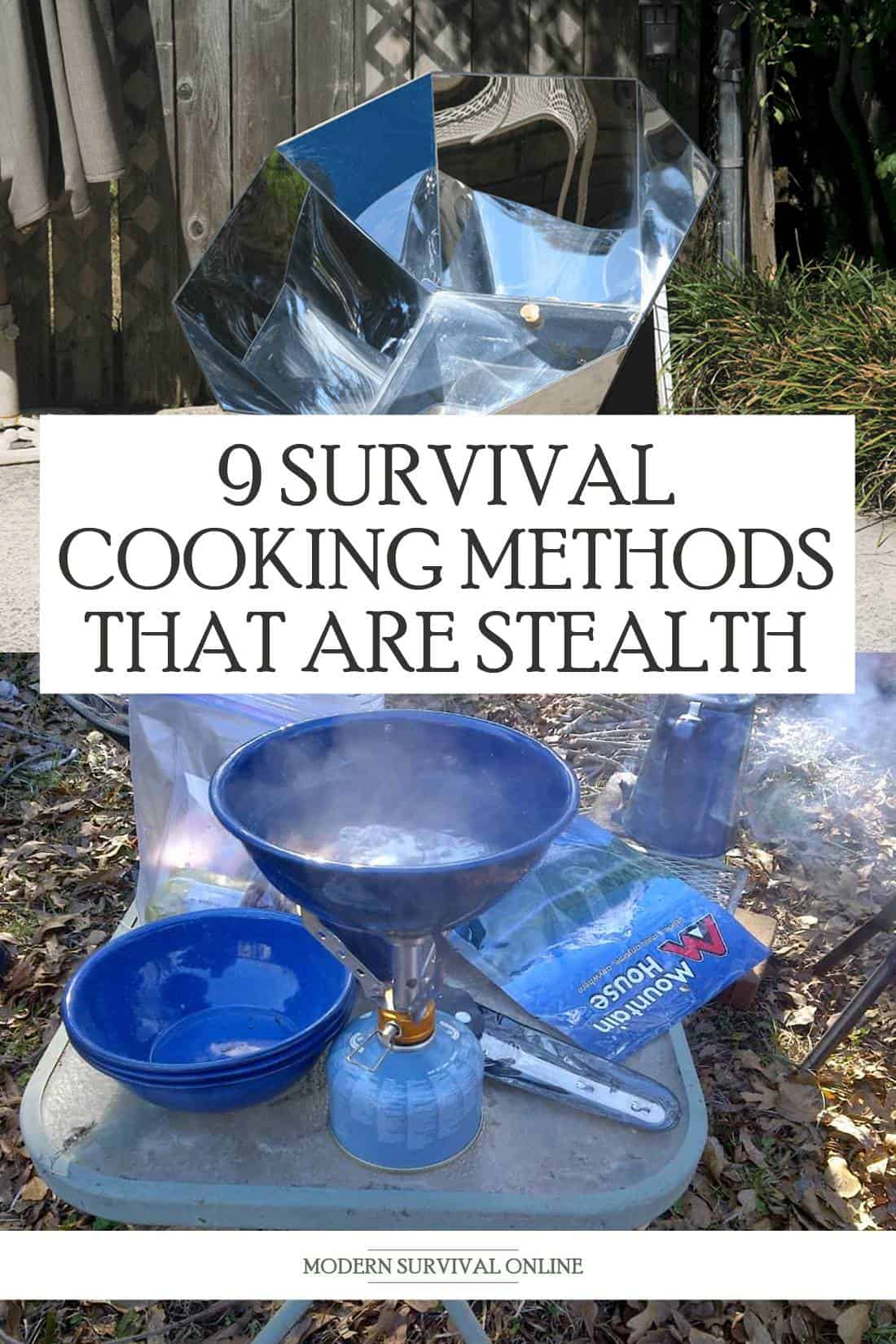
Solar Oven
Cooking food in a sun over will take a lot longer than popping it onto a grill or campstove, but the glass or plexiglass top cover on the off grid oven will greatly curtail the scent.
A solar oven is basically an enclosed box with reflective panels (although some are made without reflective panels).
Most solar ovens are capable of reaching a temperature of 400 degrees F. The average cook time for most foods typically prepared in a regular kitchen oven are 250 to 350 degrees – making this quiet off grid cooking method that will help you exercise proper sight, sound, and scent discipline.
You can bake, broil, or roast just about anything in a solar oven that you would in a conventional oven or on a charcoal grill.
Solar ovens (or solar cookers as they are also called) can work during the fall and winter, but take a lot longer to reach temperature, and may not be well suited for meat preparation during the colder months.
Gas Oven
If your home kitchen does not include a gas oven, investing in one even if it means converting the hookup from electric, should be made a prepping priority. When the electricity goes out, a gas stove and oven will still continue to work.
A natural gas oven will run on reserves for perhaps as long as 3 to 6 months in many areas. But ultimately, if no one is at the compressor pump plant keeping everything in working order, the flow of natural gas will end.
Natural gas service is not always offered in out of town rural areas. If this is the case where you live, (or you want a backup for your backup) a gas range unit can still be installed.
Purchasing a propane gas tank (or tanks) will allow you to hook up a gas range in your kitchen no matter where you live.
We can cook for more than a year using just one large propane tank on our survival homestead. A set up of his type will provide a way to cook indoors so no one – no matter how close they live, will be able to see, hear, or smell that you are cooking.
Unless you live outside of a rural area (the only place preppers should live anyway) you can buy as many propane tanks as you would like to keep a gas oven going for potentially many years.
Solar Powered Generator
Purchasing a solar generator (or several) will also allow you to cook indoors. Even if your space and budget allow for only a small generator, you will still garner enough power to use conventional food preparation devices indoors or on your back porch.
Unlike a gasoline, diesel, or kerosene-powered generators, a solar powered generator runs silently, and does not need a stockpile of fuel in order to operate. But, just as with the solar oven noted above, the cooking powered generated from this type of generator will be reduced during cold weather months.
A solar generator can typically have enough juice to power a crockpot, hot plate, toaster oven, roaster oven, air fryer, and even a small wattage microwave.
Freeze Dried Meals
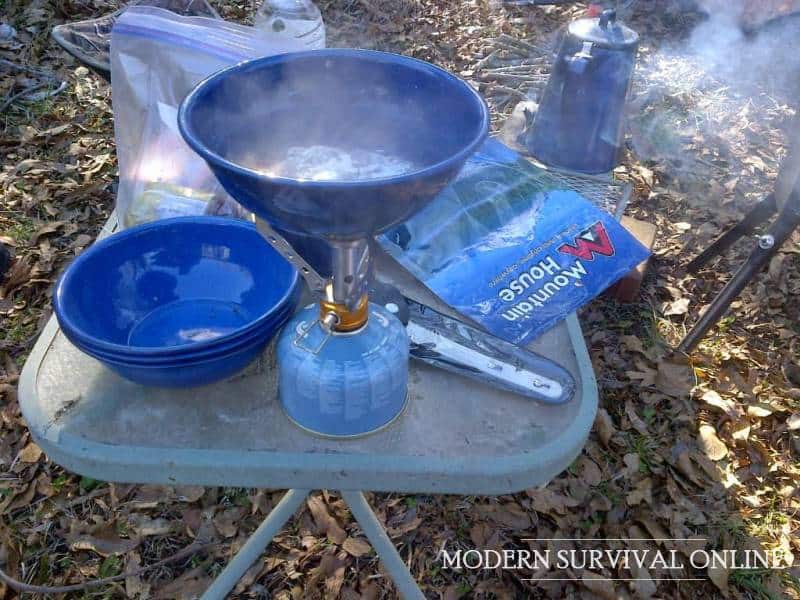
One of the very best ways to prepare hot food to eat without sacrificing sight, sound, or smell discipline. You can buy freeze dried meals from survival supply vendors that require only hot water be poured into the pouch to complete the process.
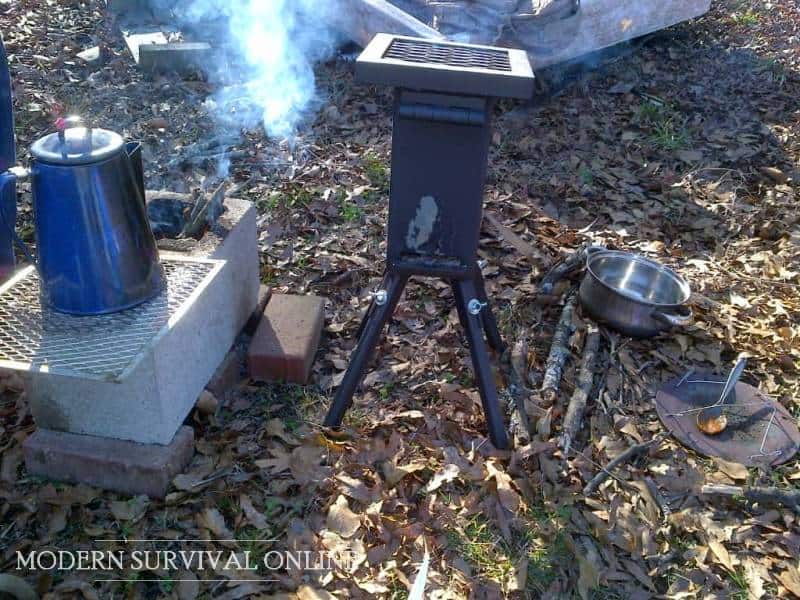
The heating of the water can be done using a camping style solar shower bag, solar oven, a small rocket stove that emits little smoke, or simply by placing a glass jar of water in a sunny spot, and allowing it to heat up naturally.
Long-term storage packet meals like this are more expensive than using food your have grown or raised yourself and preserved, but the SHTF cooking OPSEC value they provide is priceless.
Investing a freeze drying machine can cost between $1,500 to $4,000 depending on size and model. While this is a substantial expense, it could be a money saver in the end if you put in a large garden, as well as hunt and fish for a lot of your own food now, before the world goes pear-shaped.
Fireplace, Wood Cook Stove, or Wood Burning Stove
Not only will owning any one of these wood powered features in your home allow you to cook, they would also allow you to keep the living area warm, as well.
Once again, rural preppers will have a distinct advantage over preppers living in other areas when it comes to fireplace, wood burning stove, or wood cook stove cooking.
Preppers who cannot resupply their own firewood will only be able to use these options until the stockpile they have paid for and had delivered, run out. Hiding a big pile of wood from view is also going to be a major hurdle.
During cold weather months, smoke coming from any wood powered source will not look out of place in a rural area. But, in the summer, late spring, or early fall, a smoke flume coming out of a chimney will quickly alert a passerby that you have food, and are in the midst of preparing it.
Any time you can cook indoors the smell of what you’re doing is hidden. All of these wood powered devices operate not silently, but extremely quietly.
Outdoor cooking should be avoided at all costs. Unless you are in a bugout situation and have to build a fire for warmth or water purification, using a conventional campfire should always be a last resort.
Drawing attention to yourself, what you have, and what you are doing is the exact opposite of what a prepper rightly concerned about OPSEC would ever want to do.
A Dakota fire hole or Dakota fire pit is designed to produce heat using just the bare minimum of both flames and smoke. An outdoor fire like this will fairly quickly generate enough heat to boil water or cook food.
The amount of space needed to both dig and use a Dakota fire hole is incredibly minimal – making them a viable SHTF cooking option for small town, suburban, and even urban preppers.
The sight and smell discipline offered by using a Dakota fire pit is not as perfect as using a gas range, solar oven, or solar generator, but is still a potentially viable option if the Dakota fire hole can be dug in a location that no one outside of the family will see.
Cooking Bags And Aluminum Foil
When using a Dakota fire hole, or forced to build a traditional campfire in an emergency situation, using aluminum foil or cooking bags will reduce the cooking smell tremendously.
Packing cooking bags or foil in your bugout bag will reduce, at least slightly, the smell of food being prepared if you use a traditional campfire or a Dakota fire pit when away from home, as well.
Wrapping food in multiple layers of foil before putting it on a cooking grate or in a cast iron pot to prepare it, or in a cooking bag, will not alter cooking times and in fact can make the meal being prepared even more tender.
Camp Stove and Oven
A small portable propane powered camping stove or camping oven offers you the chance to make any food you would on a conventional kitchen range without making any noise or emitting any smoke.
But, the smell of bacon cooking on a camp stove, or biscuits baking in a camp oven can draw unwanted and potentially dangerous attention. Using a propane-powered cooking device indoors is not safe – as the label on camping stoves and ovens clearly state.
But, using such an off grid food preparation device on a porch close to your house door or inside of a garage with a window or exterior door cracked may allow for the recommended proper ventilation, and vastly reduce the smell of the cooking food beyond the immediate area.
Check out our reviews of these popular camping stoves:
Thermal cookers do require an external heat source like a small portable rocket stove designed to hold a small pot to boil water or a Dakota fire pit. These food preparation devices are basically large thermoses that can accommodate small to medium cook pots inside.
It takes around 10 minutes for water or other liquids placed inside of the pot to hit the boiling point. Once the water has boiled, the other ingredients that are stirred into the pot will cook for up to eight hours – without making any noise or drawing any attention to the meal preparation via smell.
Final Thoughts
There are pros and cons to every SHTF cooking option on this list. While all can work efficiently in an off grid manner, some rely on the resupply of a fuel source and others cause some type of smell, sound, or smell discipline issues.
Using more than one OPSEC minded off grid cooking options so you not only have backup for your backup but a third layer of sight, sound, and smell discipline cooking options will help keep your family well fed and safe during a long-term disaster.
Preventing anyone other than the loved ones living in the same home from knowing you have food and a cooking source to make it is the only way to keep both them and your food stockpile safe.