Tuesday, June 4, 2024

Top 10 Greatest Prepper Fiction Books of All Time

survival books

When visiting an external link on this page and then make a purchase, I may earn a commission. My full advertising disclosure is here.

If you call yourself a prepper, it means you should be a perpetual student. There’s always something more that you can learn or more skills to master…

But, of course, you don’t want your life to be nothing but work and study. It’s okay to have fun and relax, and if you are a reader, hardly anything is better than settling down with a good novel.

And here, we are lucky you can read a cracking good story and still be improving your prepper IQ with the right books.

The following 10 titles all have survival, preparation, or desperately holding out against the odds as central plot points. It might be fiction, and some of them are even fantastical, but you can still learn some very important lessons and have a good time doing so. Let’s get right into it…

Darkness on the Edge of Town, by Brian Keene

A supernatural horror thriller that focuses on the rapidly dwindling population of a small town.

One day, out of nowhere and with no warning, a dome or ring of absolute and impenetrable inky darkness surrounds a town with no signals, and no people are able to get out or in. Those brave or foolish few who chance the darkness meet horrendously terrible ends.

The terror of the situation, along with rapidly dwindling supplies, leads survivors who are stuck within the town’s borders to cooperate at first, but this quickly devolves into tribalism and bloodlust as food, water, alcohol, and cigarettes run out.

It’s a terrifying tale written in a journal style, and a harrowing look at how dire things will get in any kind of survival scenario when the food starts to run out. Get the book here.

The Dog Stars, by Peter Heller

A beautifully written tale of survival and persistence, The Dog Stars tells the story of a man, his dog, and his erstwhile friend and fellow survivor living in a fortified airport compound after a global pandemic significantly depletes the population of the United States.

There isn’t as much action as you might think, and much of the story focuses on the protagonist, Hig, just trying to get along and avoid going crazy after so much loss, while still helping those he can using a small Cessna as a conveyance.

Poetic, beautiful, and thought-provoking, this is one of my very favorite post-apocalypse novels and a must-read for any prepper. Get the book here.

Blue Dawn, by Blaine L. Pardoe

New York Times bestselling author Blaine Lee Pardoe brings us a new series that is a thoroughly modern and frightening divergence from our own current trajectory as a country here in the US.

When far-left elements successfully take over the government and conduct an ideological purge, the social issues and mores they harp and crow about suddenly become law, and many become offenses punishable by unpersoning or death.

If you’ve ever had nightmares about a complete and totalitarian leftist takeover of the government, this series will thrill and terrify you in equal measure.

Highly recommended! Get the book here.

Day by Day Armageddon, by J.L. Bourne

A zombie apocalypse thriller written during the heyday of the zombie craze, this book is nonetheless one of the best.

As alluded to by the title, Day by Day Armageddon is a journal, one written by a naval aviator who survives the onset of an ongoing trauma of a plague that turns people into frenzied and feral cannibals.

The author is a Navy veteran and knows what he is talking about when it comes to guns, gear, and tactics, and there are many points of survival and sustainment and also dealing with unknown contacts during a lockdown and shelter-in-place situation.

The problems that come up are invariably solved in a realistic, grounded way, and the story is absolutely riveting if you are into the “apocalyptic log” genre.

Another one I highly recommend! Get the book here.

The Postman, by David Brin

A classic post-apocalyptic novel, The Postman focuses on civilization, and what it constitutes, in the aftermath of a paradigm-shifting global event.

A massive war saw the use of powerful EMPs along with biological and nuclear weapons that completely devastated the United States and, presumably, much of the globe.

Protagonist Gordon Krantz takes shelter in a wrecked and abandoned post office van and takes the uniform of a postal worker after he is robbed completely blind by brigands.

Visiting various encampments pretending to be a legitimate postal worker from the restored United States, we learn about different survival strategies employed by these new proto-nations and peoples.

A bit of a slow read at times, but highly engrossing and a genuinely moving story that focuses on the humanity, good and bad, of survivors. Get the book here.

After the Shift Series, by Grace Hamilton

In this series, author Grace Hamilton shows us what a truly cataclysmic disaster might look like, one resulting from a massive upheaval and shift of the Earth’s crust. How bad are we talking? Bad enough that the North Pole is now located in the central Atlantic!

The shuttering and groaning of the very planet that we live on has caused a new, global ice age, with humanity as a whole trying desperately and often vainly to resist and live in spite of the cold.

The story focuses on a man, Nathan Trolley, along with his family, a newborn among them, as they do everything they can to find a place that is warm enough to live.

It is a grim book, as there is absolutely no end in sight to the relentless, gnawing cold that has frozen the Earth.

Still, the survival challenges that the Trolley family faces from exposure are fully consistent with both cold weather survival and a total collapse of society and the attendant loss of supply lines. Get the book here.

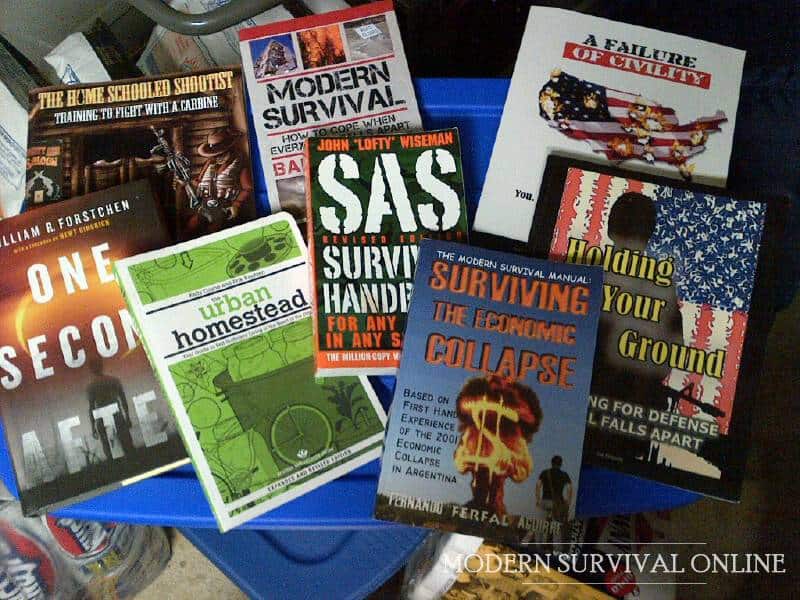
One Second After, by William Forstchen

One of the most talked about books in the survival fiction subgenre, William Forstchen’s darkly prophetic One Second After takes us through a scenario that’s entirely too likely to occur: that of a massive EMP strike on the United States which completely collapses electrical and information infrastructure.

The result is that the vast majority of the population is set back to the industrial or pre-industrial age. Shortages of food, medicine, water, and other supplies take hold almost immediately as people scramble to keep their communities calm, peaceful, and sane.

The story follows Professor John Matherson of Black Mountain, North Carolina, as he tries to keep his family safe but is, increasingly, relied upon by the townspeople as a leader. Get the book here.

Alas, Babylon, by Pat Frank

In this book, author Pat Frank pulls no punches and shows us exactly what it would look like if a full-scale nuclear war were to occur.

The United States is scoured by nuclear fire, erasing civilization almost entirely as tens of millions die immediately, with millions more dying off in the aftermath.

But, by luck or by virtue of simply being unimportant enough, some towns are spared direct destruction. Such is the fate of the setting of our novel, a tiny town in Florida. Its inhabitants now cling to life and band together to go on living.

This effort is noble but imperfect, and the novel showcases both the best and worst of humanity when pressed into such a desperate situation. Get the book here.

The Stand, by Stephen King

One of the most beloved novels written by world-famous horror author Stephen King, The Stand is a door-stopper of a book but arguably one of the most epic and enthralling tales of post-apocalypse survival ever put to paper.

After a test subject breaks out of a biological testing facility, a weaponized germ scours the globe and kills nearly the entirety of humanity in a matter of days.

Those few survivors that inhabit the unfathomably empty and quiet United States turn to two demagogic leaders: the kindly, peaceful, and wise but ancient Mother Abigail and the charismatic but evil Randall Flagg.

Avid King readers will no doubt recognize the antagonist, and that is a clue to the ultimate underlying plot point of the book.

Much of it is prosaic, and the horrible situations that the characters find themselves in seem to be nothing more than the consequences of governments and the ever-fallible people that populate them screwing up royally.

But as the book drags on and it reaches its climax, more and more supernatural elements start to kick in, in classic King fashion.

It is a lengthy and sometimes difficult read, but phenomenally entertaining and truly thought-provoking for preppers. Get the paperback book here.

The Road, by Cormac McCarthy

One of the greatest novels from one of the most recent and best American masters, The Road tells a very simple but poignant story.

A father, living through the loss of his wife to suicide in the aftermath of some unspecified cataclysm that has wrecked society in the US, is traveling south with his son to reach warmer weather, ahead of the encroaching winter.

With few possessions and surrounded by devastation and death on all sides, they try to hold on to what makes them human and good as the rest of society, seemingly, gives in to desperation and darker impulses.

At turns beautiful and ugly, heartwarming and shockingly violent, The Road is a must-read novel, period, and one of the very, very best pieces of fiction for preppers.

9780307387899Read it, and then really contemplate what you would do if you were placed in the same sorts of situations that the father was. I pray it never happens, but one day soon you might be, and you’ll need to be prepared. You can get the paperback here.

prepper fiction books

The post Top 10 Greatest Prepper Fiction Books of All Time appeared first on Modern Survival Online.


via Modern Survival Online https://ift.tt/nYQo8r9

Saturday, June 1, 2024

50 Prepper Items You Can Get at Dollar General

For so many preppers, the biggest part of the task is just getting all of the gear and supplies you’ll need to sustain yourself and your family in times of trouble.

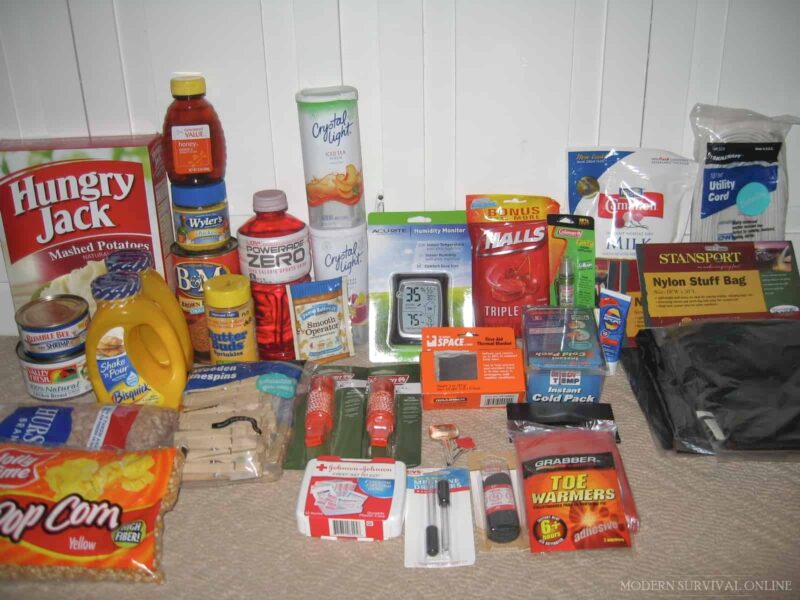
stockpiled items canned chicken breast emergency blanket toe warmers and more
Stockpiled items: canned chicken breast, emergency blanket, toe warmers, pinto beans, yellow popcorn, compass, poncho, dried milk, peanut butter, canned brown bread, honey, chicken bouillon

Yes, skills count for a lot. But there is simply no replacement for having what you need on hand when disaster strikes. I’m talking about things like food, clothing, medicine, tools, and a lot more.

Naturally, budgeting for your survival stash is enough to cause considerable stress, especially when money is tight. But you can get what you need to survive and save a fortune by shopping for your preps at your local Dollar General.

The items might not be of the highest quality, but much of the time they can do the job. We’ll get straight into our list of my top picks below…

Food

Dollar Generals have food, of course, and it is usually the staples that we preppers want. All kinds of canned food like fruit, veggies, chili, stew, and the like but also dried goods like flour, cornmeal, rice, cereal, and so forth.

Water

Every prepper knows that water is essential to survival, and when things break open nothing beats having bottled water on hand.

You can usually get bottled water by the bottle, case and sometimes by the jug at your local store, but pay attention to the quality of the container. The cheapest, flimsiest ones will start to leak in storage so watch out for that. My local DG has 1-gallon jugs for just a $1.50

Candy

Candy might not seem like an essential survival item, but you’d be surprised at the good it can do for morale.

Having something to crunch or suck on (no jokes) helps people and especially kids stay calm, and sugar can give you a little bit of energy over time. Plus, it’s a little touch of normality during a stressful situation and that is always worthwhile…

Beef Jerky

Can you even call yourself a prepper if you don’t have a stash of beef jerky on hand? This stuff has gotten horrifically expensive in recent years, and it’s going to be spendy at Dollar General, too, but it is still a good option for fitting out your field rations and stored snacks. 2.6 ounces is $4.75 for Bridgeford brand.

Nuts

Nuts, like beef jerky, are a great survival ration. They’re highly nutritious, calorie-dense, and contain a good bit of protein that is always needed in long-term survival scenarios.

Plus, nuts store really well, so you’d be smart to stock up whenever and however you can. Your local store might not have a great selection, but they will have some.

Plates + Silverware

Having disposable mess kits to eat off of will simplify hygiene requirements, and also keep you from wasting water to do dishes.

Basic paper or Styrofoam plates are generally adequate, as is plastic silverware. A couple of large packs of each should be sufficient to get you through all but the longest situations. $2.65 will get you 15 heavy-duty plates, anda buck will get you a 48-pack of assorted utensils.

Ziploc Bags

Ziploc bags are really a prepper’s best friend, specifically the large gallon freezer size. For holding dirty gear, spare water, and countless other tasks, they rock.

Get a good name brand at your local store if you can, but if you can’t then be careful with them because they probably won’t hold water without leaking a little bit. $5.00 will get you 14 gallon Ziploc-brand bags at DG.

Trashbags

Trash bags are another survival commodity, especially when bugging in and your toilet or sewer system is out of action. You’ll still need to get rid of trash, contaminated clothing, and even human waste, and that’s where a big roll of these will be worth their weight in gold. About $6.00 a roll.

Hand Tools

Most Dollar Generals these days carry a wide array of hand tools, including things like hammers, ratchet sets, screwdrivers, and so on. The quality is often low, but they can still get the job done for light duty and impromptu repairs.

Scissors

You’ll always need scissors. For cutting and modifying clothing, plastic sheeting, and countless other tasks, they come in handy. Try to get a general-purpose set or kitchen shears if they are in stock. Avoid the little blunt school scissors entirely. A small, sharp pair of barber scissors is also a good pickup.

Duct Tape

You know it, you love it. You’ve got to have duct tape because it is too useful to go without. You can improvise tools and hasty solutions to problems, conduct repairs, stop windows from breaking, and seal up structures against the intrusion of gas or smoke.

It has literally dozens and dozens of other uses besides, and I can’t go into it all here! Just get it. They carry Gorilla brand, my personal favorite, for about $6.00 a roll.

Super Glue

Super glue is a contemporary of duct tape for preppers. It can bond all kinds of materials instantly with no fuss and no muss, and even has additional uses for basic first aid.

I really love getting super glue at the Dollar General particularly because it typically comes in a multipack of single-use pipettes. Just a buck.

Pencils + Pens

Sounds boring, and it is, but pencils and pens always come in handy during survival situations. Power for devices will be at a premium, and as electronic communications shut down, remembering things and leaving notes in analog form becomes more important.

Notepads

You’ll use notepads with your pens and pencils above. Get a half dozen and stash them.

Lighters

The ability to start a fire is an essential survival capability. You can use it for warmth, light, cooking, signaling, and more.

I know many preppers think of primitive fire-starting methods and things like flint and steel in the context of survival, but you’re always better off trying a lighter first.

Matches

Matches are another great thing to have in abundance as a fire-starting tool, and they offer backup capabilities to lighters or vice versa.

Sometimes you might not be able to get your lighter going, and in that case, matches might save the day. Remember to keep them dry at all times!

Petroleum Jelly

Petroleum jelly is another fantastic prep that beginners might raise an eyebrow at. But it has many uses!

It has utility as something that can help with injuries and soreness, help you in the garage and around the home, and also be used to make excellent fire starters in conjunction with cotton balls, the next item on our list. A pot runs about $3.25.

Cotton Balls

We want cotton balls because they can be soaked in petroleum jelly and then stored in an airtight bag or other container as truly effective and reliable fire starters made for pennies. But you can also use cotton balls for other things, so they’re good to have around.

Snap Lights

Snap lights, also known as chem lights, are those little glowing green tubes you usually see coming out around Halloween or at raves.

These are heatless and utterly safe sources of light that are great when other light sources are not practical or totally unavailable. They work superbly for signaling at night and also keeping up with people in the dark. Usually a buck each when they are in stock.

Candles

The utility of candles should be obvious. Just make sure you take proper fire precautions when using them! 5-inch unscented pillar candles are only around $2.00.

Flashlights

Flashlights can be a lifeline in a disaster situation. There are so many scenarios that will result in a total loss of power, and having the portable reliability and safety of a flashlight is important. The ones you get at Dollar General might not be very impressive, but they will light your way. $1.00 to $10.00.

Batteries

Your flashlights will need batteries, and other devices you have besides. Make sure you’ve got a bunch. Duracell AA’s go for about $6.50

Steel Wool

Steel wool is handy for various cleaning tasks and another way to start a fire in conjunction with a 9-volt battery. Simply touch a tube of rolled steel wool to either terminal, and the middle will glow hot in a few seconds.

Gloves, Cloth or Leather.

You’ll have plenty of cause to protect your hands after most disasters. Get several sets of basic cotton work gloves for you and your family. Around $4.00 for coated cloth, $10.00 for leather.

Gloves, Nitrile

Nitrile gloves come in really handy for dealing with all sorts of nasty substances, from chemicals to blood and other body secretions. Get several packages and place them in your medical kit or elsewhere as needed. $8.00 for a 40-count.

Socks

Super simple. Dry, clean socks are imperative for preventing blisters and other foot ailments that can stop you in your tracks if you’re forced to hoof it. Even if you are bugging in, having clean socks to change into is great for your state of mind.

Hats

A head covering of your choice. A wide-brimmed gardening hat will keep the sun off your face and neck, and even a ball cap is better than nothing. Toboggans or toques are great to have in cold climates or in the winter.

Bandanas

Bandanas are one of my very favorite multi-purpose survival tools. They work as a head covering, masks, bundles, padding, and so much more. Dollar General versions are cheap and rough but do the job. $3.50 for two.

Blankets

Extra blankets are always a great thing to have on hand and for various reasons. Again, you’re probably going to get something that’s thin and flimsy or sturdy but scratchy at Dollar General ,but frim time to time they will have pretty nice ones, and cheap.

Hand Warmers

Hand warmers might seem like a luxury item but don’t underestimate their importance if you are forced to endure truly cold weather.

When your hands start to go numb, or even non-functional, from cold, your life will soon be in danger because you can’t do the things you need to do to survive.

Shoe Repair Kits

Taking care of your footwear is just another part of taking care of your feet. A basic shoe repair kit will help you deal with a blown-out sole or busted laces.

Sewing Kits

Similarly, keeping your clothing, packs, and other gear in good repair might make the difference between survival and death, at the very least between relative comfort and total misery. Obviously, to use this you’ll need to know how to sew. A nice one is just $5.00.

Sunglasses

Protecting your eyes from constant UV bombardment will prevent strain in the short term and damage in the long term. And even cheap sunglasses offer basic protection from dust and some flying debris or windblown particles.

Rain Ponchos

Another one of my Dollar General favorites. These cheap, packable rain ponchos or rain slickers can help keep you dry when it is pouring outside, and it rarely fails that when you are driven out of your home it will soon start to rain. Between $1.00 and $6.00 at most stores.

Planters

You can get basic planters at the Dollar General very cheaply. Something that won’t help you in the short term, but in a long-term survival scenario can help you start to bring in beneficial plants.

Seeds

In the springtime especially, many Dollar Generals will stock a surprising variety of seeds…

The seeds are usually of unknown provenance, but all the ones I planted reliably grew and were exactly what the package said they would be. Grab yourself some veggies and medicinal herbs if they have them.

Buckets

Another seemingly benign item, but real preppers know this is an All-Star pick. Buckets are perfect for storing extra water, storing food, using as an improvised stool or in a severe pinch, using as an expedient toilet. About $5.00 for a good size.

If you can get the large painter buckets cheaply, make sure you get lids with them.

Contact Cases

If you or anyone else in your family uses contact lenses, it’s smart to have a few spare cases on hand in case their primaries go missing.

Reading Glasses

Reading glasses aren’t a substitute for prescription glasses, but they might make the difference if a prescription pair goes missing or gets damaged. Even if you don’t need corrective eyewear, they can still help if you’re trying to read small print in less than ideal light.

OTC Meds

Dollar Generals carry all sorts of over-the-counter medicines, including things for pain, nausea, indigestion, diarrhea, and a whole lot more. Stock up and keep them rotated! Most small-count meds go for anywhere from $1.50 to $6.00 a pack.

Adhesive Bandages

Adhesive bandages in most common sizes can usually be found at your local Dollar General. Often they are not quite as effective, meaning sticky and durable, as the better brands you’ll find in other places, but they certainly work, and they are sterile.Most brands retail and DG for about $5.00

Gauze Pads and Rolled Gauze

Sometimes band-aids just don’t cut it, and for more significant injuries or larger boo-boos, you’ll need to break out gauze of one kind or another. I recommend getting a variety of gauze pad sizes and also a good quantity of rolled gauze if it is available.

Ace Wrap

Ace wrap, sometimes called vet wrap, is that tan stretchy stuff that your high school coach used to help deal with sprains, strains, and all sorts of other musculoskeletal injuries. Skilled users can treat everything from a bad sprain to a dislocation and even a broken bone with the stuff. Around $4.00.

Face Mask

Face masks are good to have in case you’re dealing with a significant disease outbreak or certain airborne contaminants. Not that anything like that would ever happen, of course…

Joint Supports

If you’re getting a little bit older or simply dealing with old injuries to your elbows or knees, the appropriate braces can make life a little more tolerable, especially if you’re forced to be a lot more active in the aftermath of a disaster.

Blister Relief Kit

Remember what I said about taking care of your feet up above? That means dealing with blisters.

Minor blisters are an annoyance when you are forced to be on your feet, and if left untreated they can turn genuinely agonizing and eventually crippling. Treating any blister properly is priority one in a survival situation. An adhesive kit or moleskin patch is about $5.00

Bug Bite/Sting Kit

They are rarely anything more than an annoyance or minor injury, but getting lit up by biting or stinging insects is enough to drive you mad under the circumstances. A bug bite or bug sting kit and appropriate topicals will help keep you and your family sane.

Toothbrushes and Toothpaste

Dealing with a crisis is no excuse to stop taking care of yourself assuming you have the time and opportunity to do so. Taking care of your teeth will help you feel better and also help the people around you feel better, if you know what I mean. Both might cost as little as $2.00.

Feminine Hygiene Items

Life goes on no matter how bad the situation is, that means if you are a woman or have women in your lives they need supplies to deal with that inevitable time of the month.

Even if you don’t need these things, I recommend you get at least a small stash anyway to hand out to people in need.

Sunblock

You aren’t going on vacation, but you might yet be forced to endure a long time in the sun. Severe sunburns are show stoppers, so try and prevent that with sunblock. $5.00 to $8.00.

dollar general prepper items

The post 50 Prepper Items You Can Get at Dollar General appeared first on Modern Survival Online.


via Modern Survival Online https://ift.tt/P1B2x8d

Saturday, May 25, 2024

5 Surefire Ways to Poison a Raccoon

Raccoons are adorable and charming, but only when you’re looking at them on the Internet or over in your neighbor’s yard.

raccoons eating bait

Raccoons that get on your property are invariably going to be a giant pain in the you-know-where. They are experts at breaking into trash and stored feed, can be aggressive, and if they get into your house to nest, you’re going to have a disaster on your hands.

Raccoons can sometimes be driven away, occasionally be caught, or sometimes kept out. But much of the time, they’re just too clever and too agile to get rid of using these methods.

Sometimes you’ve got to resort to lethal intervention. If that’s the case, poison may be one of your best and most reliable tools, but it’s a capricious one that you must use with great care…

If you think you’re up for the job, keep reading and I’ll tell you about 5 surefire ways to poison a raccoon below.

Before You Begin

Before we get started, here’s the obligatory safety brief. Don’t assume that raccoons can be ruthlessly eliminated like the pests that they are.

They might be protected where you live at the local or state level. If you are allowed to get rid of raccoons as pests, it might only be under certain circumstances or at certain times of the year.

Similarly, there might be prohibitions on what you can use to actually dispatch them. Poisons might not be acceptable at all. It just depends, and you must not assume because these laws often entail serious misdemeanor or even felony charges for breaking them.

Only once you have ascertained the full letter of the law and your responsibilities should you proceed.

Always Use Maximum Caution When Employing Poisons!

I hope this part will be obvious, but experience has taught me time and time again that not everyone will be responsible with poisons. It’s imperative that you use maximum caution and discretion if you’re relying on poison to dispatch a raccoon or any other animal.

For starters, death by poison, no matter what kind, is always hideous and often slow. Are you prepared to inflict that on a raccoon? Consider also that poison doesn’t kill instantly no matter how deadly it is.

If a raccoon is fatally poisoned but crawls off into or under your house somewhere, the corpse will soon start stinking to high heaven and that can make for a difficult or impossible removal.

Lastly and most importantly, poison is a highly indiscriminate killer. Because we can only rely on it through ingestion, typically by tainting attractive food with it, other animals like dogs and cats could likewise be fatally poisoned.

Smaller animals like squirrels, rats, and the like get poisoned and then die, and scavengers that eat them might then be poisoned. A chain reaction of death stretching on and off, all because you were careless or hasty.

Think carefully about what sort of bait you will use and where you will place it so that raccoons can get to it, but other animals cannot or are less likely to.

With all of that in mind, it’s time to get down to the poisons…

Warfarin, Flocoumafen, Brodifacoum, and Related Agents

You might recognize a couple of these poisons, but these and many others all have one thing in common: they are anticoagulants.

They work by reducing and eventually eliminating the clotting factor in the blood, typically accomplished by disrupting the integration and processing of vitamin K.

Whatever kind they are, these are widespread poisons that are used throughout the pest control industry today both at the professional and the consumer level.

Although effective, cheap, and easy to implement, they are very slow-acting with all but the largest and most powerful doses causing death anywhere from a week to 2 weeks after the poor animal eats the stuff.

Depending on the product, or the way that you apply it, a single dose might do it, or you might let the targeted animal eat from a tainted source repeatedly. It rarely results in a gory or heinous death, but it is a slow and miserable one…

If you are going this route, know that all poisons in the anticoagulant group are notorious for causing serious collateral damage to other animals. Rodents routinely fall victim to this stuff as designed no matter how it is deployed, and that ends up killing cats, birds of prey, and larger mammals that eat the mice.

A raccoon that dies from it would certainly be scavenged by foxes, crows, vultures, and the like, so try to confirm the kill and dispose of the body safely after death.

Bromethalin

Bromethalin is distinct from the anticoagulant group of poisons above because it is neurotoxic, and potently so.

It is again found in widespread use against rodents, and is highly effective against larger mammals in correspondingly larger doses, including humans, so handle and deploy this stuff with care!

The function of bromethalin is that it sharply decreases ATP synthesis after ingestion once it is metabolized.

A decrease in ATP levels means that various enzymes become dormant, and when these enzymes go dormant, it causes fluid to build up around and damage the nervous system tissues with pressure. Eventually, it results in severe disruption of bodily function and paralysis followed by death.

This is another gruesome poison, and one that commonly affects animals besides the target. When a significant dose is ingested, bromethalin causes severe abdominal cramping, explosive diarrhea, seizures, and profound sensitivity to light and noise.

Know that in the case of accidental poisoning, prompt medical intervention can neutralize the poison and minimize damage to pets and people, so keep an eye out for all of those symptoms and your own pets or other animals if you are deploying it around the property.

Strychnine

A well-known poison with a particularly dark reputation since it has enjoyed dual use in assassination and espionage, strychnine has enjoyed far more use as a common pesticide.

A long time ago, microdoses of strychnine were also used in medical settings to help people who had lost control of their muscles or could not achieve full contraction of the same.

Strychnine is a versatile poison because it can kill if ingested, but also if absorbed through mucous membranes or even inhaled.

This stuff is incredibly potent and takes effect quickly. Ingestion may result in symptoms as little as 5 minutes, but more commonly 20 to 30 minutes.

Once it starts to take effect, the poisoned animal will experience twitching that will progress to seizures and eventually grand mal muscular contractions. This is often accompanied by profuse drooling and sometimes foaming at the mouth. Death, when it occurs, is typically via asphyxiation because the respiratory muscles become paralyzed.

Prior to death, a heinous type of rigor mortis sets in where major muscle groups of the torso and limbs become rigidly locked in place. I warn you, even compared to other poisons we have discussed, death by strychnine is terribly ugly.

Largely fallen out of favor, strychnine is still produced and sold as poison for use against large rodents and larger vertebrate pests. Coyotes, foxes, moles, groundhogs, and sometimes Norway rats are common intended targets.

Interestingly, some mammals show immunity or extraordinary resistance to the effects of strychnine.

Horses are the most well-known example, and this means it might have genuine special utility if you keep horses yourself and are dealing with raccoons around the barn or shed.

Vitamin D3

No, you aren’t seeing things. Vitamin D3 can actually be a ferociously potent poison in high doses. And yes, it’s the very same D3 that we get when we go out in the sun or take as part of a multivitamin. No kidding!

You’ll often see vitamin D3 referred to in the pest control setting as cholecalciferol to prevent confusion or people just getting the wrong idea. But make no mistake; vitamin D3 is incredibly dangerous to all mammalian life in high concentrations.

It also kills in a particularly horrible way. Vitamin D3 will cause the progressive calcification of soft tissues throughout an animal’s body once it reaches toxic levels.

If you know anything about the process of calcification, you already know that it is very literally what petrification is. This is some evil voodoo stuff, but it’s entirely real!

And don’t think this is some peculiar homebrew methodology either: vitamin D3 is used around the world as species-specific poison baits, so the effects are entirely understood.

The mercy, such as it is, is that death usually results from one of several other mechanisms before that process is too far along: victims will usually fall prey to central nervous system collapse, aneurysm, renal failure, or cardiac arrest.

But compared to purpose-developed poisons, it can be surprisingly quick-acting. Minor symptoms will begin to manifest a day or two after ingestion, and in the case of very large doses, death may occur in a few days or a week later.

And don’t make the mistake of thinking that just because it is actually a vitamin that it’s somehow safer for your pets or farm animals: it isn’t, not in the concentrations we’ll be using to kill a raccoon!

Ethylene Glycol

Ethylene glycol might ring a bell, and that’s because it is commonly associated with antifreeze. In fact, it’s the majority ingredient in most commercial antifreeze solutions.

This stuff is particularly effective when used as – and definitely not intended to be used as – poison because it is quite sweet.

That trait has led to the addition of bittering agents in all products that use the stuff; many tragic accidents have occurred with children over the years getting access to antifreeze and consuming it.

When ingested, ethylene glycol causes drunkenness, severe vomiting, renal failure, brain damage, and intense seizures. This stuff is hideously toxic to all mammals, including people.

Peculiarly, most significant poisonings resulting from ethylene glycol show a lull of sorts where victims improve significantly and feel much better.

Unfortunately, or fortunately in our case, the damage has already been done and is indeed still ongoing during this lull. It is only afterward that the most crushing symptoms will return and then death will be hot on its heels.

Strictly speaking, the usual mechanism of death is kidney failure, specifically resulting from the formation of mineral crystals throughout the tissues. The victim is often in a coma before this happens, though.

Unlike several of the other poisons we have covered, ethylene glycol can kill very quickly with a sufficient dose, sometimes within 24 hours but rarely taking longer than two or three days.

poisoning a raccoon Pinterest image

The post 5 Surefire Ways to Poison a Raccoon appeared first on Modern Survival Online.


via Modern Survival Online https://ift.tt/ue27TkO

Sunday, May 19, 2024

11 Desiccant Alternatives That May Work Just as Well

Do you know what desiccant packs are? You know those little packets full of beads that are labeled “Do not eat”? The ones that come in all of your electronics and certain food packages? That’s them.

These packs have an important function: they absorb moisture from the air around them. Moisture that causes corrosion, spoilage, and other problems.

Unless you live in the driest place imaginable, moisture can always be your enemy when storing anything long-term, and even for the short term. That’s why smart preppers use these desiccant packs liberally when storing food, papers, electronics, tools, guns, and more.

But the costs of buying them can add up over time, and when supply lines are dodgy you might not be able to get them at all. That’s when it pays to know how to make your own from other common materials.

In this article, I’ll be telling you about 11 desiccant alternatives that can do the job as the genuine article.

How Do You Use These Materials?

Using genuine desiccant packs is easy, but how do you use these materials? It depends on the type of material.

Certain things that are coarse and chunky you can load into cloth sachets of your own or even use something like an old sock that is still in good shape.

For other materials, particularly highly reactive ones or ones that are prone to leaking when saturated, putting them inside a plastic or glass jar that has a series of holes either poked in the jar itself or in the lid is your best bet.

You might need to use a little creativity so that your chosen media can do its job of absorbing moisture without endangering the surrounding area or making a mess. I’ll address that item by item in the corresponding sections, no worries…

white rice in plastic packaging

Rice

Here’s an old-school trick that you might have known already. Rice tends to be quite absorbent, and it is certainly available everywhere and extremely cheap.

Have you ever heard about people rescuing a phone or other device that got dropped in water by covering it in a bowl of rice? It can actually work sometimes!

YouTube Video

Rice can do the job in a small space, but keep in mind it absorbs water fairly slowly, and it will turn mushy and mold over time. Because of that, it’s not a good choice for chronically humid or damp environments.

Another problem is that it’s highly prone to attracting rodents and insects! Wherever it is stashed, make sure these critters can’t get to it or you might have bigger problems.

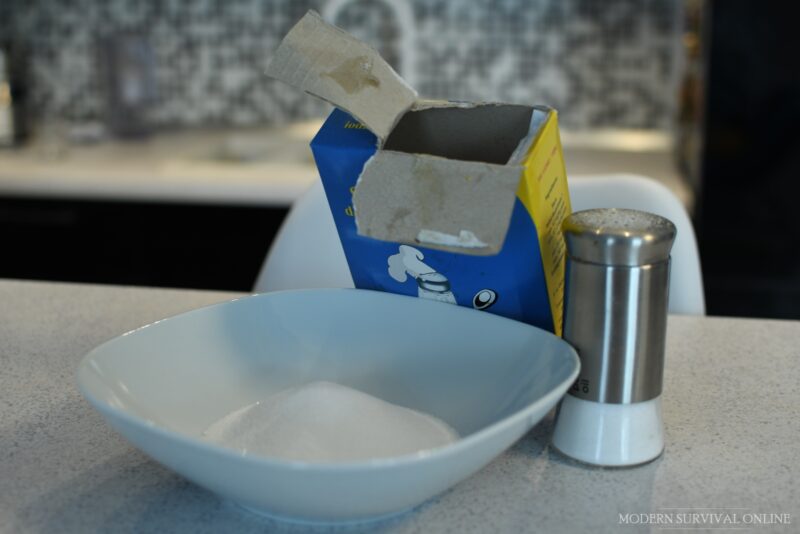
table salt in bowl in a box and in salt shaker

Salt

Salt is another time-honored method for absorbing moisture, and something as simple as a big bowl of salt might deal with dampness and humidity. It has a high capacity and absorbs water very quickly because of its reactivity. Like rice, it is also ubiquitous and very, very cheap.

As it absorbs water, salt will start to clump up into rock-like formations, and this can reduce the efficiency of the salt trapped inside or below, so periodically shaking or breaking it up helps.

Also, once salt reaches maximum capacity it will start to turn into a runny slurry, so stay on top of changing it out or keep it in a waterproof container.

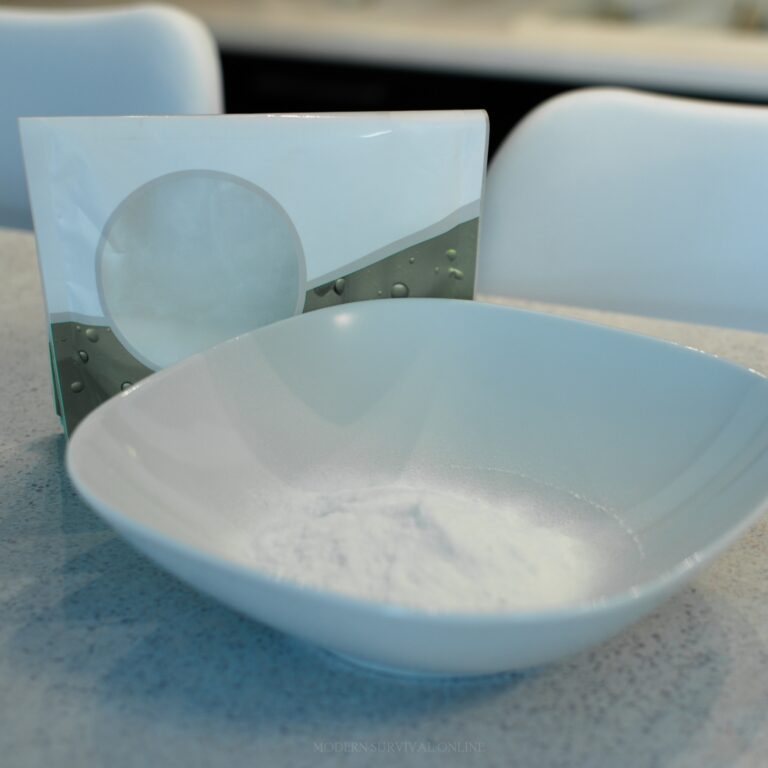
baking soda in bowl on kitchen counter

Baking Soda

You already know that baking soda is useful for absorbing and neutralizing unwanted odors, but it also does a fairly good job of dealing with high humidity and dampness.

But make no mistake: baking soda works a lot better against odor than it does against moisture. You can use it, and it will work, but don’t expect great things from it if you’re dealing with serious dampness or a constantly wet location.

The good news is that it’s easy to handle, safe, and very, very cheap so there’s no reason you can’t put it to use if you already have it on hand.

Cornstarch

Another pantry staple, cornstarch is more commonly used in the kitchen for various recipes and as a thickening agent. That said, it will absorb moisture and turn gummy, although it doesn’t really lock it into place like some of the other materials on our list.

Despite this, it is a cheap, completely safe, and expedient option.

I’ve used cornstarch myself to keep a toolbox full of tools stored in an outdoor shed from getting all rusty. Kept in a waterproof plastic or glass bowl with a lid, it can do an okay job in a confined space.

But take a tip from me and stay on top of changing it out regularly or you’ll have a mess to deal with.

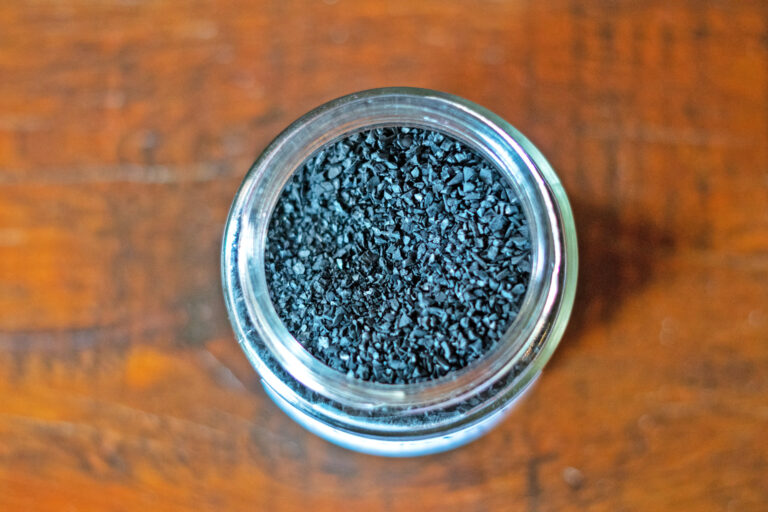
jar of activated charcoal

Activated Charcoal

Another famously effective odor absorber, and a material that is known for its purifying and detoxifying properties, activated charcoal is basically charcoal that has been processed in a way to maximize its surface area, meaning it can hold more of anything it comes into contact with and lock it down.

This stuff works superbly for dealing with musty, nasty odors and it’s also surprisingly good at taming moisture and dampness. Still, this is one of the most expensive items on our list and something you cannot get in bulk from just anywhere.

If you’re going to go this route, you might as well get genuine desiccant packs unless you already have lots of it on hand. If you do, try to put it in a wide, low-covered container to maximize the surface area exposed to the surrounding atmosphere.

Leaving it open or putting it in a cloth container is just going to make a huge mess in time because of its dustiness.

Calcium Chloride

Calcium chloride is a fantastically effective material for combating moisture and even lowering ambient humidity levels significantly. For use inside a damp room, closet, garage, or other structure, it works very well.

But, you have to use it cautiously and carefully. For starters, it will readily and rapidly suck moisture out of your skin and can cause burns. It’s also really rough on mucous membranes.

Once it is overloaded, it will readily release the absorbed moisture which might aggravate the problem you’re trying to solve. It also has a tendency to corrode metals that it is in contact with, meaning proper containment is more important than other materials we’ve talked about so far.

If you have a serious moisture problem that’s endangering enough of your gear or materials, it can be a good tool as long as you take appropriate precautions…

Cement

A good one-and-done improvised solution for moisture control is just to use a powdered cement mix. In high-humidity areas or damp locations, it will steadily absorb moisture and start to harden in the process.

The obvious downside is that once it hardens it is no good as a DIY desiccant anymore and you’ll have to replace it. I hope it’s also obvious that cement can be very destructive to whatever it is in contact with when it hardens.

Keep it securely contained if you are using it for this purpose or don’t even try!

Diatomaceous Earth

A prepper’s best friend, diatomaceous earth or DE has many uses around the home, garden, and barnyard. It works wonderfully as a natural insecticide, de-lousing agent, soil amendment, and more, and it also happens to be very absorbent.

Made from the crushed and powdered shells of ancient, tiny aquatic creatures called diatoms, it is similar to activated charcoal in how it works: the craggy individual particles have an extremely high surface area that can lock away moisture.

All in all, it works pretty well, but it tends to be dusty and so you need to contain it properly. I prefer to keep it in a glass jar with holes poked in the lid.

Also, make sure you get food-grade DE! You don’t want the pool-grade stuff: pool-grade DE contains silica which can be a serious inhalation hazard, so you don’t want to risk it.

Quicklime

Quicklime, also known as calcium oxide, is phenomenally water-absorbent and great at taming both humidity and latent moisture.

Sadly, it’s kind of a deal with the devil: this stuff is unbelievably reactive and it generates heat as it absorbs moisture. It generates enough heat to potentially ignite flammable materials or burst closed containers.

Worse, it is highly caustic and can easily burn your skin. Proper handling and protective equipment are a must if you’re going to work with this stuff, and because of these risks, it’s just not worth it for anything but the most severe moisture problems.

Even then, if you can’t control against the risk of a possible fire, you’ll be trading out one disaster for another.

I’ll leave the decision up to you, but if you decide to give it a try you must account for all eventualities when handling and placing it!

Montmorillonite Clay

An extremely porous type of natural clay found in France, once dried and calcinated this material can absorb up to 25% of its total weight in water. Not bad at all!

Best of all, you can reuse Montmorillonite clay by gently heating it to dry it out, but once it is heated too much or at too high a temperature, it will harden and stop absorbing water. It’s effective, natural, and safe to handle but expensive for this purpose.

Bentonite Clay

If you have a cat, bentonite clay might be ringing a bell right now. If you ever read the ingredients list on a bag of kitty litter, you probably noticed it!

Bentonite clay is a naturally occurring type of clay mined from Wyoming, and as expected, is renowned for its absorptive qualities. Aside from kitty litter, it is used in many other industries as a dedicated moisture control agent.

This is one of the best options to use in a sock or other cloth container because it locks moisture in tightly and won’t leak. This can make it a versatile option for storing in closed containers or other small spaces.

Desiccant Alternatives Pinterest image

The post 11 Desiccant Alternatives That May Work Just as Well appeared first on Modern Survival Online.


via Modern Survival Online https://ift.tt/AfF5sRk

Sunday, May 12, 2024

9 Things That Can Make a Functioning Faraday Cage

Ask any prepper these days what sort of mega-disaster they are worried about these days, and they’ll probably tell you it’s an EMP.

three Faraday cages side by side
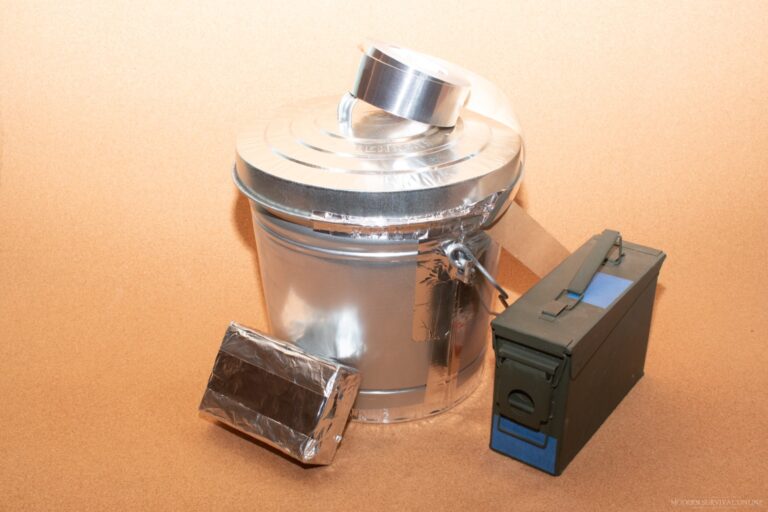
Three Faraday cages protecting your most vital electronics: a metal trash can, an ammo can, and a cardboard box wrapped in aluminum foil.

A powerful EMP can disable, damage, or even completely destroy electronics, appliances, and anything else plugged into the power grid. It’s also highly likely to destroy the power grid itself!

Plenty of folks worry about nuclear EMPs, but there are other natural sources, like powerful solar storms or coronal mass ejections.

As huge and seemingly unavoidable as these events seem, you don’t have to just sit there and pray. It’s possible to prepare for them by protecting your electronics and gear using Faraday cages.

A Faraday cage is just a conductive enclosure that will block the destructive energy of the EMP. Several related industries make fortunes selling specialized Faraday cage kits and complete units, but you can save a bundle by making your own.

Keep reading, and I’ll tell you about the items that can serve as fully functional Faraday cages.

faraday cage materials
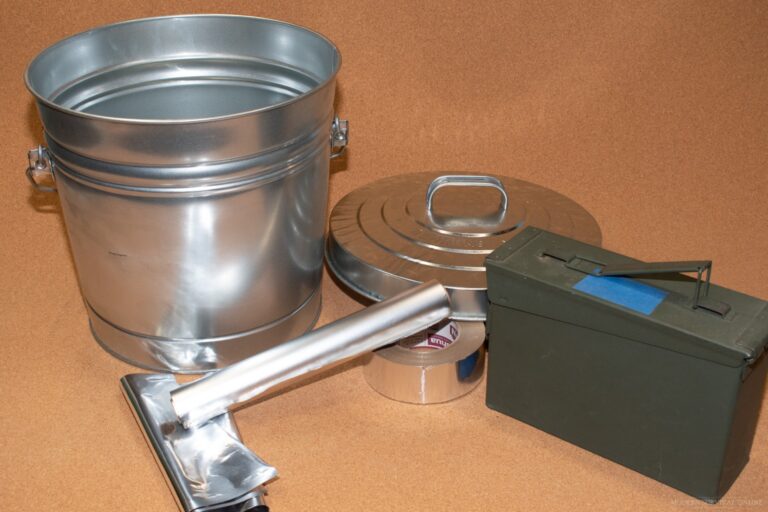
The materials to make several faraday cages: garbage can, tinfoil, foil tape, ammo can, mylar bag

Metal Trash Can with Lid

This is one trick that pretty much all preppers know about already, and it’s a good one…

You can take a galvanized metal trash can, one with a snug-fitting lid, and use that as a ready-made Faraday cage for protecting gear like large electronics, tools, chargers, and the like.

Now, obviously, you’d be wise to use a clean trash can, and you also can’t just toss your stuff in there and forget about it. You’ll need to insulate the interior or at least set your sensitive gear on something insulating so it’s not in contact with any of the exposed metal.

I like to use foam for this purpose, but I know folks who have used wood, cardboard, molded plastic, and other materials.

And make sure that the lid fits tightly. If there is slop, it can let some of the destructive energies leak inside and damage your stuff anyway. Build up the fit to the rim using aluminum foil if you have to.

Metal Paint Bucket

A paint bucket is another great option for a ready-made cage, and it works on the same principle as the metal trash can above, just on a slightly smaller scale for smaller gear. They’re compact, cheap, stackable, and can be a good portable solution if you are on the road and worried about an imminent EMP threat.

Paint buckets can be repurposed from actual, used paint buckets or purchased clean for the purpose.

I prefer spending a couple of bucks to save over an hour’s worth of time versus cleaning up a used one, and used buckets also have a drawback: if they are dented, punctured, or if the lid no longer fits tightly, the protection could be compromised.

As with the trash can above, you need to insulate the interior to keep vulnerable items out of contact with the metal walls, bottom, and top. Foam, wadded packing paper, and other sturdy but light and thin materials work pretty well.

Don’t forget to put some on the top too, and keep in mind that this will eat up your internal volume somewhat, which will affect how much you can store.

Holiday Popcorn and Cookie Tins

This is one of my favorite repurposed Faraday cages, and one that I see preppers constantly forget about.

Well, maybe they don’t forget about them, and their grandmas just get them first for their sewing and knitting supplies… I’m kidding, but make sure Grandma’s got what she needs before you take one of these for your project.

Basically, these tins work very much like the trash cans above, just in a different shape and scale. Most of them are still stackable, and they have the added benefit o having tightly fitting lids as a rule.

I use these particularly for storing flat, vulnerable electronics like data drives, phones, and things like that. Same as before, insulate the interior and ensure that none of your gear is touching any exposed metal on the inside or this will all be for naught!

wrapping box in aluminum foil
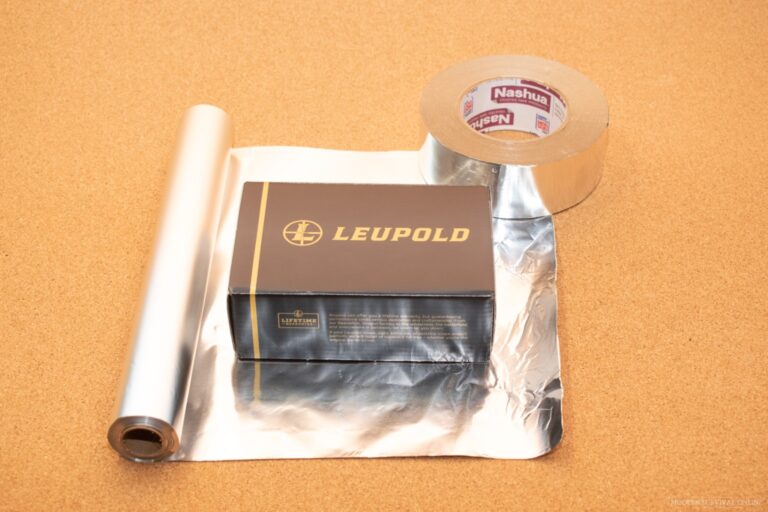
Any original packing box (carboard) can be foil wrapped and turned into a faraday cage

Cardboard Box and Foil

Believe it or not, you don’t even have to start out with a metal container to make a Faraday cage from common supplies. A sturdy cardboard box that’s carefully lined with a thick layer of aluminum foil on the outside might well be all you need.

Aluminum foil is, after all, a solid sheet and it is made out of conductive material that should easily be able to defeat all but the most powerful and nearby EMPs.

The cardboard itself is also a fair insulator, but you’ll still want to insulate the interior of whatever box you choose as detailed above.

I recommend you attach the foil using a spray-on or roll-on glue that’s good for the purpose, and take care to keep it as flat and uniform as possible.

Tears will ruin the protective value, and as you might imagine, you’ll have to treat this container with kid gloves because aluminum foil is so easy to tear.

That’s a downside, but if you need Faraday cage protection quickly and very cheaply, you can do a lot worse than this.

ammo can gasking
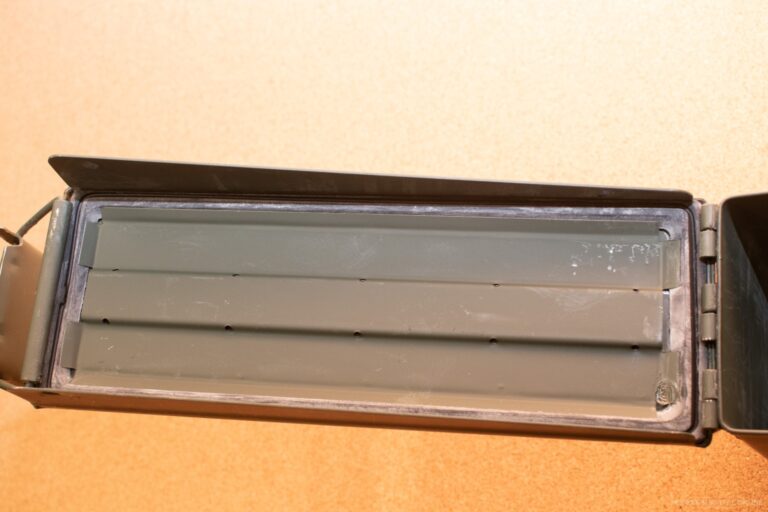
The rubber lid gasket that must be removed before this can become an effective faraday cage

Metal Ammo Can

Something that I just know a lot of preppers reading this already have on hand in abundance, the metal, military ammo cans that we all know and love can be a perfect small and portable Faraday cage.

You’re probably starting to get the picture by now. It’s just a metal container of a different kind and shape. Accordingly, subjected to the same scrutiny that we’ve already used on the other container types.

Make sure the lid fits very tightly, and that there are no punctures or holes, and insulate that interior so your electronics aren’t touching bare metal.

Something to keep in mind is that many of these ammo cans, particularly US and NATO ones, have a heavy gasket between the lid and the rest of the can.

You might want to put a layer of aluminum foil around the joint where the lid meets the can just in case it’s possible for some of the energy from the pulse to sneak in that way.

Metal Storage Cabinet / Locker

A large metal storage cabinet or locker is a workable Faraday cage, but one that will need some attention from you before it’s ready to use…

Most of these units have holes or gaps. Holes might be left over from the manufacturing process or slots used to adjust shelves on the inside. Doors typically have a fairly substantial gap at the top and bottom.

Deal with holes by welding over them or tightly covering them with aluminum foil or other sheet metal products. The door gap can be shored up like everything else on this list by using a layer of aluminum foil to increase positive contact.

Then all you have to do is put down a layer of foam, cardboard, or something else on the shelves inside to set your gear on. Once you have it set up right, this is a highly convenient option that you can leave in place.

Galvanized Metal Piping

If you don’t mind the extra weight and it being unable to effectively stack, galvanized metal piping of various sizes can be used to good effect.

It has a major advantage in that threaded caps tend to fit very snugly with precious little room for EMP energy to find its way inside, and the pipes themselves tend to be quite durable. You can improve protection even better by using thin foil or metal thread tape on the threads before screwing on the cap.

One drawback to galvanized piping is the fact that the volume inside is pretty low, and gets even lower when you insulate the items that you’re storing. Large diameter pipes that can hold more stuff get quite heavy and pricey quickly.

Metal Mesh

Fine metal mesh, of the type used to cover windows and screen doors, or sometimes used as a sieve for water tanks, can be repurposed to make small or large-scale Faraday cages.

You can line a box with it as you would with aluminum foil, or make a frame with wood and then make a screened enclosure. This is a great way to protect larger items like vehicles, generators, and more. Just make sure you have protection on the bottom, too!

This mesh material tends to be pretty tough, but it is easily damaged and gets worse quickly once it has taken damage.

Of more concern is the fact that this stuff has not been tested against real deal and very powerful EMPs. Some experts suggest that EMP energy could squirt through the tiny gaps in the mesh, but others claim that it is small enough to prevent this.

Time will tell, so if you are in doubt, use a double layer for extra insurance.

RFID Blocker Bags

When you visit an external link on this page and then make a purchase, I may earn a commission. Read my full advertising disclosure here.

If you have any of that specialty travel luggage that is designed to protect your phone, credit cards, and more from skimmers and other electronic subterfuge, rest easy because these things work wonderfully as Faraday cages. And that’s because they are!

Anything that will completely block cell and radio signals from getting out or in should stop the energy from an EMP cold.

These bags and other containers are great because you know they are purpose-designed to do exactly this.

And, assuming your gear is inside, and the luggage is closed, then you should be good to go. No fuss, no muss. Best of all, these are highly portable by design and very durable for what they are.

The downside is that they’re expensive, and you’re not going to be protecting larger gear with this travel-on-style luggage. Still, if you’re only worried about some small stuff and the cost is no object, I wouldn’t hesitate to get a few just for this purpose.

Faraday cage containers Pinterest image

The post 9 Things That Can Make a Functioning Faraday Cage appeared first on Modern Survival Online.


via Modern Survival Online https://ift.tt/kFoSptU

Tuesday, April 2, 2024

My 10-Step Guide to Preparing for an EMP

When it comes to mega disasters, if there is one guaranteed to make any prepper wince these days, it is the looming threat of an EMP, or electromagnetic pulse.

solar flares
solar flares

A really powerful EMP, be it caused by natural phenomena or man-made weapons, brings with it the possibility of plunging society back to the Stone Age by knocking out and destroying electrical grids and anything that relies on electronics to function.

The worst part is, we just don’t know how bad it’ll be, but experts you can trust say it will be anywhere from utterly devastating to apocalyptic. With so much of what we rely on these days, in day-to-day life and for survival, being electronic in some capacity, you’ve got to know how to prep for this threat.

It’s enough to make anyone anxious, but you don’t have to be afraid. I’ve got a 10-step EMP preparation guide for you below.

Step 1. Stock Up on the Basics

Before we delve into EMP-specific preparations, you need to get prepared on a fundamental level. I’m talking about the essentials: food, water, first aid kit, fuel, clothing, shelter materials, self-defense items, etc.

When it comes right down to it, no matter what sort of disaster you are facing you’ll still have to face the same fundamental threats to your survival. EMPs are no different in that they can expose you to the elements, compromise your food chain, cut you off from reliably safe water, and pose a physical threat from secondary effects.

You must ensure your access to food, water to drink, and shelter supplies so can warm enough that you don’t freeze. That’s why EMP preparation entails stockpiling all of that stuff for yourself and your family so you know you have it in the aftermath. And don’t worry: we’ve covered this topic from front to back here on Survival Sullivan.

If you aren’t ready with these survival basics, you aren’t ready for an EMP at all. Get ready, and only then start making the following EMP-specific preparations.

emp electronics to protect
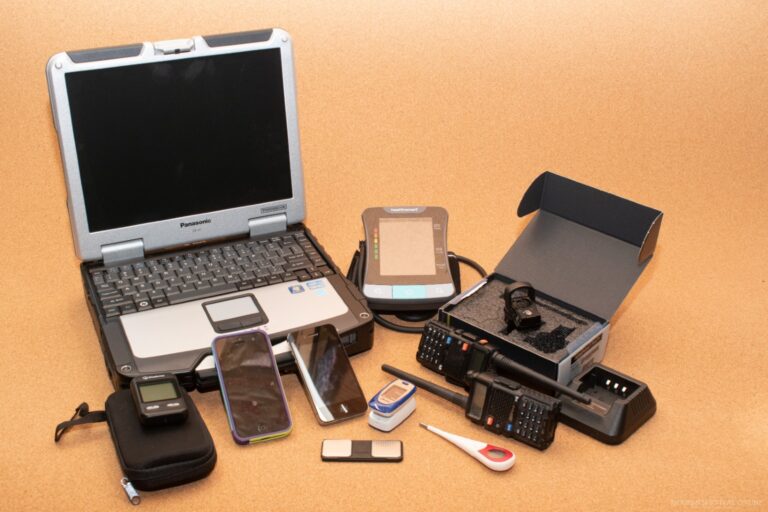
A selection of small electronics to protect from an EMP (clockwise) Laptop loaded with reference materials, blood pressure monitor, red-dot optic, ham radios, thermometer, pulse-oxygen meter, Kardia mobile EKG monitor, cell phones loaded with offline apps and reference materials, glucometer.

Step 2. Assess Vulnerabilities

The next thing you need to do to get ready for an EMP is to assess your specific weaknesses to the event. Meaning, if all electrical service and all electronics were suddenly, instantly, knocked out in the blink of an eye, how would that affect you in your day-to-day life?

  • Are you a commuter?
  • If your car suddenly lost power along with all the other cars around it, how would you handle that?
  • How would you get home?
  • How much food do you have stored for the long haul that isn’t refrigerated or frozen?
  • How far away are your family, friends, and other loved ones?
  • If you couldn’t call them on the phone, how would you get in touch with them?
  • Do you have a family member who needs some kind of machine for life support or remediation of an illness or ailment?
  • Likewise, does anybody depend on refrigerated medicine like insulin?

These are the questions that you must answer, and the context is unique to each individual and family. By understanding these vulnerabilities, you can start prepping against them and ensuring continuity of service or communication after the pulse.

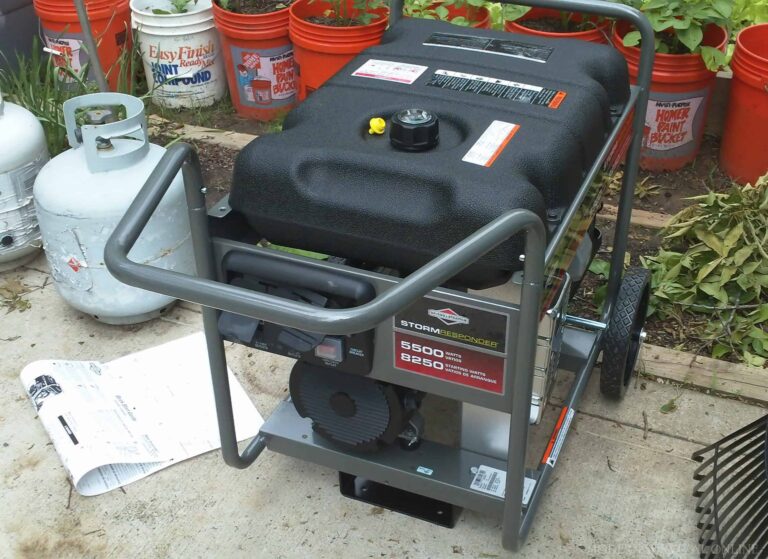
Briggs & Stratton generator
a Briggs & Stratton generator

Step 3. Get a Generator

If you don’t have a generator by now, you really should – especially if you want to be ready for an EMP. They can be absolutely invaluable because you’ll be able to provide your own electricity in a self-contained way.

An in-depth discussion of generators is an entirely separate endeavor, but you’ve got two basic schools of thought. You can try to power just the basics like the refrigerator, freezer, and a few lights, or you can run the whole house so you can stay more comfortable.

Whichever route you want to go, you must protect the generator itself from the EMP, because many modern ones are vulnerable to its effects. I’ll tell you how to do that a little later on, just keep it in mind for now. Something else to consider: it’s possible older generators might be a bit more resistant to EMPs, but this theory has not been properly tested in lab settings. Something to think about!

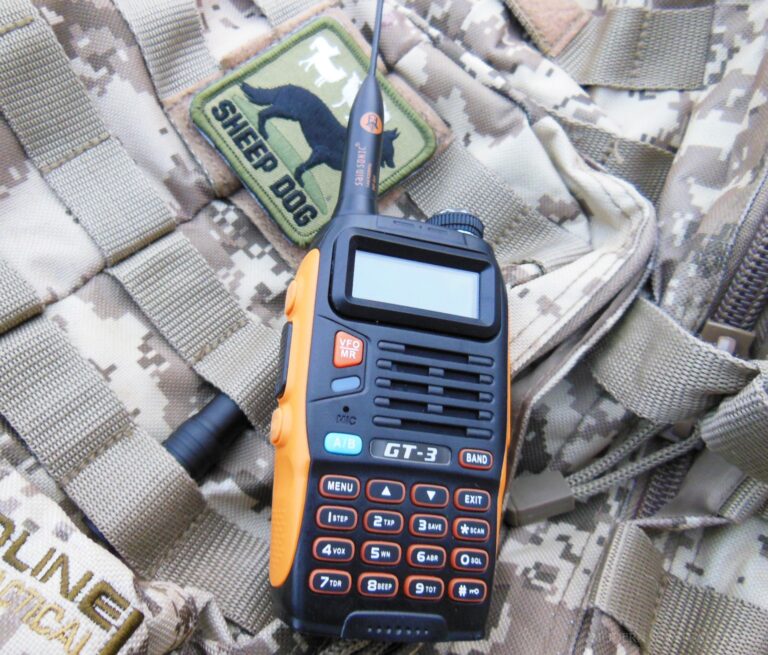
a Baofeng handheld ham radio

Step 4. Invest in Radios

You might think me a hypocrite or a fool telling you to invest in radios, something inherently electronic, when you’re getting ready for an EMP, but bear with me and I think you’ll see my reasoning…

Radio is definitely old-fashioned compared to our modern cell phones, but unlike phones and phone lines, radios are totally self-contained, meaning they aren’t reliant necessarily on any network infrastructure in order to function.

Your radio can transmit and receive all by itself. A radio will be worth its weight in gold in the aftermath, and it can help you get in touch with first responders, family, friends, or just other survivors.

If you have the cash, stocking up on radios now for a particularly rainy post-EMP day could make for excellent trading. Just make sure you keep them protected until that day comes!

The trick with radio is that you’ve got to know what you’re doing. That takes practice and if you want to use more capable ham radios, getting a license.

And, just like with your generator, you’ll need to protect your radio from the effects of an EMP so it is intact and ready to call when you need it.

Step 5. Consider an Older Vehicle

Depending on who you ask, it is either sad or wondrous how inextricably linked modern automobiles are with electronics and computers. Sure, it might make them faster, more efficient, more comfortable, and more capable overall, but a sad side effect is that these vehicles are hideously vulnerable to EMPs.

Many of these cars can’t be driven at all if they lose even a single essential computer, and an EMP would literally fry the brain and nervous system of these cars and trucks.

It’s worth considering getting an older vehicle, say pre-1982 at the latest, that is less dependent on electronic fuel injection and any sort of computer. Even if you have it put away for this rainy day, it will keep you on the road when everyone with a newer ride is stranded.

faraday cage materials
The materials to make several faraday cages: garbage can, tinfoil, foil tape, ammo can, mylar bag

Step 6. Protect Critical Gear with Faraday Cages

One of the most important and fundamental EMP-specific preps you should invest in are Faraday cages. I’ll spare you the science lesson, but basically, a Faraday cage is a metallic enclosure that will surround and protect vulnerable electronics and infrastructure – say, for instance, your cell phone or your radio.

Larger ones can even protect vehicles, and specialized bags can even hold a generator that is kept for just such an occasion.

It’s possible to buy specially made Faraday cages for the purpose, or you can DIY your own with a little ingenuity assuming you have an understanding of the principles behind how EMPs cause damage.

Step 7. Have an Alternate Means of Heating Your Home

If your home depends on electricity for heat, you should understand explicitly by now that you’re not going to have heat after an EMP, unless you’ve got a pretty large genny. But don’t count yourself lucky if you have gas, assuming you don’t have an on-property propane tank.

The civic systems that deliver natural gas, and many natural gas furnaces and other appliances, still depend on a certain amount of electronic controls to operate. Controls which will be knocked out by an EMP, making gas infrastructure and appliances unsafe or totally unusable.

Some other types of heating systems, such as a simple propane heater, wood-burning stove, fireplace on could literally save your life, especially if you live in a colder climate. You’ll want to stock up on the appropriate fuel too.

Step 8. Get Analog Gadgets and Tools

One of the very best and, somewhat humorously, most commonly overlooked defenses against the ravaging effects of an EMP is simply going analog.

Basically, any gadget, function, tool, or anything else that can rely on muscle power or something else in order to operate is worth considering, especially if it’s something you need or use all the time.

In the case of power tools, you could instead go with manually operated equivalents. You might replace a car with a bicycle, or even a horse. Trucks can be replaced with draft animals pulling wagons, etc.

Get creative, and you might be surprised to learn how little electricity you actually need with the right approach.

Step 9. Establish a Family Contingency Plan

Crucially important for our purposes is establishing an intricate family contingency plan and then rehearsing it. Truly, I cannot impress upon you enough how total the chaos will be in the aftermath of this awful crisis.

People won’t be able to call each other, they won’t be able to drive anywhere, and even if they could, the roads will be clogged with stalled vehicles, planes may fall out of the sky, electronic currency won’t work- it’s going to be mayhem.

And, because most well-adjusted folks don’t just wait in their homes for the sky to fall, chances are you, your spouse, your kids, your other family members, etc., will all be out and about in different places doing different things at different times.

So now, this is where we start working through those variables…

If an EMP happens, what will you do to get home or get to your family? Should they stay where they are, should they immediately head home, or should they listen to authorities?

Have you some pre-established plan or signal for re-establishing communication with each other? Is there anyone you might send to collect them in your stead? If the right hand doesn’t know what the left hand is doing in this instance, the chaos will only be magnified.

Make a plan, go over it, then rehearse it. Then start adding layers, additional contingencies, and complications, so that everyone is prepared for a true worst-case scenario.

This is arguably going to be one of the most difficult and intensive parts of EMP prep, but I can guarantee you it will be a real comfort if it ever happens, and this type of plan can also serve you well for lots of other disasters.

Step 10. Skill Up

Last but certainly not least, if you are serious about being ready for an EMP, the big one, you’ve got to skill up. But skill up on what? Everything.

Society is going to go completely to pieces, and even if the event only affects a regional level (which is arguably a “best case” scenario compared to the nation or much of the globe) there will be so many victims pile up, and so fast, that no cavalry will be coming.

Even then, first responders’ own capabilities are going to be gravely diminished, almost to zero, under the circumstances.

Because of this, you must become your own sanitation engineer, your own paramedic, your own firefighter, your own security guard, your own logistics specialist, and your own electrical company.

It’s the only way to guarantee that you and yours will have the know-how, and with a little elbow grease, have a chance of surviving what will be a historic event.

Luckily, if you’ve been prepping for any length of time already, there are definitely some of these skills you already bring to the table, but now is not the time to sit on your haunches!

The post My 10-Step Guide to Preparing for an EMP appeared first on Modern Survival Online.


via Modern Survival Online https://ift.tt/GgIQeNM