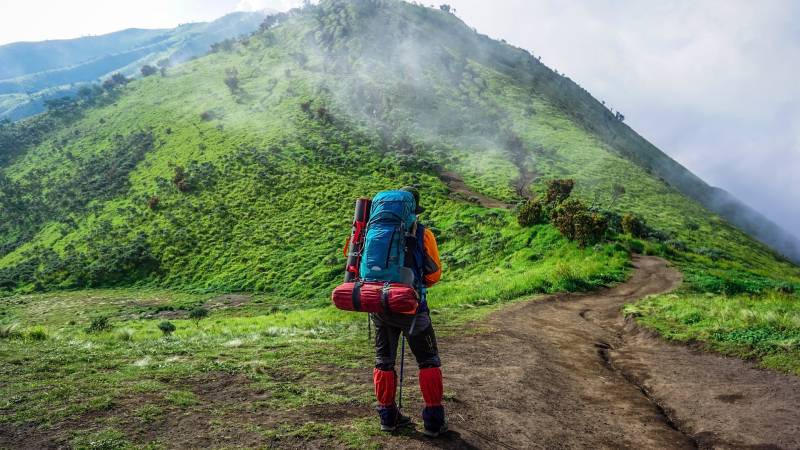
An INCH bag is far different than a BOB bag. Possessing such a bag could be essential to your very survival – and should always be kept within reach.
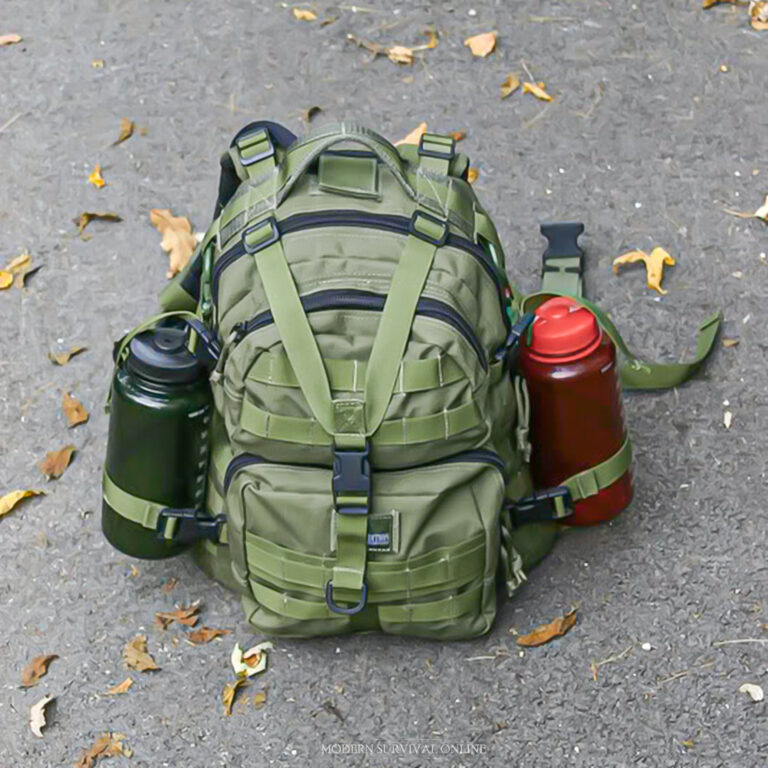
INCH stands for I’m Never Coming Home. It is a large survival bag that is packed full of all the essentials tools and gear you will need to survive while you find a new place to call home. A BOB – or bugout bag, holds enough gear to keep you alive UNTIL you get home, or up to 72 hours.
While you will some of the same items in each bag, there are vast differences in both the gear packed and the rucksack used to carry them. Think of an INCH bag as a bugout bag on steroids! In this article we’ll talk about the items you need to consider when you put it together.
Differences Between an INCH bag and a Bugout Bag
Bugout bags a typically smaller than INCH bag, and carry just enough supplies and gear to help you survive a SHTF trip from work or school to your home or nearby prepper retreat where stockpiles of long-term storage food, water, gear, etc. are waiting for you upon arrival.
A bugout bag is packed with a specific trek and time-frame in mind. An INCH bag is packed to last you basically forever. Of course you won’t be packing all the food and water you will ever need on your back, but you will be carrying to tools necessary to provide yourself with the basics of survival.
INCH bags are packed with a potentially unending time-frame and destination in mind. Nomadic living, especially in the wilderness, should be the primary focus during INCH bag packing. You may not be staying in one place for very long and likely will not have the option of guaranteed resupply unless you have buried survival caches you can get to during the SHTF disaster you are trying to live through.
The typical bugout bag weighs about 25 to 30 pounds when stuffed full with gear. An INCH bag commonly weighs between 40 to 50 pounds when loaded with survival supplies.
The best type of I’m Never Coming Home bags will also come equipped with a hydration bladder with a straw that reached from its storage spot in the bag to the wearer’s mouth…
Hands-free watering on the go will not only keep you moving along the trail, especially when being chased, but will prevent the need to remove the bag, causing you to keep both your hands and eyes busy and not looking out for danger that could be lurking behind the next bush.
Carrying either bag for any distance drives home exactly how important it is for all preppers to work physical fitness into their SHTF practicing your preps routine.
At least twice a month I walk three miles with my INCH bag and hike about the same distance over rugged terrain with my bugout bag.
Even though my beloveds and I live in a fully-functional, sustainable, and secluded homestead, I refuse to become a complacent and overly confident prepper and ignore the real possibility that we could one day be driven from our survival retreat by the marauding hordes, fire, or nuclear attack.
Choosing the Right INCH Bag
If you bag wears out before you do, the chances of living to see another sunset are greatly diminished. An INCH bag must be durable, first and foremost. Such a bag INCH bag should fit the upper body properly to distribute its weight evenly between the shoulders and hips – and have adjustable straps.
A rucksack with a sturdy yet light-weight external frame, the type designed for backcountry hiking, are the best option for INCH bags – especially the ones with padded pressure points to provide extra comfort. The bag’s fabric should be waterproof, durable, and have copious amounts of pockets and zipper compartments.
The bag, when filled, should not weight more than 25 percent of your total body weight. Only purchase a bag that is in a dark, earth-tone, or camouflaged color to help conceal your movements and location.
List Of INCH Bag Survival Items
Water
Water is a top priority, especially when you are planning to never return home again. When you are always moving about in order to survive, fining it is definitely going to be an ongoing struggle. Even if you are fortunate enough to make camp for an extended period of time near an ample water supply, the essential liquid must be both filtered and purified properly to avoid illness or death.
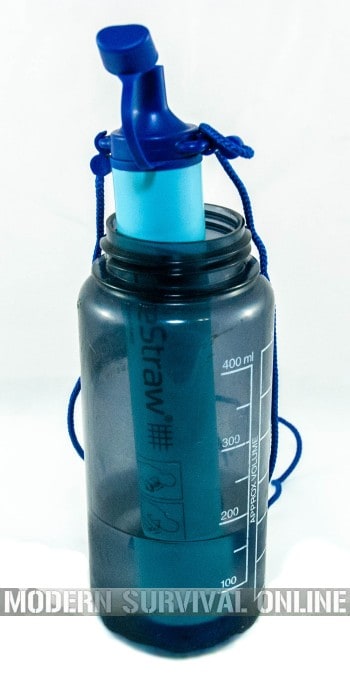
If you were merely packing a bugout bag, throwing in a few LifeStraw filters would do the trick. But, when packing an INCH bag, the straws and packets of water purification tablets would be used up in a matter of weeks – months if you got lucky.
Go ahead and toss several water purification tablets and LifeStraws into your INCH bag, but save them for only the most dire of circumstances. Pack a stainless steel water bottle in the I’m Never Coming Home bag for long-term use as well.
A stainless steel water bottle can be placed over an open flame so the potentially contaminated liquid inside can be safely boiled and impurities removed. You can boil water over and over, and yet over again, in the stainless steel bottle without damaging it – and it doubles as a portable water container.
Dual-use items are key when packing any survival bag – they serve multiple functions and avoid the need to add extra weight or take up essential space in the bag.
When planning to live off the land for long periods of time you need the right tools to do so. You need every advantage you can get and you need to use them all.

Food
You will need plenty of protein to remain strong and healthy while surviving in the woods or other temporarily safe area after the SHTF. Snaring small game like snakes, squirrels, rabbits, and raccoons, will become a part of your daily routine and challenge to survive.
Fishing in every waterway you are fortunate enough to come across offers another opportunity to secure protein and to garner the amount of calories you need to maintain your strength.
Snares and Traps – Either pack the wire in various small to medium weight gauges you will need to capture small game, or buy one of the survival snares kits that are readily available online for a nominal price.
The snare kits typically come with diagrams and detailed directions on how to place and set the snares to aid trapping novices. The kits or wire needed to make your own snares, will take up very little space and are really lightweight – but will worth far more than their weight in gold after the SHTF.
Compact Fishing Pole – A pocket fishing rod is lightweight and takes up little space in your bag. One is none and two is one, so squeezing two of these fishing poles into your INCH bag will enhance your chances of survival in one of them breaks and can offer you a quality bartering item if absolutely necessary.
Yo-Yo Reels – The reels are also a must have for the INCH bag. The handy reels increase your chances of catching a fish while you are sleeping or performing another survival task – like chopping wood for a fire. You simply set the Yo-Yo Automatic Reel and then walk away until you get a bit and then reel in your catch once you have awoken or finished gathering the wood you need to cook your bounty.
Tackle – A compact fishing tackle kit should include ample swivels, eights, hooks, extra line and other typical supplies an angler would need to catch his lunch and dinner.
Slingshot – A high-velocity slingshot will help you to not only kill small game, but can be used as a silent self-defense weapon as well. A slingshot will never run out of ammo! Put the survival slingshot in an exterior pouch of the INCH bag to keep it handy when you spot game….or trouble.
Bows – There are multiple types of bows, and each one of them can be deadly in the right hands and have extreme value during a survival situation. The takedown recurve bow it the best option for an INCH bag. It quickly breaks down into smaller parts without tools and can easily fit into a zippered pouch of your I’m Never Coming Home bag.
Compound bows won’t break down into smaller pieces to be stored inside the INCH bag, but are lightweight enough to be tied to the outside frame of the bag for easy toting. This type of bow is great at long range and will allow you the capability of stalking and shooting large game, like deer, from a significant distance.
A crossbow will likely need to be connected to a strap and carried over your shoulder or slung across the top of the INCH bag. It can be carried cocked so you are ready for either a threat or any game that happens to cross your path, at all times.
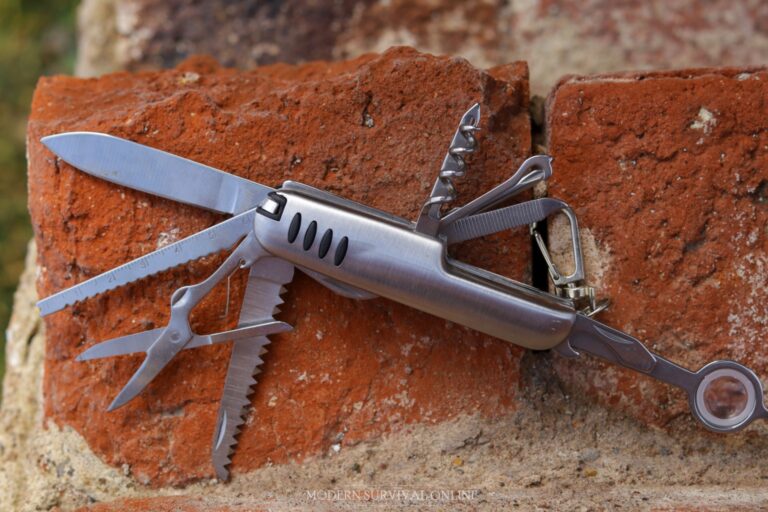
Knives – Multiple different type of knives should be included in the INCH bag. A pocket knife, multi-tool or Leatherman-style knife, a butcher knife, a fish scaling knife, and a Bowie knife. This is both a tool and a weapon and must be kept sharp and ready to use at any moment – your life will very likely depend on it!
Tools
You’ll need to build at least temporary shelters, cut your way through dense and prickly thicket, and chop woods, while surviving by only your wits, skills, and what is contained in your INCH bag.
Shovel – A lightweight and foldable survival shovel folds up into a hard case that can be placed inside of, or clipped onto, the INCH bag. Most shovels of this type have a serrated edge, making it another dual-purpose survival tool.
Hatchet – The hatchet will double as a wood and limb cutter for fire and shelter making, and can also be used as a weapon. If you also pack the necessary items to keep the hatchet (and the knives you will also be packing) sharp – and you should, the hatchet should be sharp enough to cut through animal bones for tool and weapon making purposes.
Machete – The lightweight brush-cutting tool will help clear your path in the dense woods and can also be used as a weapon. Learn how to make your own rope and use the machete to cut vines to garner supplies for natural rope making and basket weaving – to storing and gathering food and trapping purposes.
Hand Tools – A screwdriver, hammer, folding hacksaw or camping finger saw, plyers, wire cutter, and if you can find one that is not too heavy and cumbersome, a bolt cutter.
Fire Starters – Pack multiple lighters and waterproof matches, a flint stone, and homemade fire starters – like dryer lint, petroleum jelly mix with turpentine at a 2 to 1 ratio – this is also doubles as a healing salve for wounds and burns.
Compass and Maps – Pack a compass and paper maps that cover at least the tri-county region. Covering the paper maps with clear contact paper will help protect them from the elements while still allowing them to fold. A compass/emergency whistle combo can be tied onto the INCH bag and serve as an orienteering backup device.
Binoculars – If you rifle does not have a scope, or as back-up even if it does, invest in a decent pair of lightweight binoculars.
Clothing
Preventing frostbite and hypothermia will be essential to your survival. Even if the SHTF in the peak of summertime, do not leave home without a durable warm coat and rain gear.
Shirts – Lightweight long sleeve shirts should also be packed to avoid being plagued with bug bites and sun burn. Pack two lightweight long sleeve shirts, two sweatshirts, a thermal shirt, and two short sleeve shirts in your INCH bag.
Health issues which are nothing more than mild or mundane now could become deadly when left untreated during a doomsday disaster. An intense sunburn and exposure to the heat could cripple your energy and reaction time just enough to get you killed while trying to survive in the wilderness.
Gloves – Pack at least one pair of cold weather gloves and two pairs of work gloves in your INCH bag. Yes, three pairs of gloves will take up valuable space, but trying to survive without them will eventually be almost impossible. Gloves will wear out quickly during heavy usage – the typical farmer or rancher will go through four pairs of leather work gloves per year under routine circumstances.
Socks – Keeping your feet dry will prevent foot rot and other potentially serious infections and debilitating conditions that could keep you languishing in one spot, unable to do the necessary food gathering/hunting, and water gathering you need to survive. Pack seven pairs of socks and a dry bag to store any clothing you can’t immediately allow to dry thoroughly when it becomes wet or damp.
Pants – Two pairs of durable work pants, like Carhart pants of bibs, or heavy jeans should also be pack, along with a couple pairs of lightweight shorts. If you feel that underwear and bras are worth taking up space, by all means roll them as tightly as possible and put several of those into your INCH bag as well.
Bandanas – Pack three bandanas in your bugout bag. They can be dipped into water and tied around your neck or forehead to help keep you cool, or tie up your hair and keep it off your back to achieve the same goal. The bandanas can double as a bandage and a rag to clean your cookware with as well.
Hats – Pack two warm hats suited for winter wear – preferably the type that include ear flaps. A ball cap or other lightweight hat to protect the head and face from intense heat is also worthy of a spot in the INCH bag.
Cleaning and Repair
Sewing Kit – The supplies and ability to mend not just your clothing but the INCH bag if it tears – which it likely will over time, is extremely important.
A winter coat with just a few small tears will allow cold and rain to reduce your natural body heat. The needles in the sewing kit can be sterilized and used to stitch torn flesh as well. Sure, that is a very unpleasant thought, but being able to stitch your own body after an accident, might just save your life.
The kit should include small or foldable scissors, a dozen needles, a needle-threading tool, and ample mini spools of thread. White thread should be packed because it is free of dyes, making it less likely to spark infection if used to stitch up a wound.
Gun Cleaning Kit – A cleaning kit which fits into a tube or folding carrier will help keep all of the important pieces safely tucked away until they are needed. Purchase extra parts for your firearms and store them in a zipper pouch of some type to keep them secure. A repair kit and extra string for bows and fishing rods should also be included.
Sewing kits, weapon cleaning kits, repair kits, and small unique tool kits if room allows it (such as screwdrivers, pocket knives, and utility tools.) Extra clips, buckles, and straps should also be included in order to repair your I.N.C.H. bag in case of rips, tears, or damage while out trying to relocate to safe shelter.
Eating and Drinking
Cooking – A camping cookware set is both compact and lightweight and will cover all of your essential needs. The self-contained kits have a skillet and an “plate” that doubles as a lid for the skillet – the skillet is just deep enough to be used as a shallow pot to make stew. Eating utensils slide into a secure spot on top of the plate/lid for compact storage.
Canteen – A canteen with a carabiner can hang from the outside of the bag – saving valuable space inside. Even if you have a hydration bladder, packing a canteen is still recommended. You may be forced to move from your campsite near a waterway at any moment – having as much water as you can carry should always be a priority.
Survival Food – Pack enough MREs or survival food packets to last for three days. The food should be saved for only a dire emergency when you absolutely cannot catch, kill, or forage for a meal for the day.
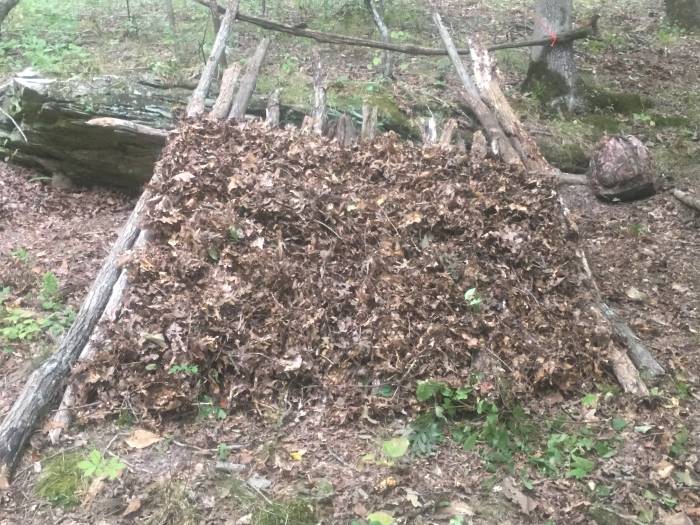
Shelter
Tarp – Pack at least one tarp, preferably two, to use to make a tent when building a temporary shelter. Choose tarps in a camo motif or at least in a dark color to avoid attracting unwanted attention.
Rope and Tape – Pack two rolls of duct tape and plenty of rope and paracord to use to tie together branches when making a temporary shelter and to hold down tarps being used on the shelter. There are countless uses for duct tape and rope – do not skimp on these items when stuffing the I’m Never Coming Home bag.
Sleeping Bag – Packing a sleeping bag is common when making a bugout bag, but might be too heavy to add to an INCH bag. Instead pack several neatly folded into squares, plastic trash bags.
Laying on the trash bags will keep you off the cold ground and help you maintain a steady body heat. Stuffing the trash bags with leaves and brush will further insulate the body from the cold and damp ground. The bags can also be used to help protect the contents of the INCH bag during heavy rains or when being forced to cross deep waterways.
Blankets – Pack a small blanket to use as a bedroll – most rucksacks have straps at the bottom that can hold a rolled up blanket.
Mylar blankets are common items in a bugout bag, but they will do you little good in the long term – one use and they become trash. The blankets are extremely lightweight and take up a very small amount of space, so packing several in the INCH bag for medical emergencies or during times of intense cold is not a bad idea.
After being used, the blankets could be used as bedding or under a tarp roof on a temporary shelter to better protect the inside of the makeshift structure from rain, snow, or cold.
Pillow – A rolled up piece of the packed cold weather clothing can serve as your pillow – or use one of the trash bags filled with leaves to suit this purpose. Small inflatable pillows could be packed without taking up a lot of space, if deemed necessary.
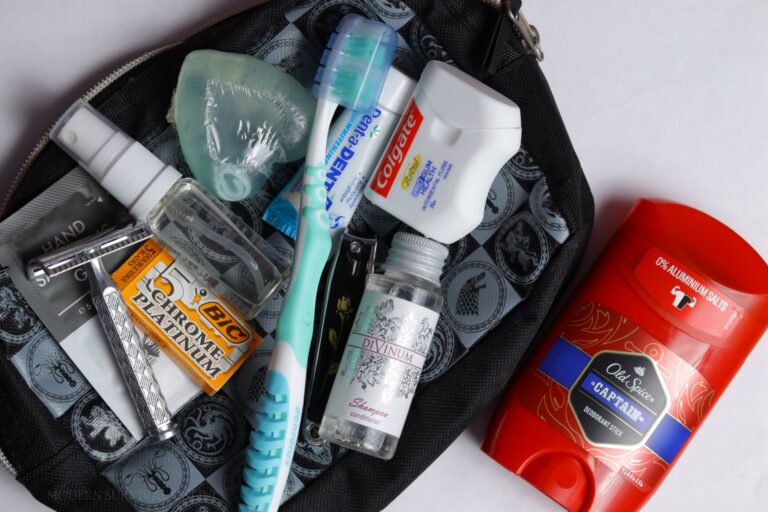
Hygiene
Hand Cleaners – Wet napkins, soap, and waterless hand sanitizer will help keep you clean and destroy germs you WILL come in contact with while butchering animals and cleaning fish.
Teeth – Pack a two travel size toothbrushes and a travel size mouthwash and toothpaste holder, The mouthwash and toothpaste will run out quickly, so learn how to make your own natural substitutes from the bounty offered in the woods to prevent potentially life-threatening tooth and gum disease and infections.
Dental Kit -A small dental care kit with tooth extractors is also necessary. An infected tooth can bring you to your knees quickly, and allow the infection to spread throughout the body. The kit should also include a temporary filling kit and an oral anesthetic
Feminine Hygiene – It would be impossible to pack enough tampons and pads to take care of a lady’s monthly needs in any INCH bag. Purchase two disposable feminine cups to take care of the monthly issues. The cups are not designed to last forever, but if they are washed out and cleaned, it should be possible to make one cup last up to a year before it tears and leaks.
Misc. – A towel and wash cloth, a mirror, comb/hairbrush, are useful comfort items that will not add much weight to the INCH bag. Learn how to make your own shampoo from natural items to keep your hair clean – or cut it as short as possible before leaving home and pack a pair of scissors to repeat the short cut as necessary.
Birth Control – Romance might not be the first, or even the 100th thing on your mind when packing an INCH bag, but if you are bugging out with your spouse or significant other, one day it will be. Packing condoms will help prevent an ill-timed pregnancy from happening during a dire disaster scenario.
Lighting and Communications
Lighting – Flashlights and batteries to keep them going are definitely necessary. Batteries take up space and have some weight to them, so plan to use the flashlights sparingly after strapping on your bag and fleeing home. Mini flashlights that have a keychain end should be attached to the INCH bag in multiple places. A LED headlamp and glow sticks will also be handy to have and take up little space in the bag.
HAM Radio – Purchase a handheld HAM radio so you can monitor traffic, even if you never plan on saying a word to a single outsider. Being aware of the movements of marauding hordes, the location of an emerging pandemic, and a brewing wildfire – and what the government is doing, could save your life!
A hand-crank or solar powered radio could accomplish this same goal, if the purchase of a HAM radio does not fit your budget and you are worried about battery weight. Buy a small portable solar charger with a USB port to help keep your handheld radio charged at all times.
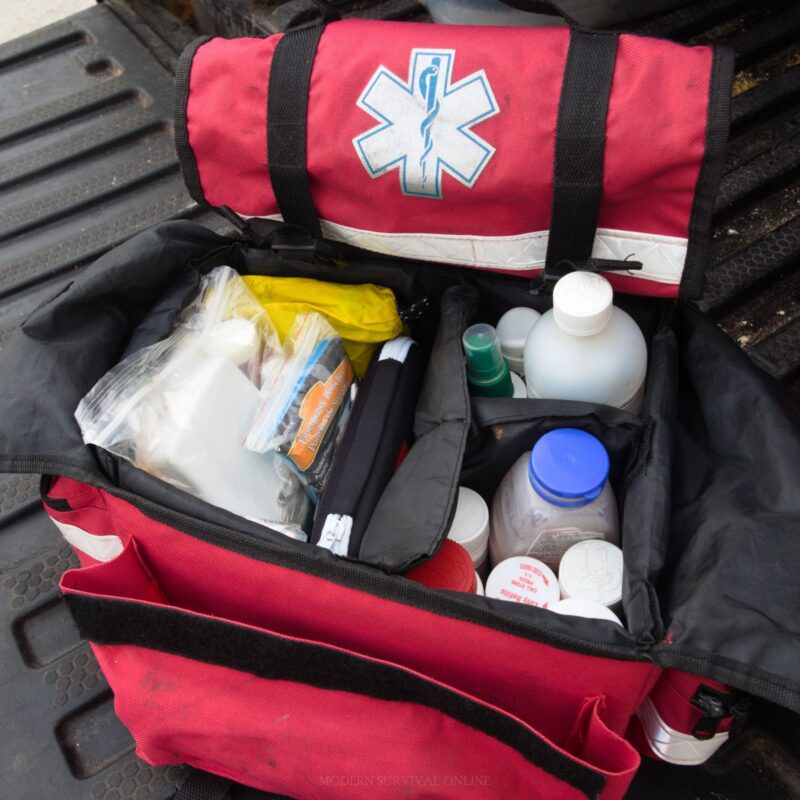
Medical
First Aid Kit – You will not be able to call 911 after the SHTF. The first aid items in your INCH bag should be given a top priority level, just below water.
List of INCH Bag First Aid Supplies
- Quick Clot Compression Bandages
- Tourniquet
- Non Adhering Pads 2×3 inches
- Gauze Pads 3×3 inches
- Gauze Pads 2×2 inches
- Gauze Pads 4×4 inches
- Cold Packs and Hot Packs
- Electrolyte Mix
- Eye Wash or Saline
- Penlight
- Skin Stapler and Remover
- Nasal Decongestion Spray
- Utility Lister Scissors
- Instant Glucose
- Magnifying Glass
- Peroxide
- Rubbing Alcohol
- Witch Hazel
- Liquid bandage and/or super glue
- Chapstick
- Splinter Outs
- Burn Gel
- Tweezers
- Anti-Diarrheal
- Stool Softener
- Scalpel
- Cohesive Self-Sticking Roll Bandage 3 inch by 5 yards
- Aid Adhesive Tape
- Gauze Roll 2 inches
- Gauze Roll 4 inches
- Triangular Bandage
- Multi Trauma Blood Stop Dressing
- Surgical Dressings 5×9 inches
- Ammonia Inhalants
- Exam Gloves
- Bandaids Strips in all sizes, including butterfly Bandaids
- Knuckle Elastic Cloth Bandaids
- Fingertip Elastic Cloth Bandaids
- Oval Eye Pads
- Antibiotic Ointment
- Antiseptic Wipes
- Alcohol Pads
- Sting Kill Swabs
- Snake Bite Kit
- Iodine Swabs
- Knee, Ankle, and Elbow Braces
- Tylenol and any prescription medications – learn how to make natural substitutes from prescription and over-the-counter medicines and carry an empty container to store the natural medications in.
Resource Material and Comfort Items
Photos and ID – Pack along photos of your loved ones to help bring you comfort and inspiration while surviving in the wilderness, perhaps trying to reach your family or friends. Photo identification might be necessary if stopped by a governmental entity or, in the worst case scenario, for a good Samaritan to use to mark your grave.
Book, playing cards, pen and paper, etc. – Pack a book or deck of cards to give you something to enjoy during the little down time you will get after fleeing your home. The mental diversion will eventually be much welcomed.
Education – Pack a first aid book, tree and plant identification guide, or other survival resource material they may help guide you on your survival journey.

The post The Ultimate List Of INCH Bag Survival Items appeared first on Modern Survival Online.
via Modern Survival Online https://ift.tt/nuz8IvN