Sheep would have to rank among the most common grazing animals in the world. They are extremely versatile and adaptable and are raised for wool, meat, skin and milk.
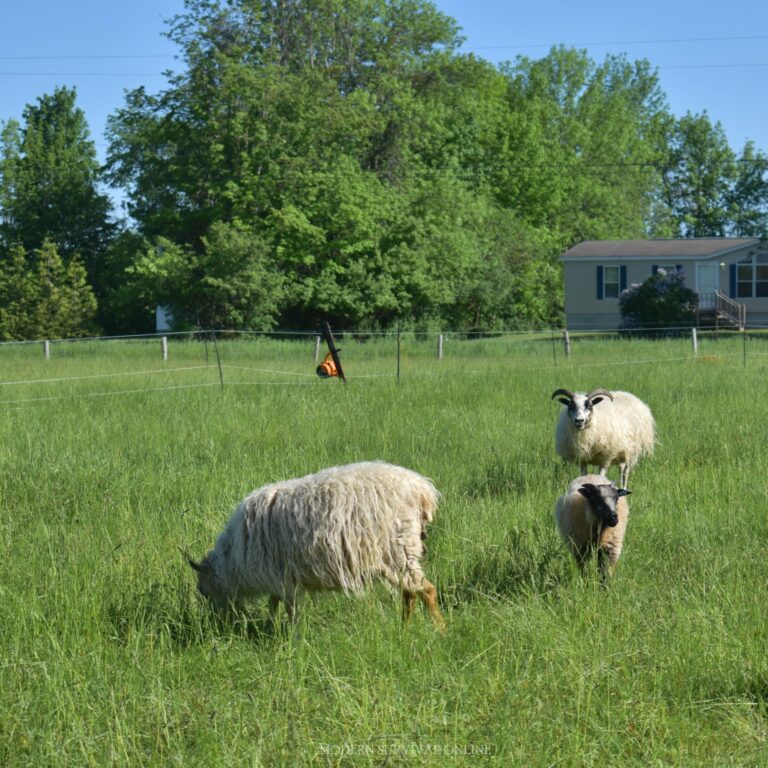
Raising your own sheep is an extremely enjoyable experience, as well as an excellent way to keep the grass down, turn your weeds into clothing and provide some really tasty meals.
The sheep industry isn’t a modern one. In fact, it dates back thousands of years to a time when a more primitive people relied on their personal flocks for food, clothing and trading. Actually, history tells us that wool was one of the first textiles to be processed and spun for use as cloth.
Let’s look at the benefits of raising your own sheep and see they will become invaluable when disaster strikes…
Lifestyle
For many, the enjoyment of an agricultural lifestyle and a ‘small taste of country’ is the reason for keeping a few sheep. If their property has extra land, it’s an excellent way to keep the grass down and provide some of their own organic meat. Folks sometimes use it as an opportunity to expose their young children to the idea of living off the land and teach them that meat and milk doesn’t grow on supermarket shelves already packaged.
For families with young children, sheep are an excellent choice because they are generally good tempered and easy to handle. We have found that lambs which have been bottle fed become extremely friendly and make excellent pets.
Relationships with animals such as these are really important, especially for children because when disaster strikes and your life is turned upside down, animals are one of the best sources of comfort quickest ways to restore a bit of normality back to your life.
They take up much less space than cattle and aren’t Houdini’s like goats. To give you a general idea, one cow and her calf needs about the same amount of grazing area as a flock of five ewes and lambs.
Sheep are happy to graze orchards, lawns, wooded areas and nearly anything else between. They eat a lot of plants that other more fussy grazers won’t touch and better still, they eat basically to ground level.
They are reasonably cheap to buy, have a comparatively short gestation period of 145 days and generally need little medical attention. So, without much upfront cost, you can have your own little flock in a short space of time.
Organic Food
For some people, it’s a way of ensuring that what they eat is completely natural free of additives and steroids. Knowing exactly how the animal has been kept, what it has eaten and how it has been processed is really important to these people.
Tax Benefits
There are several taxation advantages that go along with raising sheep, or other agricultural activities, which may be worth considering too. Laws vary by state, so you will need to familiarize yourself with your state’s definition of a farm for taxation purposes.
Wool, Meat or Milk: Which Breed is Best?
Considering there are a lot of breeds of sheep, it’s important that you identify exactly what you want to get out of your flock. As with any livestock, different breeds have been developed for different purposes, so you need to decide what your number one priority is: wool, meat or milk?
You also need to consider your climate and what kind of pasture you have to offer and make your choice accordingly.
Supposing your aim in raising sheep is purely for their wool, here are some things to consider:
Fine-wool breeds have been specifically developed for the genuine wool producer, for both commercial and hand spinning markets. These sheep have been selectively bred to produce quality fleeces and their comparatively fatty meat is not always considered prime eating quality.
Fine wool will bring better returns, but you may have difficulty breaking into an existing market in your area, especially if your quantity is small.
Fine-wool breeds include:
- Merino
- Rambouillet
- Debouillet
- Cormo
- Jacob
Medium-wools cover most of the common breeds of sheep. Their fleece is generally sold on the market and their carcasses are often large and make good eating.
The ROI on this wool isn’t likely to be as good and if you can’t shear them yourself (i.e. you have to pay shearers to do the job), the cost of the shearing may be greater than the money the fleece brings.
The most popular medium-wool breeds include:
- Dorset
- Hampshire
- Suffolk
- Shropshire
- Texel
- Cheviot
- Polypay
Meat sheep
If you are keeping sheep for their meat and can’t be bothered with the fuss of shearing, your obvious choice will be one of the hair sheep varieties.
As their name suggests, hair sheep are covered in rugged hair much more like that of their wild ancestors, which adapts to suit their environment and sheds in much the same way as a dog’s coat.
Hair sheep have become very popular because they are hardy, low-maintenance and resistant to many of the common parasites.
Carcasses are usually lean and make excellent eating.
Hair sheep breeds include:
- Katahdin
- California Red
- Barbados Blackbelly
- Croix
- Wiltshire Horn
- Royal White
- American Blackbelly
Dairy sheep
Do you want to keep your flock for milk and cheese? These items will be invaluable for bartering after that catastrophe hits.
Sheep’s milk is extremely nutritious and has a very high solid content which means makes excellent cheese and butter. It is higher in several vitamins and minerals than cow’s milk and is easier on the digestive system.
They are easily milked by hand and depending on the variety, may produce between 400 and 1100 pounds of milk per season.
Lactating ewes of any sheep species are suitable for milking, however the renowned milking varieties include:
- East Friesian
- Lacaune
- Hampshire
- Suffolk
What facilities do I need to keep sheep?
Buildings/shelters
As with any livestock, the size and complexity of the facilities needed to keep sheep depend largely on the size of the flock, your local climate and the climate in lambing season.
Some sort of storage shed or barn is useful for fodder storage and climate protection and will be essential if lambing is going to take place during the winter.
Sheep are incredibly adaptable and hardy and if the ewes are lambing in spring or summer, a small flock owner may well get away with a basic shelter for storing supplies and housing ill or lambing animals.
Shelter for BOL
A temporary shelter is easily constructed with bales of hay for walls and a piece of weighted iron for the roof. This type of shelter can be easily erected at your BOL and is cheap. The hay will provide fodder once the shelter is no longer needed.
Shade and water
If your summer is dry and hot, you will need to ensure that your animals have adequate access to shade and water. Sheep, like other grazing animals, are exposed to the elements all year round and inadequate shade and water will likely be fatal.
You will need to make sure that your BOL is close to a natural water source – your flock will make short work of your stocked water so your location needs to have a dam, waterhole or river nearby.

Pasture/feed
Sheep are grazing animals, so the constancy and quality of pasture or feed is very important. They will happily graze a wide range of grasses, legumes and trees.
Most of a sheep’s nutritional needs can be satisfied with grasses, but if the pasture is poor or in short supply or the needs of your animals particularly high, you may need to supplement with a mix of whole grains.
Some people say that feeding sheep grain to fatten them up will make the meat greasy and fatty – this is of course, a matter of personal opinion. I have never tried it because we have more than enough pasture. Grain is, of course, a more expensive feed option and will be harder to find and more expensive post disaster.
Hay, which is high in vitamin A, is going to be necessary for feeding out if your area experiences harsh winters. Store your hay in a dark place (e.g. a barn) to preserve its nutritional value.
Mineral salt helps to prevent bloating and should be readily available to your sheep. Maybe you could use a licking block or provide it loose or granulated.
Health Issues
Sheep are incredibly hardy, adaptable and resistant to many kinds of common livestock diseases.
Of course it’s your responsibility to provide a clean and safe environment for your animals because most illnesses are the result of poor sanitation and dirty housing.
A few of the illnesses that may affect your flock are:
- Footrot
- Polyarthritis
- Pneumonia
- Mastitis
- Pregnancy disease
- Coccidiosis & scours (lambs)
Sheep are also prone to parasites, but this can be prevented to some extent by rotating pastures regularly.
It is really important that you maintain contact with a reliable veterinarian and vaccinate your flock appropriately.
Annual routine care should include vaccines, shearing, hoof trimming and deworming. Lambs require ear tagging and tail ringing. Ask your vet for more information on these topics.
Sheep manure should always be pelleted and solid and the animals generally stick together in a flock. Keep a lookout yourself for any animals that look sick or injured and isolate any animal that appears unwell.
General care
Sheep are generally easy to handle and easily trained. If your flock is small and you are a smart prepper, you can make the most of their gentle character and use it to your own advantage. They will follow almost anywhere for grain, apples or bread. Luring them with treats makes it easy to get them into pens for veterinary treatment or loading.
Handling facilities, no matter how small the flock, always make the job easier when it comes to loading, shearing or sorting. Of course they can be constructed in many different ways and your own needs will determine what you build or buy.
A few things to remember when designing your pens:
- Sheep move along better if their course is slightly curved and they can’t see what is ahead
- They instinctively move towards and follow other sheep
- They move better uphill than down
Predators
Predators are a serious concern as thousands of sheep are lost every year to hunters such as wolves, coyotes, foxes, eagle and bears.
A few points that may help to prevent losses to predators:
- Use guardian animals such as dogs, alpacas, llamas or donkeys
- Use neck bells on your sheep
- Quickly remove any dead sheep from your fields
- Install high, predator-tight fencing
Other Points of Interest
Here are several other points about raising sheep and lambs that might be of interest to you:
- Lambs can be weaned as early as 60 days old
- Orphaned lambs are often unwanted by commercial farmers and they are only too happy to give them away. This really does make your flock a very economical investment.
- Bottle-fed lambs make excellent pets, though they tend to be very demanding and over friendly as they grow up.
- Lambs do very well on cow’s milk powder, which can be easily purchased from your local supermarket and is much cheaper than the genuine lamb milk powder.
- Sheep are generally quiet, unlike goats.
- Sheep will happily graze steep or rocky pasture that is unsuitable for cows.
Well, it really isn’t difficult to keep a few sheep of your own. In fact, it’s enjoyable and helps to keep the grass under control. With the added bonus of delicious, home-grown meat.
You never know what circumstances might crop up, when there is no longer anywhere to buy meat, or you simply don’t have the cash. I think, when times get ugly, you’d be jolly glad to have your own animals. After all, isn’t this just going back to basics and learning how to care for ourselves without relying on modern conveniences?

The post A Primer on Raising Sheep appeared first on Modern Survival Online.
via Modern Survival Online https://ift.tt/2zWQgtD
